
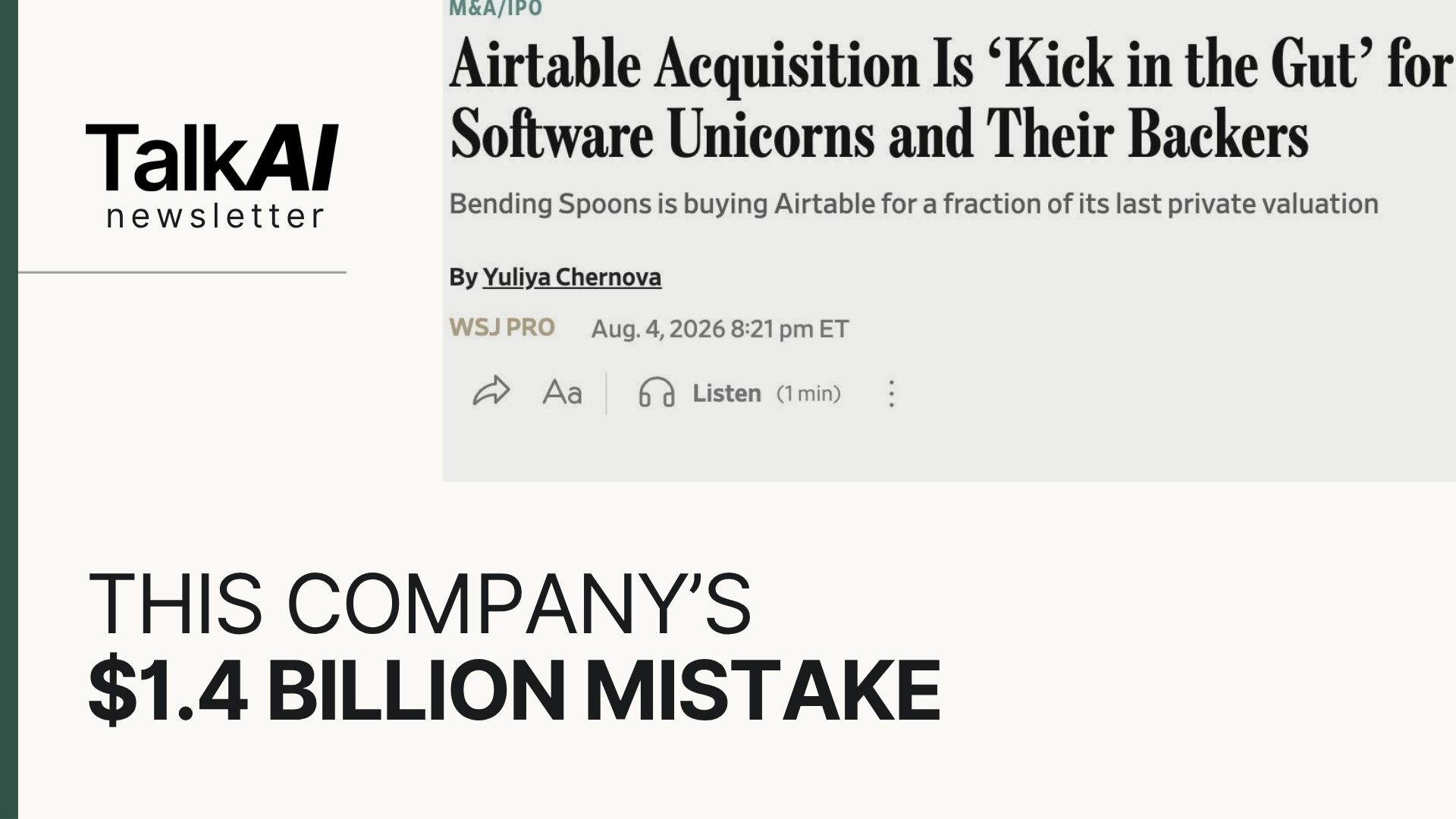
A company raises $1.4 billion and eventually sells for $1.2 billion. People are using AI to generate personalized podcasts for a seven-minute drive with their kids. Companies are spending two days building chatbots nobody will ever use and calling it transformation.
Meanwhile, LinkedIn becoming a dating app might somehow be the most sensible use of technology I saw all week.
There is so much genuinely incredible stuff happening right now, but there is also a lot of nonsense getting rewarded simply because it looks like progress. This week I kept coming back to the same question: Are we actually making things better, or have we just gotten really good at making everything look innovative?
Let’s get into it.
LinkedIn Might Be Better Than Tinder
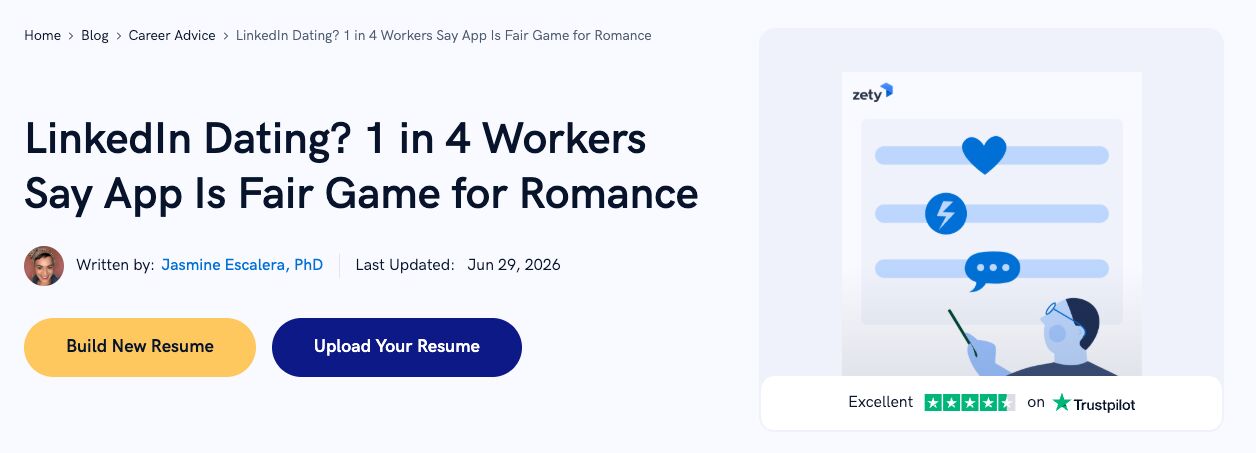
LinkedIn is apparently a dating app now.
This new survey found that 1 in 4 workers think using LinkedIn for romance is fair game, and 1 in 8 have actually started a relationship there.
Hahaha. I love it, and honestly, it kind of makes sense.
Tinder tells you someone likes hiking, tacos, and “adventures,” which is nice. LinkedIn tells you they survived three layoffs, changed jobs four times in six years, and post suspiciously thoughtful leadership lessons every Sunday night.
That is useful information.
They might actually be onto something here. Linked does give you current photos, jobs that are usually real, and a really good way to knock out your due diligence. I have spent years looking at LinkedIn as a place for business, and somehow it never occurred to me that people were also quietly sizing each other up for dates.
Now that I see it, I cannot unsee it.
Sometimes people find a completely unintended use for technology and it actually works. The opposite is when we start desperately looking for problems technology can solve.
Or Just Talk to Your Damn Kids
It feels like people are starting to get sick of AI.
Every week, some tech bro finds a new way to turn a normal human interaction into a six-app workflow and calls it the future.
The latest “incredible use case” was uploading your family calendar, explaining your kids’ interests, and generating a personalized podcast for the seven-minute drive to school.
Or just talk to your damn kids.
It doesn't feel like people hate AI. We’re just getting pretty sick of the BS surrounding it. The good stuff is incredible. The forced use cases are getting ridiculous.
And businesses are doing their own version of this. Except instead of a seven-minute podcast, there are tacos and a VP in a branded hoodie.
Hackathons Are Not an AI Strategy
Most corporate AI hackathons are expensive playdates for adults pretending they accomplished something. I’ve seen the same stupid routine a thousand times.
- The company cancels two days of actual work
- Forty people pile into a conference room
- Someone orders tacos
- A VP in a branded hoodie says, “There are no bad ideas.”
- Everyone builds the same three things: a chatbot nobody asked for, a meeting summarizer nobody reads, and a dashboard nobody trusts
- A panel of executives who couldn’t ship a software feature if their lives depended on it hands out trophies for the “most disruptive idea.”
- Everyone claps
- Marketing takes photos
- LinkedIn gets a post about the “incredible energy in the room.”
And then every project quietly dies. Honestly, that’s okay.
These people have actual jobs. They are supposed to be building a business, not spending the next six months playing Minecraft for adults and maintaining a pile of useless internal tools that cannot scale.
Turning a hackathon prototype into a real product is brutally hard. You need clean data, security approval, integrations, funding, ownership, maintenance, adoption, and an actual business case.
Most hackathon ideas do not deserve any of that. So let people play with the tools. Let them learn what AI can do. Let them get uncomfortable, experiment, and build something stupid.
That has value. Just stop pretending it is transformation. Call it what it is: A fun learning experience with tacos. Then get everyone back to work.
The problem is when that same thinking makes it out of the hackathon and into the actual operation.
Deflecting Tickets Is Not Transformation
“We deployed AI across our contact center, but CSAT is down and operating costs are actually going up.”
But what is the AI actually doing?
“Handling easy tickets. Deflecting emails. Routing calls.”
That was the problem. Too many companies think adding AI to the front of the customer journey is transformation. We automate the easy work and leave every complex interaction to an already stretched team. That is exactly why we are bringing AICX back on August 19.
Leaders from Arrive, Proofpoint, Horatio, Webflow, and more will share what is actually working, where AI has fallen short, and how they are rebuilding customer operations around it.

A great group of CX leaders with real experience putting AI into practice.
Of course, pretending activity equals progress did not start with AI. Silicon Valley has been doing it with money for years.
$1.4 Billion In. $1.2 Billion Out.
How the hell does Airtable raise $1.4 billion, then sell the entire company for $1.2 billion?
Seriously, how is that even possible?
Nearly $500 million in ARR, 500,000 customers, 80% of the Fortune 100, a shiny new AI strategy, and they still ended up worth less than the cash investors poured into it?
That is almost impressively bad and might go down as one of the most expensive lessons in SaaS history.
But let’s call it what it is. Silicon Valley spent a decade pretending fundraising was value creation, and Airtable just showed us how stupid that game really was.
Airtable was valued at $11.7 billion when money was free and revenue multiples were detached from reality. Everyone celebrated the round like the company had accomplished something.
But it didn’t accomplish anything. It basically signed up for a $1.4 billion bar tab at a fantasy valuation, and eventually someone had to pay it.
Look, raising too much money can screw a company just as fast as running out.
Once you take that giant round, the valuation becomes the strategy and growth gets forced. You hire too fast and build the company around proving the valuation was real instead of solving customer problems.
Then the market sobers up, the fake math disappears, and everyone finds out what the company was actually worth.
That should terrify every founder still bragging about how much money they raised. No matter how you spin it valuation will never equal value and fundraising is definitely not winning.
And while companies are figuring out what they are actually worth, the internet is changing how that value gets discovered in the first place.
The Internet’s Old Deal Is Breaking
I posted a TikTok about Reddit potentially walking away from its AI deal with Google.
It did way better than I expected. But the response got me thinking.
The story is not really about Reddit asking Google for more money. It is about the internet’s old agreement falling apart.
For years, the deal was simple:
- You create the content.
- Google indexes it.
- Google sends you traffic.
....now AI can take the content, generate the answer, and keep the user.
And that same shift is happening to brands.
AI search is not just deciding which page ranks first. It is deciding which companies are credible enough to include in the answer at all.
New research by Gaetano Nino DiNardi looked at 270 real buyer searches across ChatGPT, Gemini, and Perplexity.
The same small group of brands kept showing up.
That raises a much bigger question than how to optimize a few pages for GEO: What makes AI trust one company and ignore another?
Gaetano and I discussed this on Friday, watch here.
The Reality Check
Maybe that is the question underneath all of this. We have gotten really good at making things look like progress. More AI, more automation, bigger valuations, more “innovation.”
Eventually the story gets stripped away and you are left with a much simpler question: Did this actually create value?
That question is getting harder to hide from.