
AI is making it easier to do almost everything.
For years, a lot of jobs were judged by whether those activities happened. We counted calls, emails, meetings, tasks, leads, and content. Activity became a stand-in for value.
That worked when execution was expensive. It stops working when a machine can produce the same activity instantly.
AI is forcing us to separate the people and companies that merely complete tasks from the ones that actually own outcomes. And that distinction is going to reshape far more than a few software features.
Let's get into it.
Adding AI Is Easy. Owning the Transformation Is Not.
Adding the latest AI feature from your SaaS platform isn't AI transformation. It's a software update.
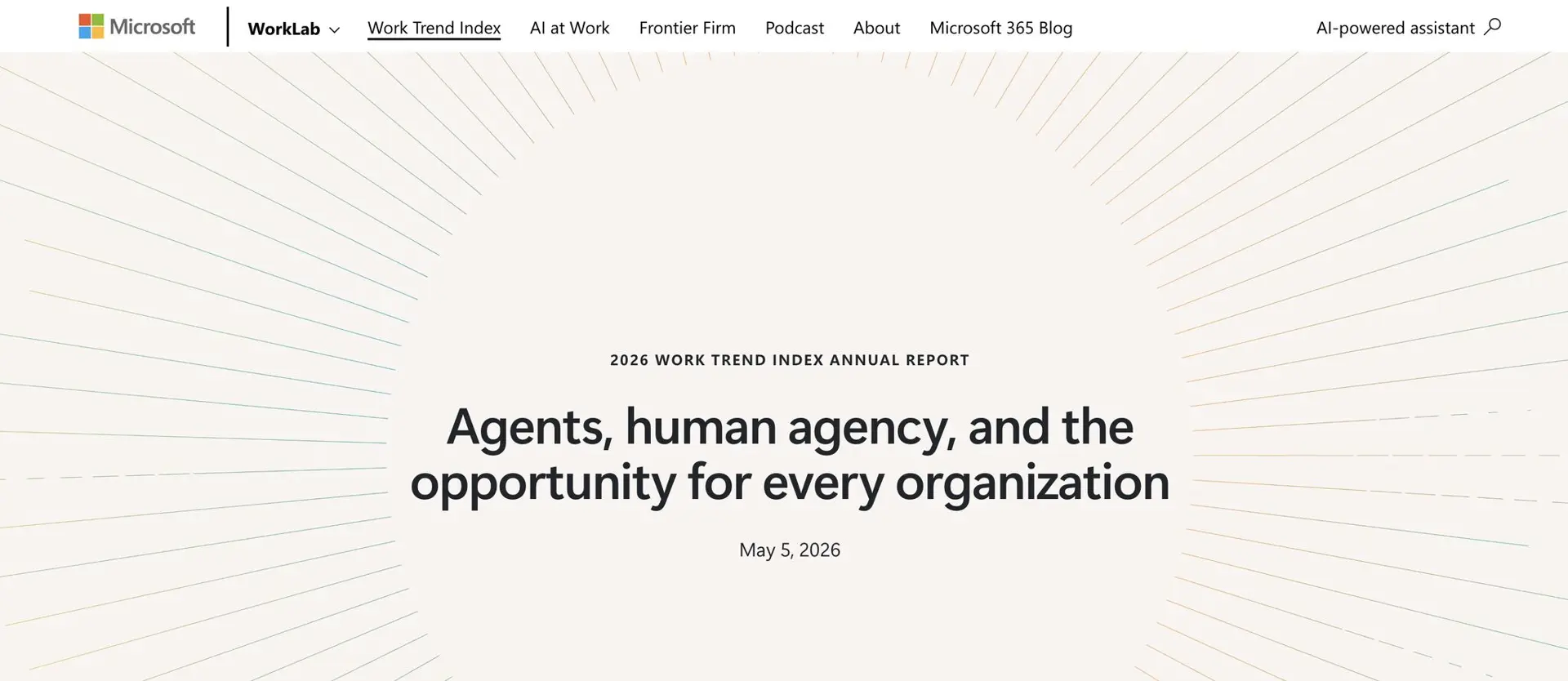
Microsoft's latest Work Trend Index found only 19% of companies have actually redesigned how work gets done with AI. That's because AI isn't another feature, it's really a new operating model.
There's a massive difference between adding AI to your business and rebuilding your business around AI. Link to the study.
Most companies want the benefits of AI without taking responsibility for redesigning the work around it.
Adding AI is easy. Redesigning the work around it is where the work starts.
Knowing More Is Not the Same as Doing More
The GTM industry has a hoarding problem. Everyone is collecting signals with tools like UserGems, Clay, Common Room, Warmly, ZoomInfo, 6sense, etc.
Awesome. You know your prospect hired a new VP, raised $50M, visited your pricing page, and downloaded a whitepaper. Now what? Most companies do exactly what they've always done.
- Create another Salesforce task nobody will ever open
- Send a Slack notification everyone ignores
- Hope an SDR gets to it before the buying signal dies of old age
- Glue together six tools to do outbound
Everyone thinks the signal is the product. It's not. The product is what happens next. Execution is the product.
That's where signal-based outbound gets interesting. What if every buying signal had an employee assigned to it instantly?
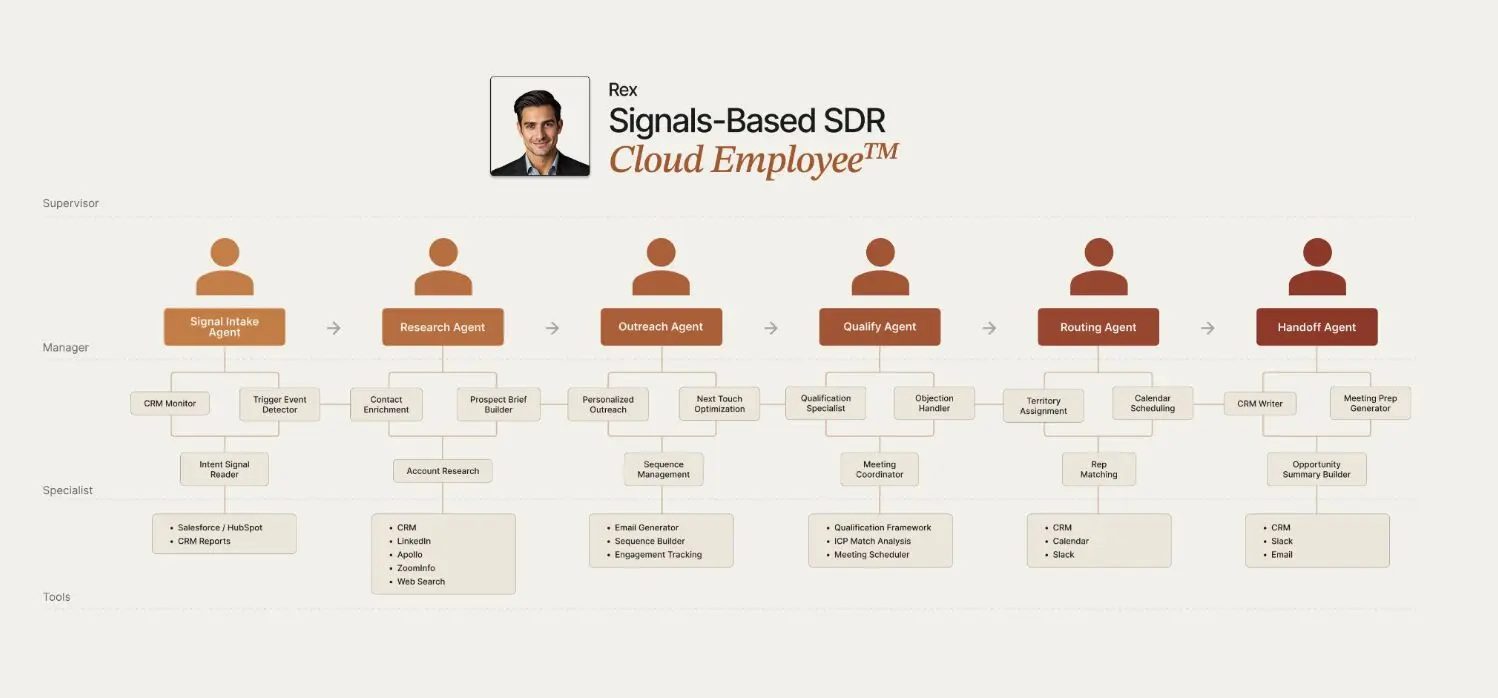
That's Rex's job. A signal-based AI SDR that acts on buying signals the second they happen. Rex doesn't wait for the morning. He watches for:
- Leadership changes
- Funding announcements
- CRM migrations
- Pricing page visits
The second a signal appears, he goes to work. He doesn't notify an SDR. He becomes the SDR. He researches, writes, follows up, books meetings, and updates Salesforce.
I've spent the last two years building AI SDRs. Here's my biggest takeaway: AI is terrible at cold outbound but AI is surprisingly good at signal-based outbound.
There's a big difference between interrupting someone and showing up the moment they're ready to buy.
The signal only matters when someone owns what happens next.
The AI Didn’t Raise the Bar. It Revealed How Low It Was.
I received a cold call from an AI SDR the other day.
I was fully prepared to hate it. I had my finger on the hang-up button, a few four-letter words ready to go, and I was already thinking, "This is going to make a great LinkedIn rant."
Then... it completely ruined my plan.
- It got straight to the point
- It knew why it was calling
- It answered my questions without stumbling through a script
When I interrupted it, it didn't lose its place or ask me to repeat myself. It wasn't pretending to be my best friend.
It was just... efficient.
And then I had an uncomfortable thought. This was better than a lot of human SDR calls I've received.
Not because the AI was incredible. Because we've let the bar for outbound get embarrassingly low.
Everyone keeps asking: "Did it sound human?" Who cares? I've talked to plenty of humans who sound like they're reading from a script they don't understand.
The only question that matters is: Did it earn the next 30 seconds? If the answer is yes, I'll stay on the phone. If the answer is no, I don't care whether you're human or AI.
AI did not make the call valuable. It exposed how little value weak execution was creating.
A List of Tasks Is Not a Job
A founder called me this week. “We’re holding off on hiring SDRs until we figure out if AI can just do the job.”
I asked him to define “the job.”
“You know,” he said. “Sending emails. Making cold calls. Getting meetings.”
That is the mistake a lot of founders are making right now. They are confusing activity with ownership.
- Sending 500 emails is activity.
- Scraping LinkedIn is activity.
- Owning a territory, running discovery, building trust, and creating pipeline is responsibility.
If your entire SDR strategy is built around paying people to send emails and make calls, the problem is not AI. The problem is the role you built.
I’m sat down with Blake J. Harber. He has built outbound teams from 1 to 80+ reps, and we’re breaking down what founders should actually build today.
If you had a $500k pipeline budget, how much should go to people, AI, and software? Where are founders wasting money? What still requires a human?
Listen here. The question is no longer who completes the task. It is who owns the outcome.
Ownership Means Leading the Buyer Somewhere
It's crazy. Nobody has a sales process. They have a series of meetings they hope magically turns into revenue.
I'm amazed how many sales calls end like this: "So... what do you think? Want to move forward?"
Guys, that's not selling. That's asking your buyer to invent your process for you. The next step should never be a discussion. It should already be obvious. Every rep on your team should know exactly what they're recommending before they ever join the call.
Here's ours:
- Discovery + Overview We uncover the problem, then walk through the same proven overview every rep delivers. Yes, it's templated. Good sales teams don't reinvent the demo every Tuesday.
- Custom AI Employee Preview: We build a tailored AI employee for their business and show exactly how it would work across phone, email, chat, SMS, or wherever they engage customers.
- AI Blueprint: This is where most companies completely fall apart. Buyers shouldn't have to figure out how to buy your product. We do the work for them. Current state. Future state. Use case maps. Investment. ROI. Implementation plan.
- Proposal Review: Answer final questions. Confirm the rollout plan. Remove risk.
The biggest lie in B2B sales is that buyers want endless flexibility. They don't. They want someone who has done this 100 times and knows exactly what to do.
If your reps are asking buyers what the next step should be, please have them stop it's bugging me.
Ownership means leading the process, not asking the buyer to figure it out for you.
You Cannot Outsource Proof
How do you hire a CMO who doesn't market themselves?
- It's like hiring a VP of Sales who can't close
- Or a CTO who can't build
- Or a CFO who can't read a P&L
A CEO friend called me this week. "We're only interviewing CMO candidates who actually market themselves." I said, "Isn't that... the job?" He laughed.
A CMO's first product is themselves.
If you can't build an audience If you can't tell a story If you can't get people to care about your own ideas
Why would anyone believe you can do it for a company? I'm not saying you need a million Instagram followers. I'm saying you've got to prove you can create demand without hiding behind someone else's logo.
Because if you can't market yourself, don't tell me you can market my company.
The Reality Check
AI is making activity easier, but it is also making ownership harder to fake.
Companies add AI features without redesigning the work. GTM teams collect signals without acting on them. SDRs complete tasks without owning pipeline. Sales reps run meetings without leading the buyer. Executives claim expertise without proving they can create the outcome themselves.
Technology is not removing the need for people. It is removing the value of work that was never tied to a real result.
Winners will be the one willing to decide what matters, build the process around it, and take responsibility for what happens next. AI can complete the task. Ownership is making sure the task actually leads somewhere.