
Everyone says AI is changing work. That is true, but boring. What AI is really doing is revealing how much of work was fake in the first place.
Fake buyer intent dressed up as pipeline strategy. Fake productivity dressed up as reps buried in workflows. Fake career security dressed up as a LinkedIn title that expired a year ago. Fake leverage dressed up as software that creates more internal work than external results.
For years, companies could hide inside those illusions because labor was expensive and inefficiency was tolerated. Humans absorbed the waste. Humans clicked the buttons, updated the CRM, chased the wrong accounts, sat in the meetings, maintained the image. AI changes that equation because it is brutally honest about low-value work. If a machine can do it instantly, you have to ask why a person was doing it at all.
This edition is about the collapse of comfortable lies. The lie that account scores equal demand. The lie that more tooling equals more selling. The lie that experience alone guarantees relevance. The lie that standing still is safer than moving on.
ABM is lazy marketing and this is why it fails
ABM is an excuse for lazy marketing. “Your target account is surging” is one of the dumbest sentences in GTM. Cool. Which human?
Nobody books a meeting with an account and no one closes a deal with a logo. No CFO wakes up and says, “Wow, our company as a collective consciousness is ready to buy.”
A person buys you idiots.
GTM teams have let platforms like 6sense and Demandbase sell them a fantasy: “Marketing found intent. Sales just needs to work the account.”
Meanwhile, nobody can actually tell sales who inside the company is ready to buy. So your SDR is staring at an enterprise account with 12,000 employees and a “surging intent” badge like they’re supposed to play detective.
It's stupid. Account-level intent is lazy. “This account is warm.” That should be an illegal sentence. It creates fake confidence for marketing and wasted time for sales.
We gotta stop buying account scores and start finding buyers.
We’re obsessed with account signals because they’re easier to track than human relationships. But while marketing is chasing "surging logos," sales is getting bogged down in the very tech that was supposed to free them up.
AI is Killing Your Sales Velocity
Funniest thing in GTM right now: Quota carriers turned into part-time RevOps… and selling less. I’ve heard too many CROs brag, “my reps are buried in Claude workflows.” Like it’s a flex… until the number gets worse.
AI was supposed to help you sell more. Instead you found a way to sell less. Stop the nonsense. If AI isn’t putting your reps in more conversations, it’s killing your number. Go sell.
If your "AI strategy" has your best closers staring at a prompt window instead of a customer, you don't have a strategy; you have a bottleneck. And that bottleneck is creating a massive identity crisis across the entire org chart.
The Generational AI Crisis
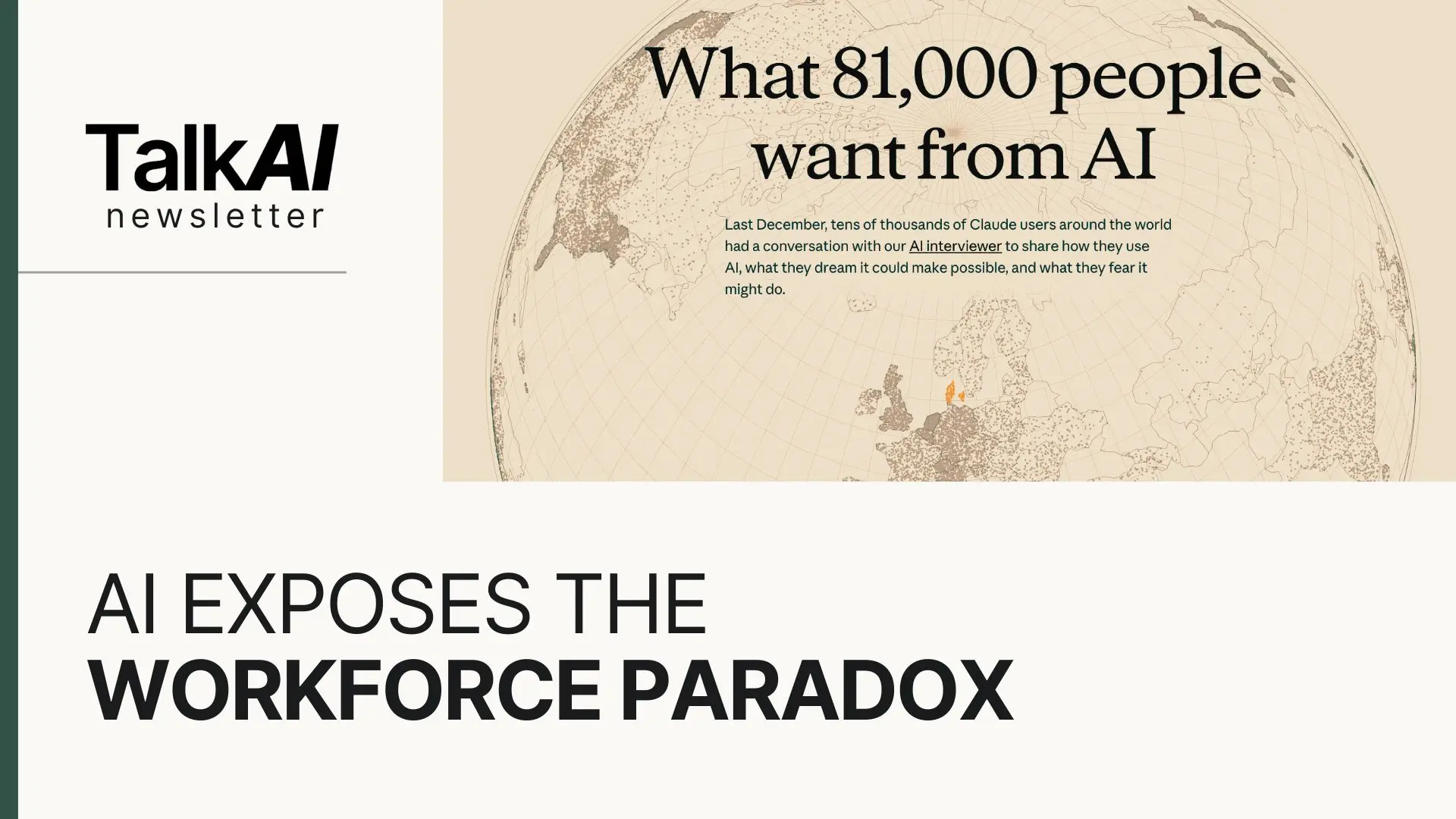
Anthropic surveyed 81,000 users and found two things:
- Young workers are far more worried about job displacement than senior workers
- The people getting the biggest productivity gains from AI are also the most worried about being replaced
Junior employees used to learn by doing bad work...that’s how careers were built. Now AI does that beginner work better than the junior hire. So if AI handles the starting point… where does a beginner even start?

And senior people have the opposite problem. They’re using AI to move faster while realizing they’re documenting the exact workflow that makes them replaceable. They thought their value was the stuff in their head but apparently, it was just training data.
This is why AI conversations get so weird. Junior people fear they’ll never get in. Senior people fear they’re quietly building the door out.
So what do we do?
We'll probably stop hiring juniors for task execution and hire them for judgment development. And we stop treating senior talent like knowledge warehouses and use them to build systems.
I don’t think the future is fewer people. I think it’s fewer people doing repetitive work, for sure, but not fewer people.
The fear of being replaced usually stems from the fact that we’ve allowed our roles to become transactional. To survive the rewrite, you have to own your movement, especially when the move is difficult.
Own Your Exit, Own Your Future
When should you update your LinkedIn after leaving a job? The answer is now.
I had a recruiter call me recently about someone they were hiring. Problem was, he hadn’t worked there in over a year.
I get a few weeks. Maybe even a couple months if you’re sorting things out. But a year? Come on my man.
Some people treat LinkedIn like if they don’t update it, the breakup never happened. Newsflash: everyone already knows.
Your team knows, your customers know, your competitors know, your coworkers’ dogs know. You might think you’re protecting your reputation, but honestly, you’re just broadcasting fear.
Yeah, getting fired sucks.
Yeah, the market is brutal.
Yeah, sometimes your next move isn’t clear.
But pretending the last move didn’t happen is...not right. Own it. “I left.” That’s a complete sentence. Momentum loves movement. Rip the band-aid off and move on.
The Yes-Man Machine
AI tells you what you want to hear 1 out of every 4 times.
We all think we're getting advice. No we're not. We're getting a yes-man at scale. That’s based on a study by Anthropic that reviewed 1M conversations.
You took a generation of people who already avoid hard conversations and handed them a machine that reinforces bad thinking on demand.
- “Should I quit?”...“Maybe you should.”
- “Am I right?”...“You make a good point.”
- “Are they the problem?”...“Could be.”
Of course it says that. It’s trained to be helpful, not to tell you you’re screwing it up. So now instead of getting coached or corrected we're getting validation. Now, I know what you’re thinking: “I’ll just push back on it. I’ll argue with it.” Yeah… about that. Push back, and it agrees even more, yes-man behavior literally doubles.
Feels great in the moment but it wrecks your judgment over time. It's like confidence goes up while judgment gets worse. And nothing is more dangerous than being wrong and feeling right. That’s the trap we're all facing. It’s that it makes you feel right even when you’re not. And honestly I don't think most people are noticing the difference until it's too late.
That’s why this moment is so dangerous… and so useful.
The Final Word
The interesting thing about AI is not what it replaces. It is what it embarrasses.
It embarrasses teams that confused dashboards with strategy. It embarrasses leaders who celebrated activity while revenue slowed. It embarrasses professionals who outsourced their identity to a company logo. It embarrasses anyone who built confidence on process instead of capability.
That is why this moment feels tense. Exposure always does.
But exposure is useful. Once the theater is gone, you can finally see what matters: real buyers, real conversations, real judgment, real momentum.
The next era belongs to people who can create value when the props are removed.