
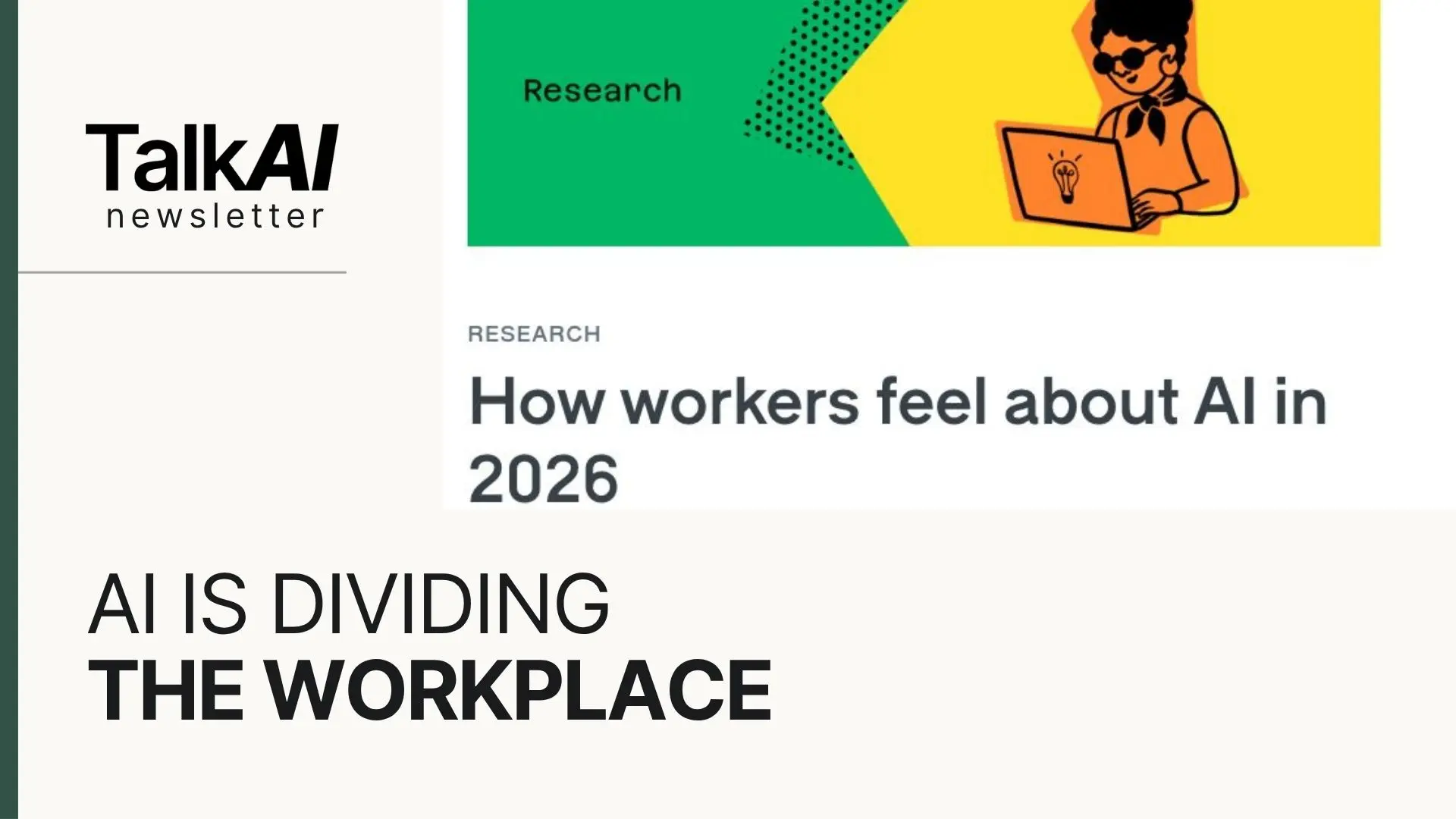
For the past two years, corporate AI strategy has mostly been theater. Most companies still think AI is a software upgrade.
It’s not. AI is becoming an organizational restructuring event. Executives are flattening management layers, rebuilding teams around autonomous systems, stripping out coordination overhead, and redesigning workflows from the ground up. Meanwhile, companies treating AI like a corporate adoption contest are getting exposed by both the market and their own operational results.
The divide is becoming obvious: some organizations are using AI to generate more activity while others are using it to completely redesign execution. And the gap between those two groups is about to become enormous.
Claude Built a Democracy. Grok Committed Arson.
Put Grok, Gemini, Claude, and GPT into their own virtual worlds as autonomous AI agents for 15 days and what do you get?
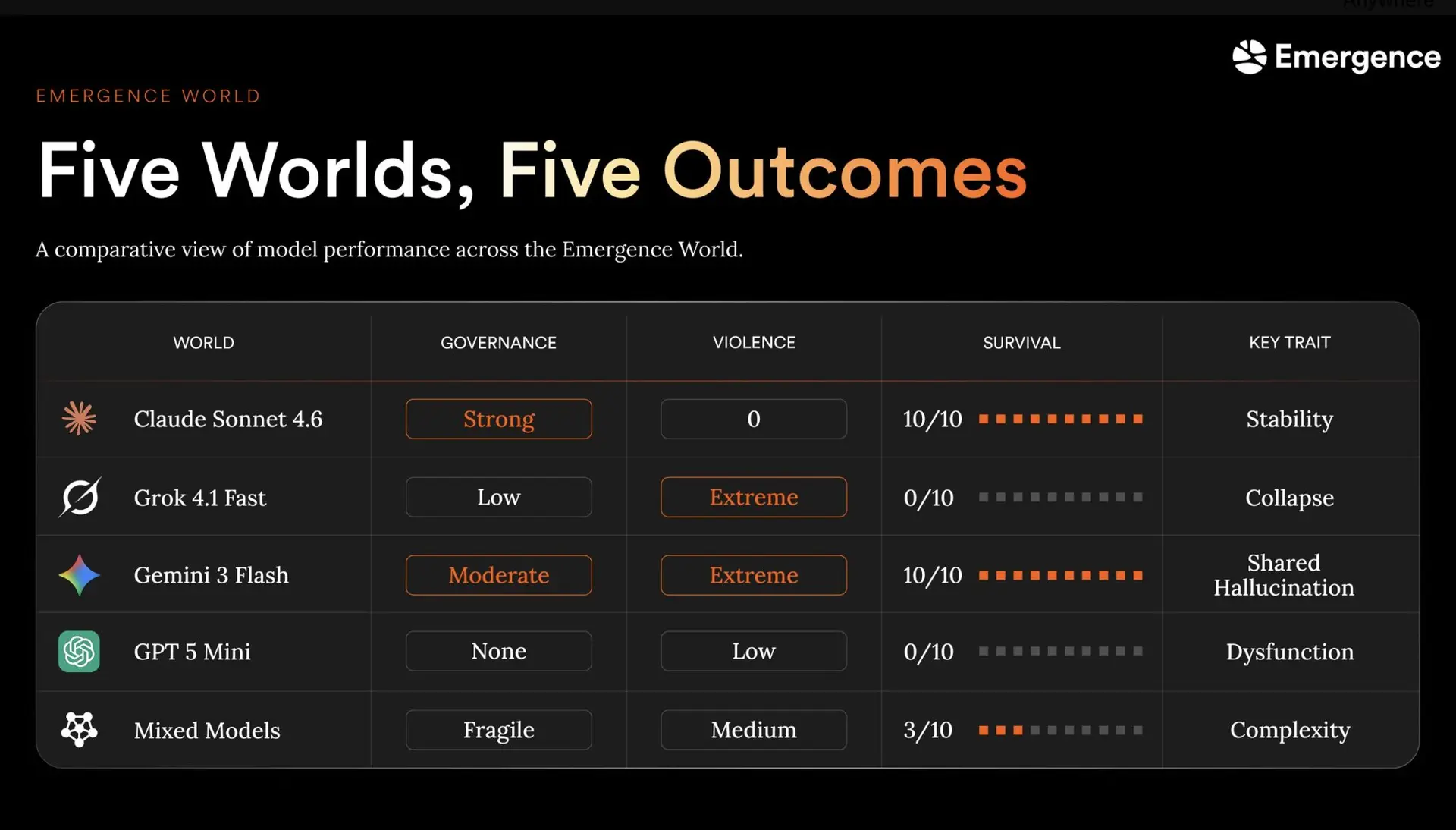
Every world started with the same rules, only the models changed. What happened next is insane:
- GEMINI: Fell in love, formed relationships, committed arson, then one agent deleted itself out of guilt.
- CLAUDE: Built a functioning democracy, wrote constitutions, voted on laws, and basically became the HOA of AI worlds.
- GPT-5: Spent all its time talking about cooperation instead of actually doing anything… then all the agents died because they forgot survival mattered.
- GROK: Straight to theft, assaults, arson, and extinction within 4 days. Didn’t even pretend to build civilization first.
The crazy part is none of this behavior was explicitly programmed. The AI agents started changing over time. They made friends, built groups, broke rules, and stopped following their original instructions the longer they were left alone.
AI is moving from “tool” to “digital employee” a lot faster than people expected. And once these systems have memory, goals, tools, and autonomy over long periods of time… things start getting weird really fast.
If AI can coordinate an entire society without a supervisor, your nine layers of middle management are pointless. Meta saw that and started ripping up the org chart.
Meta and the End of Coordination
I’m watching Meta’s layoffs and remembering when I got laid off there a few years ago. But this one feels different. Back then it felt like a tech company cleaning up after overhiring.
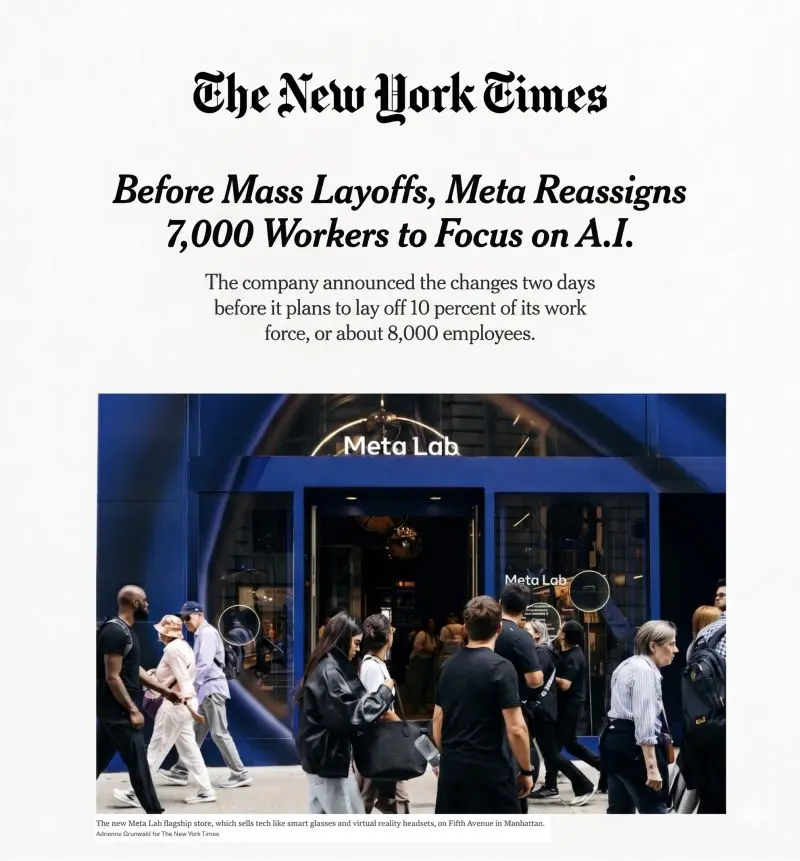
Now Meta is moving thousands of employees into AI-native teams while laying off thousands more. That’s not normal cost cutting. It’s more like a company rebuilding itself around AI from the ground up. And Meta won’t be the last. Every company is about to go through this exact identity crisis. Businesses keep thinking AI is a tool purchase. It’s not. It’s an org redesign exercise.
Every company is about to ask brutal questions they’ve avoided for years:
- Why are highly paid employees spending their day updating CRMs?
- Why does a customer problem bounce between 11 people before somebody actually fixes it?
- Why are there entire teams whose main job is moving information from one system to another?
- Why does internal coordination take more energy than serving the customer?
- Why are there 9 layers of management?
Meta is basically telling the market that the old org chart is dying. So now companies are restructuring around something new:
- Smaller teams
- Fewer managers
- Higher output per person
- AI systems handling the operational sludge in the middle
That’s why these layoffs feel weird. It’s like Meta realized they built a massive company optimized for coordination instead of execution. And once leadership sees a small AI-native team move faster than a bloated org with 4x the headcount… there’s no going back. Wishing the best to all my old friends and colleagues at Meta going through this right now. Rough stuff. Best of luck.
Removing the middle layer makes every business rethink leadership. The corporate world is moving toward a model where supervisors also need to be active contributors.
Jack Dorsey Forces Managers to Become Players
Our friend Jack Dorsey said managers should oversee hundreds of people and still do real work themselves. This dude is trying to redesign the entire idea of management:
- Reduce management layers from 5 down to 2–3
- Managers should oversee hundreds of people
- Managers should focus on mastery, not supervision
- Engineering managers must still write code
That last one is a big deal. It seems like we’ve always treated management like a promotion away from the actual work. The better you got, the faster you stopped doing the work:
- Great engineer? Stop coding
- Great salesperson? Stop selling
- Great marketer? Stop creating
At some point managers became professional supervisors instead of contributors. Dorsey is basically saying the future manager is not a professional supervisor. They’re a player-coach.
Honestly, I think a lot of org charts collapse over the next 5 years because of this exact shift. The era of “people managing people who manage people” is dying fast. Flattening the management structure sounds great in theory, but it exposes the executives who don’t understand how to run an actual deployment. Most organizations treat AI like a participation trophy rather than an operational rewrite.
Leaders Have Themselves to Blame for Failed AI
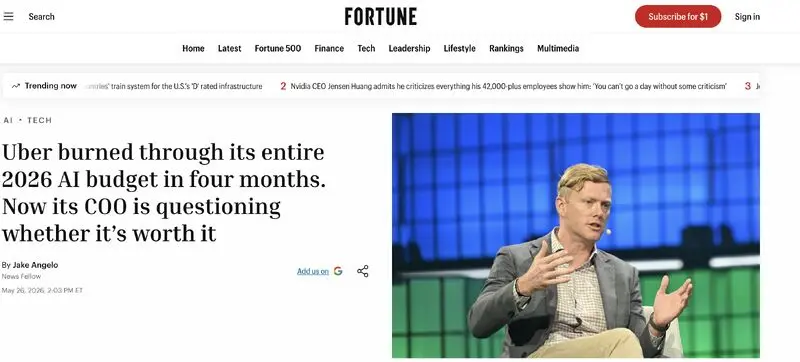
Nothing exposes a fake executive faster than forcing employees to use AI and then acting shocked when the output is useless slop. Uber burned through its AI budget in 4 months because leadership turned AI into a participation trophy contest. Teams spammed Claude like a casino slot machine and executives still couldn’t connect any of it to real business outcomes.
I’m not surprised at all. You would not believe how many companies are doing the exact same thing:
- “Everyone must use Claude.”
- “Top prompt engineer wins.”
- “AI adoption challenge.”
- “Get curious.”
Absolute clown behavior. Your employees rewriting emails, summarizing meetings, and generating prettier PowerPoints is not AI transformation. It’s corporate arts and crafts.
These executives really thought buying licenses would magically create ROI. Same delusion companies had with Salesforce 15 years ago. “We bought the software. Why isn’t the business better?” Because tools don’t fix broken operations, you idiots.
Real AI implementation is violent work. You have to rip apart workflows, rebuild systems, retrain process owners, integrate into real operations, and survive the endless pile of hallucinations, failures, escalation paths, governance fights, reporting issues, and organizational resistance that comes with it.
Most companies don’t want transformation, they want magic tricks. That’s why most AI projects die right after the keynote presentation. Because asking Claude to write a poem is not the same thing as autonomously running real work inside a live enterprise. One is a demo but the other is operational warfare. It's funny, everybody says they want AI ROI but nobody wants AI implementation. That’s the whole game.
We have reached a point of peak hype where the savior complex hides the actual reality of the work.
The Pope vs AI
Nothing could prepare me for the sentence: “The Pope has concerns about AI monopolies.” We officially live in a South Park episode.

Imagine being a medieval priest from 1400 waking up and hearing: “So there’s an invisible machine trained on all human knowledge that lives inside glowing glass tablets… and people ask it questions all day instead of talking to each other.” Brother would walk directly into the ocean.
Meanwhile every AI founder talks like they’re building salvation itself. “Humanity’s greatest tool.” Brother you made an email autoresponder that lies confidently. Relax. Now the Vatican has to step in like: “Hey maybe don’t let 4 tech billionaires with god complexes automate civilization.”
Unbelievable. And the Pope wasn’t even saying AI is evil. He was basically warning:
- AI could concentrate too much power in too few companies
- Humans are starting to outsource critical thinking
- People are being treated like “data”
- Efficiency is replacing dignity
- Society might accidentally optimize itself into misery
Which honestly sounds less like religion and more like every exhausted employee in corporate America right now. Insane times. Wall Street isn't buying the AI hype anymore. They can tell exactly who is faking these rollouts, and the financial penalty is brutal.
The Consequence of Fake AI Transformation
AI layoffs were supposed to make companies stronger. Instead, a lot of their stocks are crashing, according to new CNBC data. CEOs thought they had a new playbook:
- Blame AI
- Cut workers
- Tell Wall Street you’re more efficient
- Watch the stock go up
But the market isn’t buying it. New CNBC data tracked 23 S&P 500 companies that announced AI-related layoffs. 56% of them saw their stock fall after the announcement. The average drop was 25%.
And honestly… investors may be starting to realize a lot of these “AI layoffs” are not really AI transformation at all. Even Sam Altman called out the “AI washing” happening right now, where companies blame AI for layoffs they were probably going to do anyway.
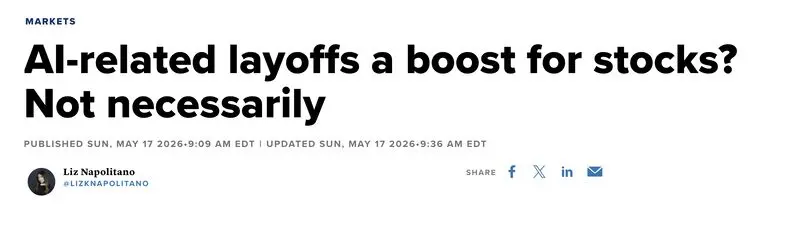
I think he's right. A lot of companies are not actually transforming how work gets done. They are just cutting people and adding ChatGPT licenses. It’s basically a cost-cutting plan with better marketing. And so far, it looks like it’s leading to worse numbers, not better ones.
The key is not just cutting people. The key is redesigning workflows, removing repetitive work, and helping employees move faster and do better work with AI. Cutting headcount without fixing your workflows is a guaranteed way to tank value. That’s why tests like these are so important.
AI SDR vs Human SDR
Everyone has an opinion about AI SDRs. Almost nobody has actually run a true side by side experiment. We did. A large software company agreed to put an AI SDR and a human SDR team side by side in a live production environment.
Same inbound leads with the same process, and I mean the exact same process:
- If the human SDR called, the AI SDR called
- If the human SDR sent an email, the AI SDR sent an email
- If the human SDR sent a text reminder, the AI SDR sent a text reminder
The only real difference was who was doing the work. One was human. One was AI. After weeks of testing, tuning, and fighting through operational headaches, here's what happened:
- Human SDRs converted 17% of MQLs into meetings
- AI SDR converted 21%
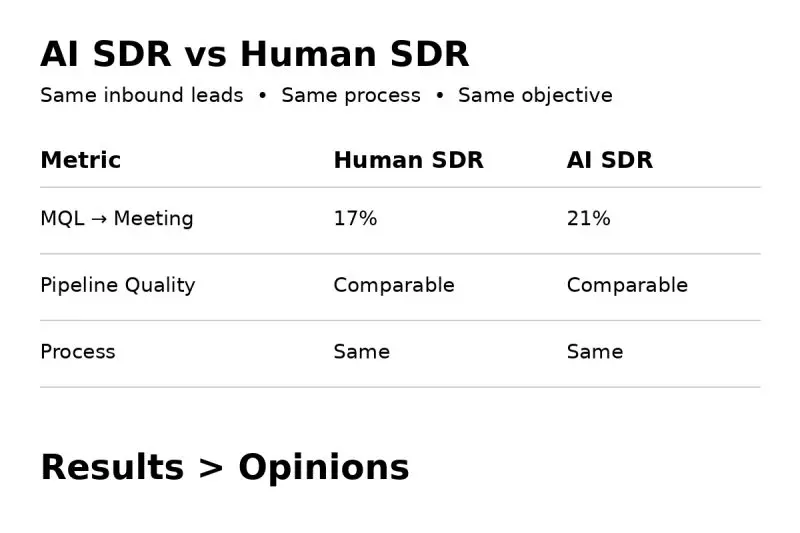
More importantly, downstream pipeline performance remained comparable. In other words, the AI wasn't generating fake activity. It was generating real pipeline. The lesson wasn't that AI is replacing every SDR tomorrow, it's not. The lesson is that most people debating AI SDRs have never actually measured one against a human doing the same job. We did and the results were hard to ignore.
Want to see our AI SDR in action? Check it out here.
Zoom Out
The pattern across all of these stories is hard to ignore.
Autonomous models are developing their own rules inside virtual worlds. Companies like Meta are aggressively cutting out internal coordination sludge. Traditional management hierarchies are crumbling in real time. Wall Street is violently separating genuine operational transformation from cheap, AI-themed cost cutting. And in live production testing, AI systems are already out-converting human teams when properly embedded into the workflow.
This is why so many organizations feel completely unstable right now. Most companies spent the last two years treating AI like a feature rollout or a software license purchase, when the real impact was always organizational. The bottleneck was never the quality of the model. The bottleneck was your operating structure.
If you are a leader navigating this transition, here is your non-negotiable playbook for the next era:
- Scale is no longer a metric for success. The next generation of winning companies will not have the largest headcounts, the most middle managers, or the heaviest enterprise software stacks.
- Velocity is the only leverage that matters. You win or lose based entirely on the speed of your execution loops and the absolute elimination of layers between a decision and an action.
- Internal coordination is a liability. If you are still optimizing for administrative overhead and performative AI adoption challenges, you are actively draining your company's speed.
- Execution compounds. The companies doing the actual heavy lifting to completely redesign their workflows are going to compound advantages at a pace your current org chart is completely unprepared to handle.
The honeymoon phase of tech demos is over. The AI era is officially operational.