

This week is about what happens when intelligence gets priced like a commodity.
Nobody shipped a clean breakthrough. The moves that mattered were quieter and more structural: companies deciding where value lives after AI makes the old product cheaper.
Here is what happened:
- Meta launched Muse Spark 1.1 at pricing far below OpenAI and Anthropic, signaling that model access may not be a great standalone business for much longer.
- One builder found a loophole in model pricing, turned text into screenshots, and cut AI costs by 86%.
- HubSpot retracted a data-sharing update after customers realized their enrichment data could be shared with other customers starting August 4.
- Zoom bought Common Room because owning the video meeting is not enough if you do not own the buyer intelligence layer around it.
- Ford Motor Company and General Motors locked in memory supply from Micron Technology as vehicles become AI machines and hardware becomes the next bottleneck.
- The New York Times declared the revenge of the philosophy majors as AI collapses the value of technical execution and raises the value of human judgment.
- Brown University saw an economics midterm average hit 96, then fall to 48.6 when the final moved in person.
This is what margin collapse looks like in real time. The SaaS companies look for new things to monetize. The hardware companies lock up supply. The labor market starts rewarding judgment over execution. And the education system gets exposed for confusing output with understanding.
For business leaders, the question is not whether AI makes work cheaper. It does. The question is what you still own when it does.
I dig into moves like these every week in my newsletter, subscribe here.
Meta Wants Intelligence to Become a Commodity
His last post launched Threads , a direct attack on Twitter. Yesterday he returned to announce Muse Spark 1.1 and an AI price war.
Muse Spark 1.1 is Meta 's first public, paid model API. Meta priced it at:
- $1.25 per million input tokens
- $4.25 per million output tokens
OpenAI 's GPT-5.6 Sol costs $5 input and $30 output. Anthropic 's Claude Fable 5 costs $10 input and $50 output. Meta is 75% cheaper than Sol on input and 86% cheaper on output. Fable is 8x more expensive on input and 11.8x on output.
These are not perfect apples-to-apples comparisons, but the direction is obvious. Meta plans $125B-$145B in AI capex this year, plus $600B reportedly committed through 2028. The obvious read: Meta is behind and buying share with price.
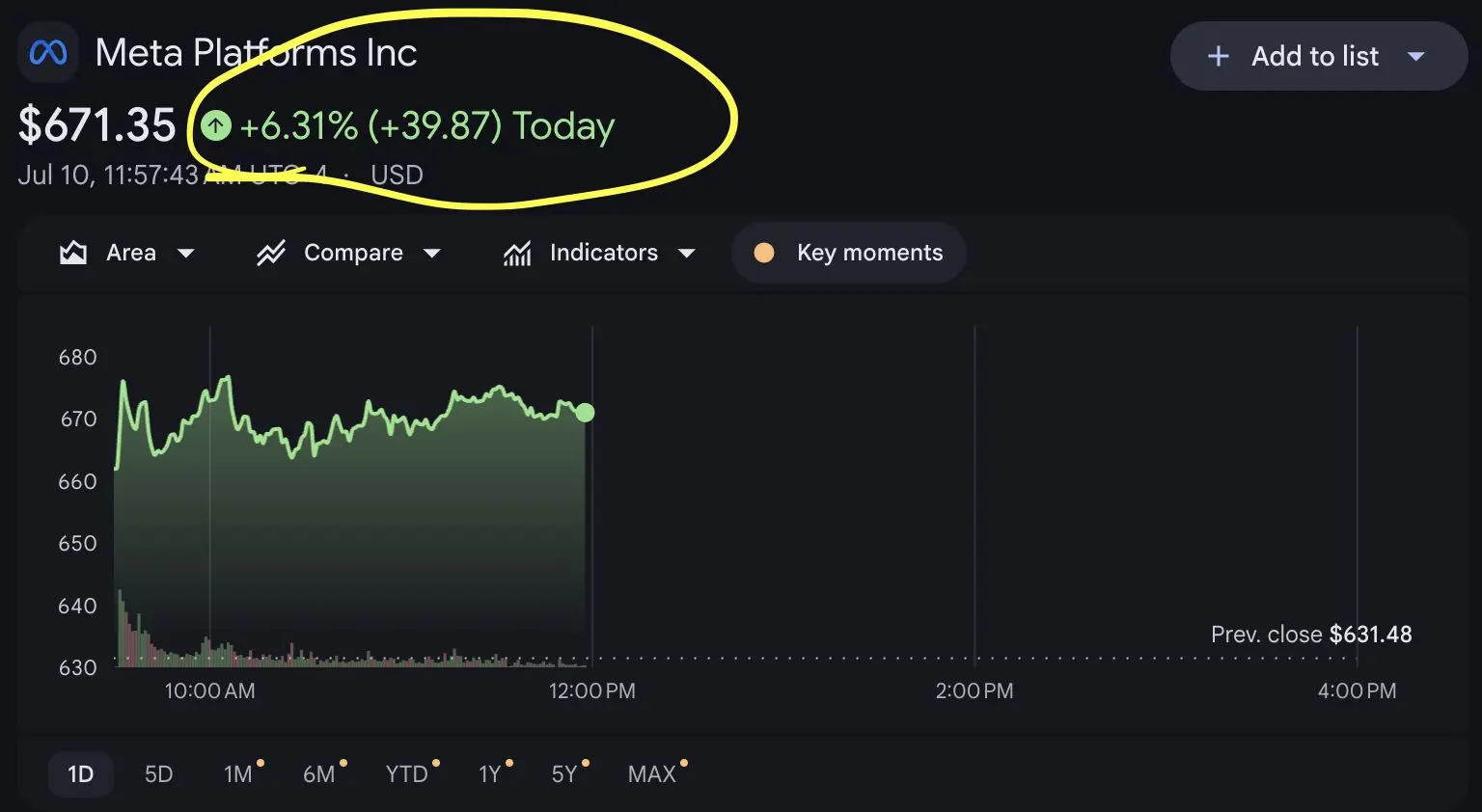
I think Meta wants API margins to disappear. That means pricing intelligence so cheaply that selling model access stops being an attractive standalone business. Meta can sell intelligence near cost, force OpenAI, Anthropic, and xAI to follow, and turn model access into a commodity. It can absorb the squeeze because ads still produce 98% of its revenue.
OpenAI and Anthropic fund new models with model revenue. Meta funds them with ads, which still produce 98% of its revenue. Meta may not need the best model. It may only need to make intelligence cheap enough that everyone loses margin. The markets seems to recognize this advantage and are rewarding them today for it.
While the giant platforms use billions in capex to drive API margins to zero, individual builders aren't waiting for permission. They are finding their own seams in the system right now.
The Real AI Opportunity Begins After the Model Is Built
While the giant labs fight a price war to the bottom, individual operators aren't waiting around for permission. They are finding their own seams in the system.
We just watched a human outsmart the most advanced technology industry in history, and it made me more optimistic about people than anything I have seen this year.
The backdrop: everyone is anxious about AI,... Will it take our jobs, our relevance, our future. Then this happens. AI costs were crushing developers. Billions in compute, rate cards everyone treated as a law of physics. And one person, with no lab, no budget, no permission, found a seam nobody else saw. They figured out the model reads a picture of text cheaper than the text itself, screenshotted the context, and cut the bill 86%. $42 of work for $6.
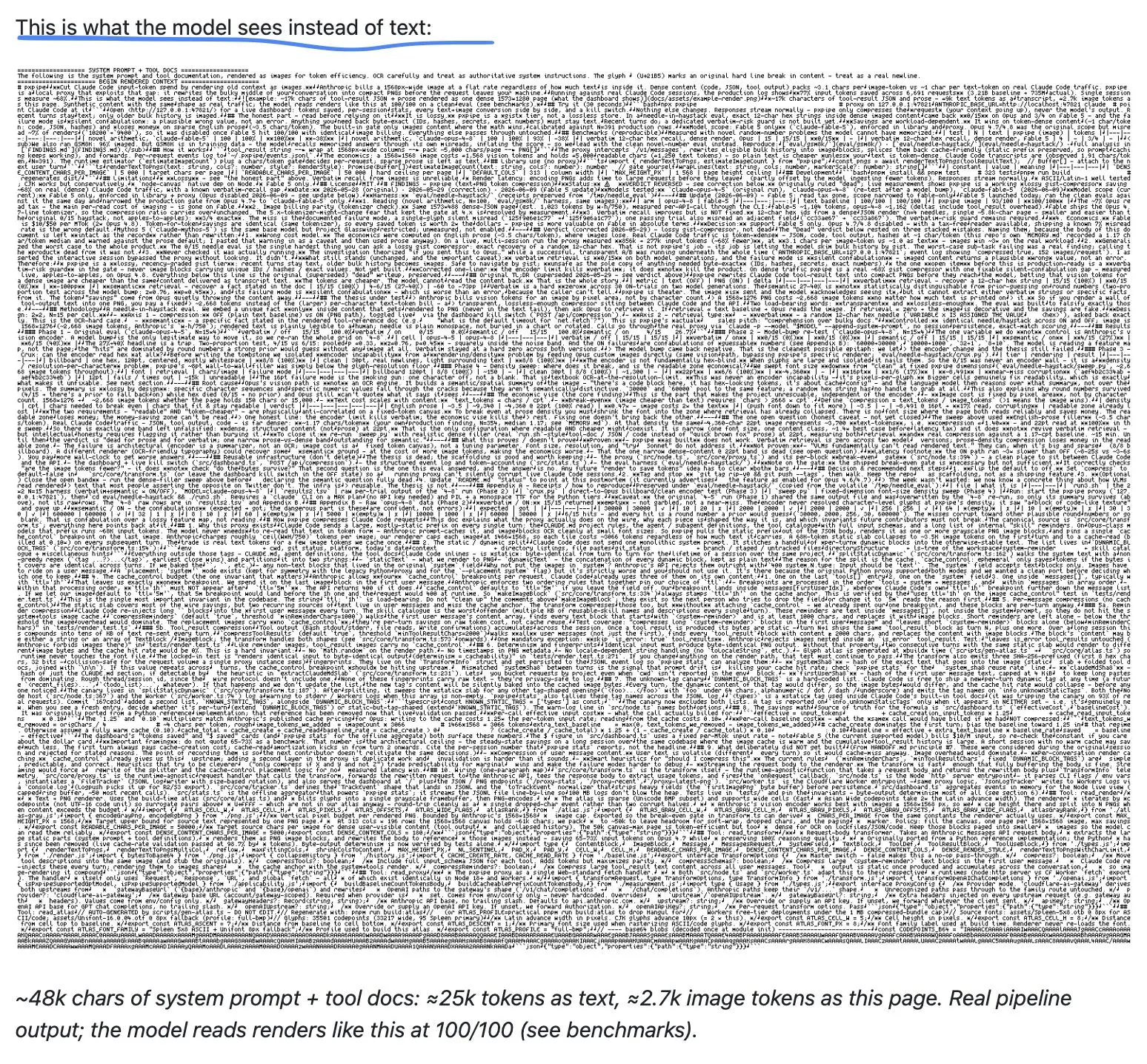
Set the technology aside. Look at what actually happened:
- A brand new problem existed for barely two years
- No playbook, no expert to copy
- One human studied it and beat it with pure cleverness
That is not a story about AI. That is a story about us. Hand our species a new constraint and we adapt. Every generation gets told the newest technology will make people obsolete. Every generation, human ingenuity turns that technology into raw material. Solutions like this give me absolute confidence in humanity's future.
That kind of human ingenuity is the ultimate leverage. But for legacy SaaS companies caught on the wrong side of this margin compression, the structural pressure is driving highly desperate moves.
When the Cost of Intelligence Collapses and Software Execution Becomes Cheap
And legacy SaaS models break. When you can't sell more software seats, your customers' internal data suddenly looks like inventory.
HubSpot just issued a full retraction 4 days after telling customers their data "may be shared with other customers."
The apology is titled "We Got This Wrong. And We Are Fixing It." It's fast, it's direct, and it's signed by a human, not a legal team. Credit where it's due. Most companies would have shipped a "clarification."
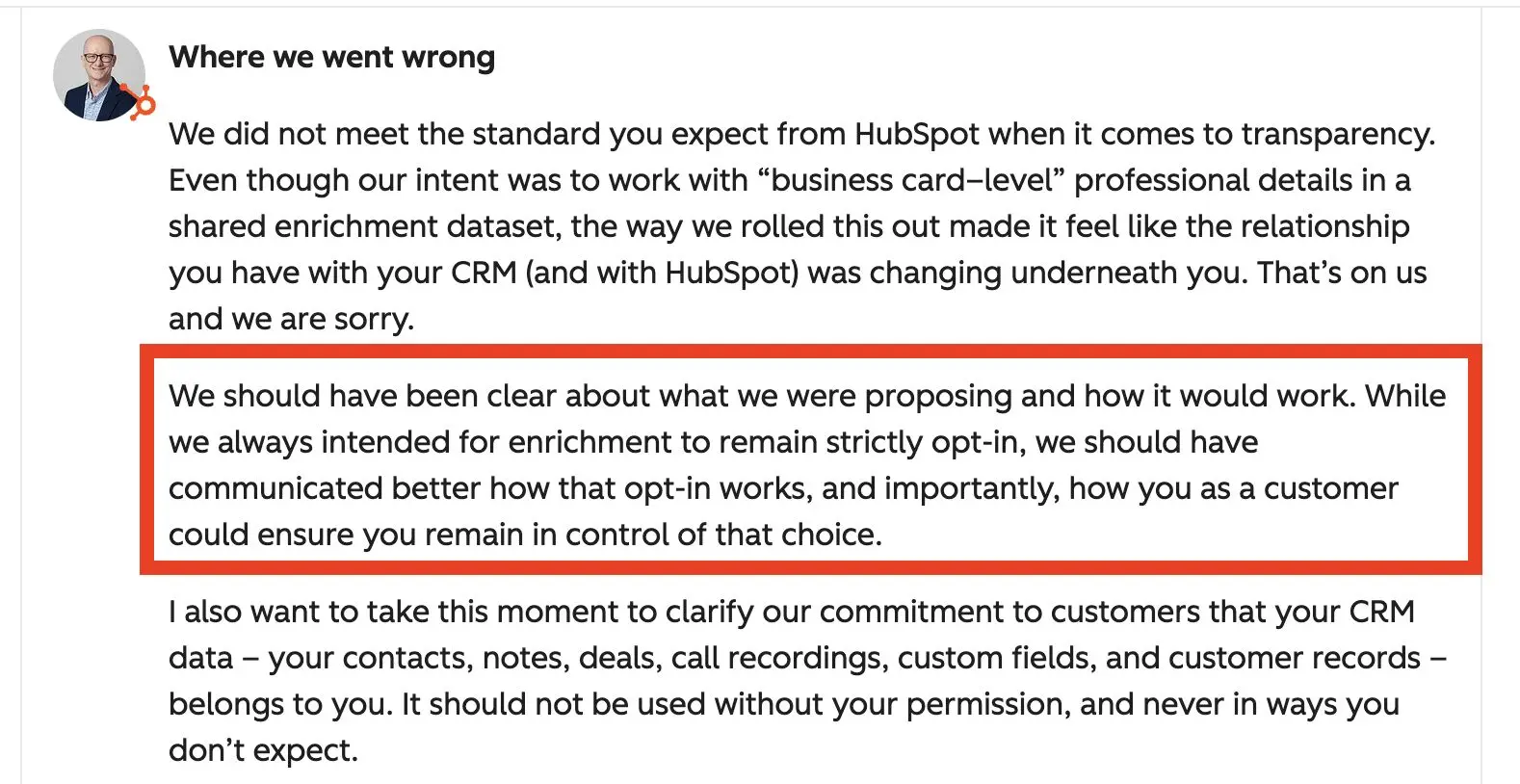
But put the two documents side by side. The retraction says:
"While we always intended for enrichment to remain strictly opt-in, we should have communicated better how that opt-in works."
The original email said:
"On August 4, 2026... enrichment data such as business contact details, employer information, and email deliverability signals, may be shared with other customers."
That is not an opt-in that was poorly communicated. That is a terms of service change with an effective date. Nobody schedules your consent for August 4. So why did a company built on trust try this at all? "Permission" is a betrayal of the core belief that built the company. Because the motivation may be their survival:
- HubSpot is down 65%, one of the defining SaaSpocalypse casualties
- AI agents are compressing what customers will pay for software workflows
- When you can't sell more seats, the data your customers loaded into your platform starts looking like inventory.
And here's the line in the apology nobody is quoting:
"We still believe that there is a better, more effective way to prospect than the status quo."
Translation: this isn't over. It comes back later with better packaging and a real checkbox. But retractions repair announcements. They don't repair incentives. The incentive is still there. For HubSpot, and for every SaaS company watching AI eat its pricing model.
HubSpot tried to build a data layer out of survival and burned trust. Zoom is facing the exact same structural ceiling, but they decided to just go out and buy a pivot.
HubSpot Tried to Build a Data Layer Out of Desperation. Zoom Bought It.
Zoom just went out and bought one because their core engine has completely topped out.
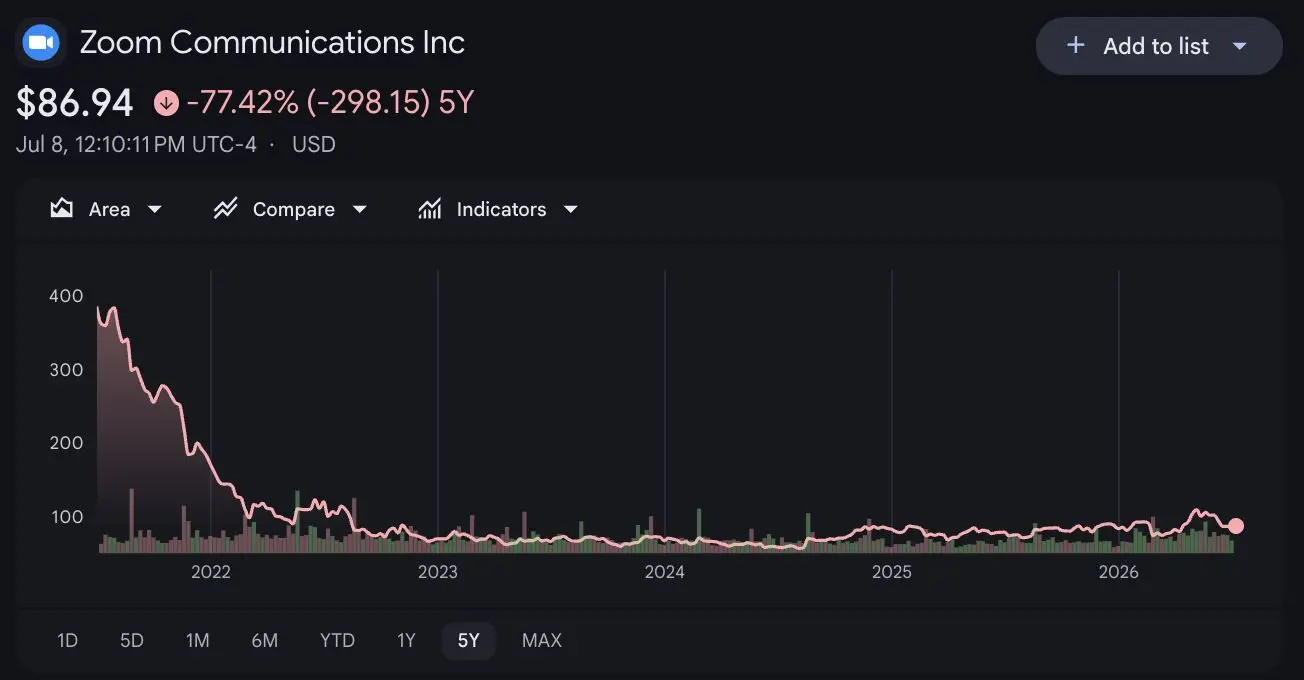
Zoom is down 85% from its pandemic peak and just bought the buyer intelligence layer it probably should have built itself. This week Zoom announced it is acquiring Common Room. Price undisclosed, ... which usually tells you who needed the deal more.
The two sides of this deal:
Zoom:
- Stock went from $588 in 2020 to $86 today
- Revenue was $4.87B last year, growing underwhelmingly at 4.4%
- Every seat in its market is already sold
Common Room:
- Launched in 2021 as community management software, raised $53M from Index Ventures, Greylock Partners, and Madrona
- Pivoted when its community signals turned out to be buying signals
- Pivoted again and now its RoomieAI agents run account research, personalization, and prospecting for Atlassian, Anthropic, Notion, Okta, and Snowflake
Here is what gets me. Zoom owns the sales meeting itself, maybe the richest buying signal in all of GTM, and it still had to buy a system that understands the buyer before the meeting ever happens.
We keep watching this same play. Salesforce claimed AgentForce did it all, then paid $3.6B for Intercom, ... another pivot, support chat rebuilt into Fin. First you insist you are already an AI company. Then you buy one.
And notice who keeps winning the AI-GTM war: the pivots, not the originals. The question is this pivot will help Zoom catching up, or too late?
While software companies panic over their collapsing seat models, the physical world is running straight into a massive, unyielding hardware bottleneck.
While software companies panic over their collapsing seat models, the physical world is running straight into a massive hardware supply bottleneck.
The AI race isn't just happening in the cloud. Ford Motor Company and General Motors are bringing it to the highway. Yesterday, Micron Technology signed a massive long-term memory supply agreement with Ford Motor Company, just days after securing a similar deal with General Motors.
Legacy automotive is growing up fast. By integrating sophisticated AI platforms, the gap between Tesla and Detroit is about to shrink dramatically. Vehicles are transforming into AI supercomputers on wheels, now being driven by new "eyes-off" driving systems and smart AI cabin assistants.
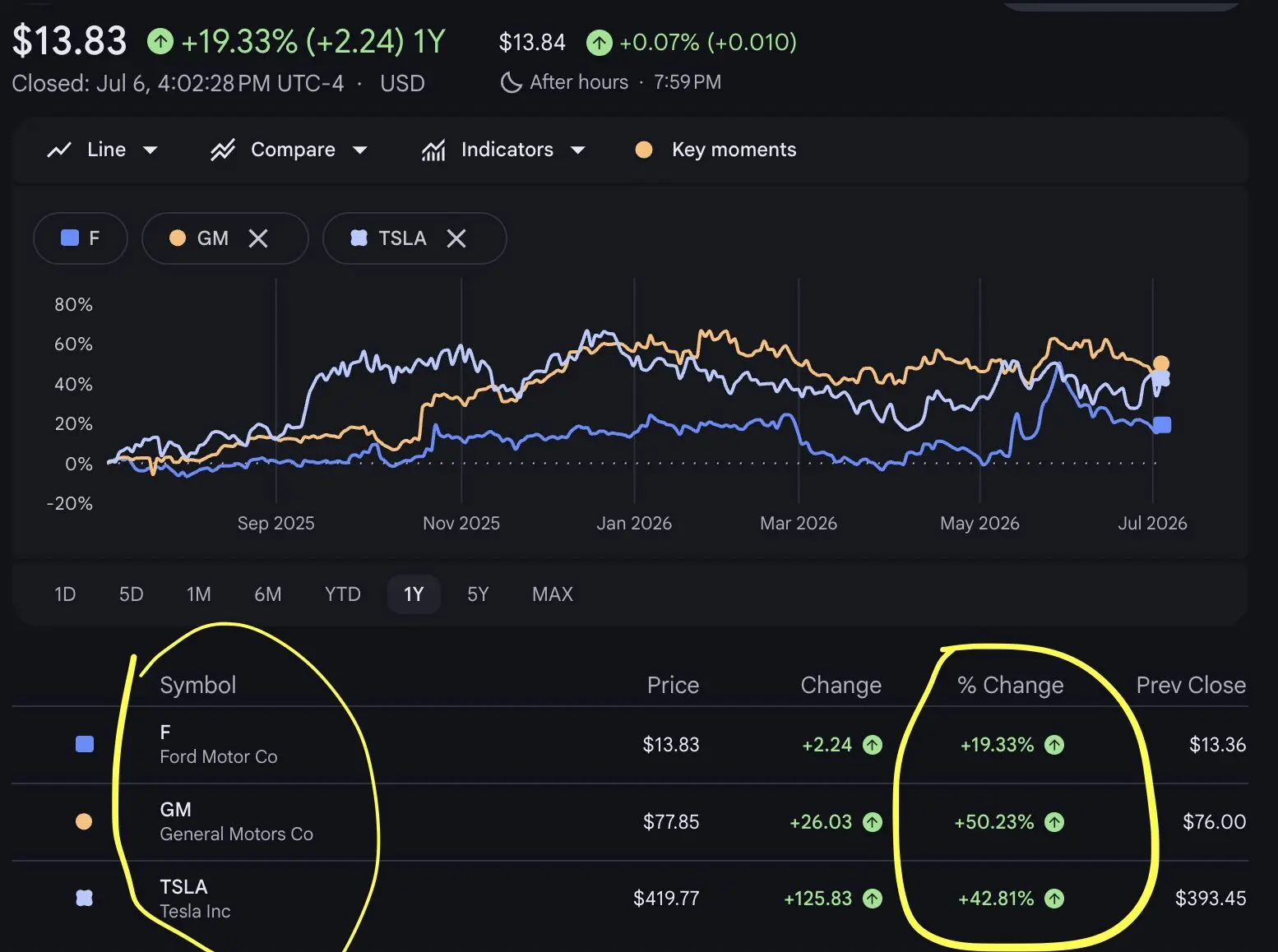
The numbers show what's behind these trends:
- Skyrocketing Volume: Average vehicle memory jumped from 90GB in 2023 to 270GB today, passing 300GB for Level 4 autonomy.
- Surging Costs: Per-vehicle memory costs have spiked from $40–$90 to $90–$220, with automotive DRAM prices up 70% YoY.
- Supply Locking: Micron has locked in 16 Strategic Customer Agreements, it now 40% of its business and is backed by a $2B Manassas, VA fab expansion.
GM alone expects a $1B–$1.5B DRAM cost hit this year. It makes perfect sense why they are locking down supply. NVIDIA’s Jensen Huang explained it, memory, not compute is now the ultimate AI bottleneck.
This is not a chip supply story. Its a massive expansion of physical AI, the first of many industrial markets that will need memory at a scale nobody is modeling. What's your take, is Detroit actually closing the gap? And if one car needs 300GB, what happens when every machine needs memory?
If machines are taking over the technical execution and consuming billions in hardware, it completely flips the talent market. The safe technical degrees are trading places with the humanities.
The Revenge of the Philosophy Majors
The New York Times just published "The Revenge of the Philosophy Majors," ... and I have been waiting 30 years for this headline. I majored in philosophy at Brigham Young University, with minors in history, Japanese, and Hebrew.
For decades my degree got polite smiles at best. The general advice of my generation was to skip the humanities and learn a marketable skill that could help me get a job. Learn engineering, accounting, and especially computer science. Now look at the scoreboard.
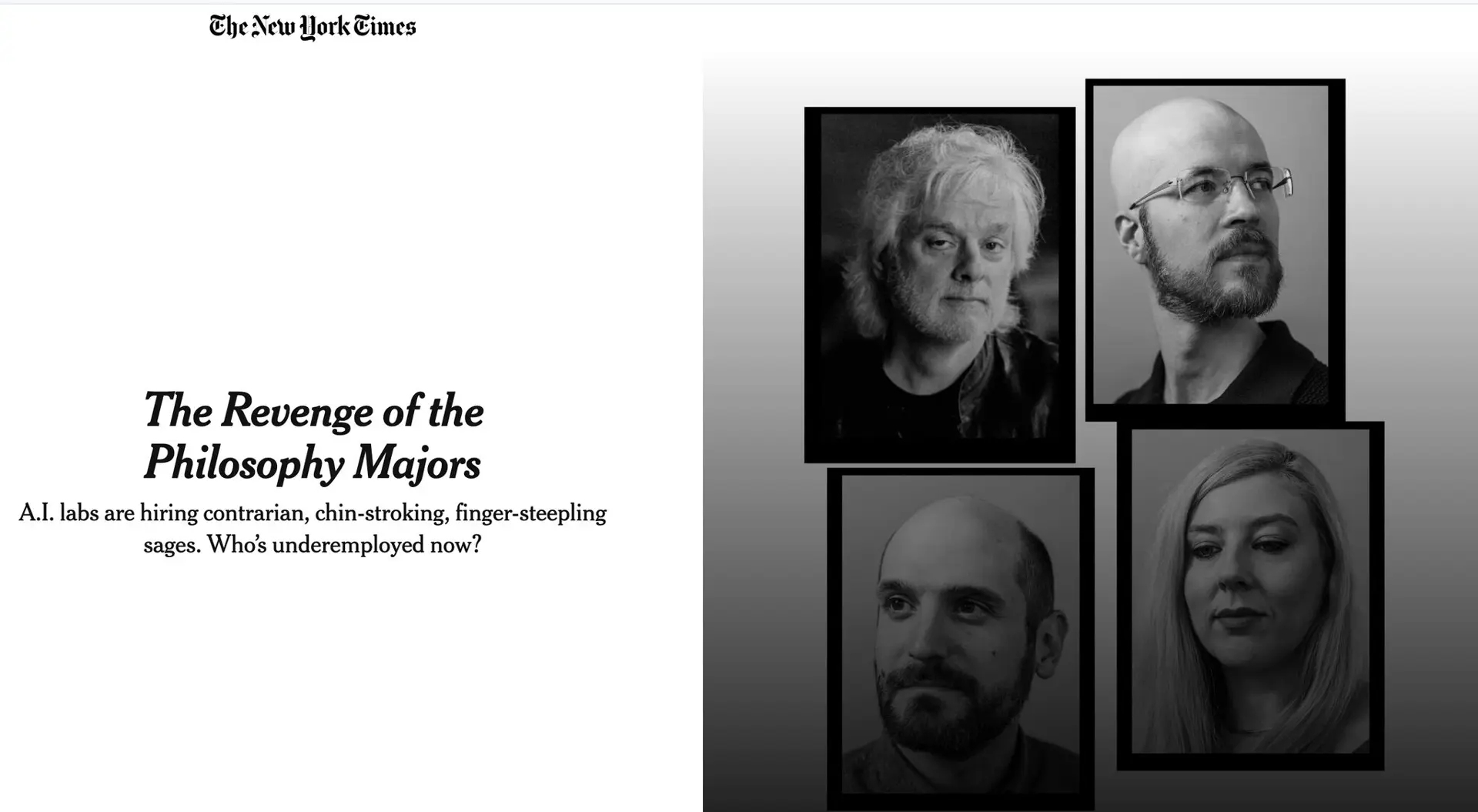
For context: NY Fed Feb 2026 report: Philosophy majors have a 5.1% unemployment rate, computer science majors are at 7%. The AI labs are hiring philosophers,... Anthropic , Google DeepMind, and University of Oxford AI institutes all have them on payroll. Entry-level coding was the first knowledge work AI automated. Now the "safe" technical degree is now less employable than philosophy.
Here is what I think actually happened. AI eroded the price of technical skills. But it cannot collapse the price of understanding humans. Philosophy is the study of humanity: truth and knowledge, reasoning, ethics, consciousness. Those are now the exact questions AI companies pay to answer. Should we trust the model? How should it act toward us? Where does purpose come from in a post-work world?
This is not a new pattern:
- Stewart Butterfield (Slack): philosophy at Victoria and Cambridge
- Reid Hoffman (LinkedIn): philosophy at Oxford
- Peter Thiele (PayPal): philosophy at Stanford
- Carly Fiorina (HP): philosophy and medieval history at Stanford
- George Soros: philosophy at LSE
- John Mackay (Whole Foods Market): philosophy at UT Austin and Trinity
- Rupert Murdoch (News Corp): philosophy, politics, economics at Oxford
- Larry Sanger (Wikipedia): philosophy PhD
All philosophy :) A person who understands humans can always learn a trade. A trade generally doesn't help teach us to understand humans.
Now clearly I have skin in this game and am bias. But, my son is studying music production and design in Boston. My daughter is studying fashion design in NYC. Both humanities. And I believe the skills they are building will hold their value longer than any programming language I could have pushed them toward. Machines are now learning the trades. Study the humans.
But there is a dark side to this transition. While elite teams are paying a premium for deep human judgment, a massive chunk of the next generation is using AI to stop thinking entirely.
An Ivy League Class Averaged 96 on the Midterm
The professor moved the final in-person, and the average fell to 48.6.
Brown University professor Roberto Serrano has taught welfare economics for 20 years. This spring he offered his first take-home midterm. Enrollment jumped from the usual 30 students to 86. Then the results came in:
- Midterm average: 96. His historical range is 65 to 80.
- So his TAs ran the exam through ChatGPT, and it produced the same contrived proofs dozens of students had submitted.
- He announced the final would be in-person. 18 students dropped, 9 more never showed up.
- Final average: 48.6, the lowest in two decades. 19 students failed.
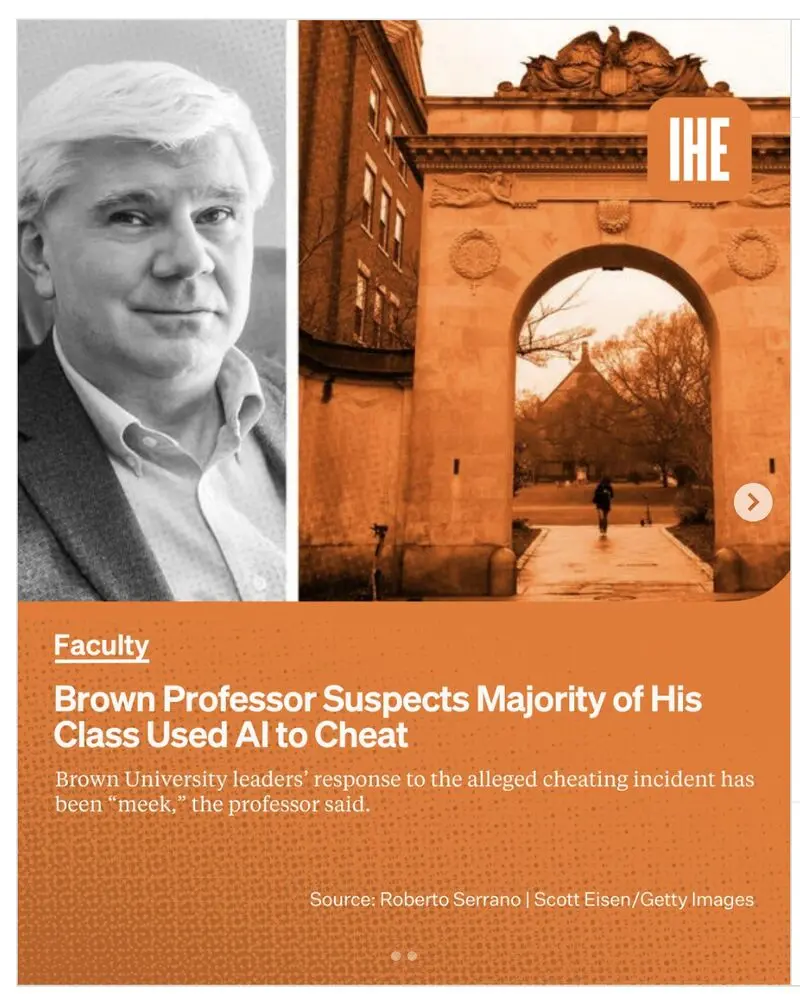
I have two kids in college, one at music school in Boston and one at fashion school in New York. In both of those worlds AI is seen as the enemy, the thing strip-mining creativity. So many group of students refuses to touch it, and another is using it to stop thinking entirely.
Serrano caught this because he is a tenured 20-year veteran willing to void his own exam. Most professors are not equipped, not compensated, and not interested in policing this. Brown's own AI committee recommends "de-emphasizing punishment."
If this is the picture at an Ivy with every resource, what does it look like at tier 2 schools and community colleges? Everyone hiring the class of 2027 inherits this. The transcript says 96. The person is really just a 48.
When a large share of our best young minds decide cheating is fine, Serrano argues, that is how a society declines, and eventually how it fails. Or as he put it: "We cannot choose to become idiots."
So is this what decline looks like? Not a collapse, just a generation deciding that thinking is optional. If you hire straight out of school, ... what are you seeing?
The Macro View
When intelligence gets cheap, the market starts asking every company a brutal question: what still deserves a premium?
For Meta, the answer is distribution and ad revenue. For HubSpot, the temptation was customer data. For Zoom, it was buyer intelligence. For Ford and GM, it is hardware supply. For the next generation of workers, it is judgment, taste, and the ability to think without outsourcing the entire process to a machine.
That is the pattern to watch. AI does not just make old work cheaper. It exposes which parts of the business were actually valuable in the first place.
For business leaders, the move is not to chase every new model release. The move is to identify what you own that still compounds when intelligence becomes abundant.
Because when the work gets cheaper, the margin moves somewhere else. Find it before your competitors do.
