
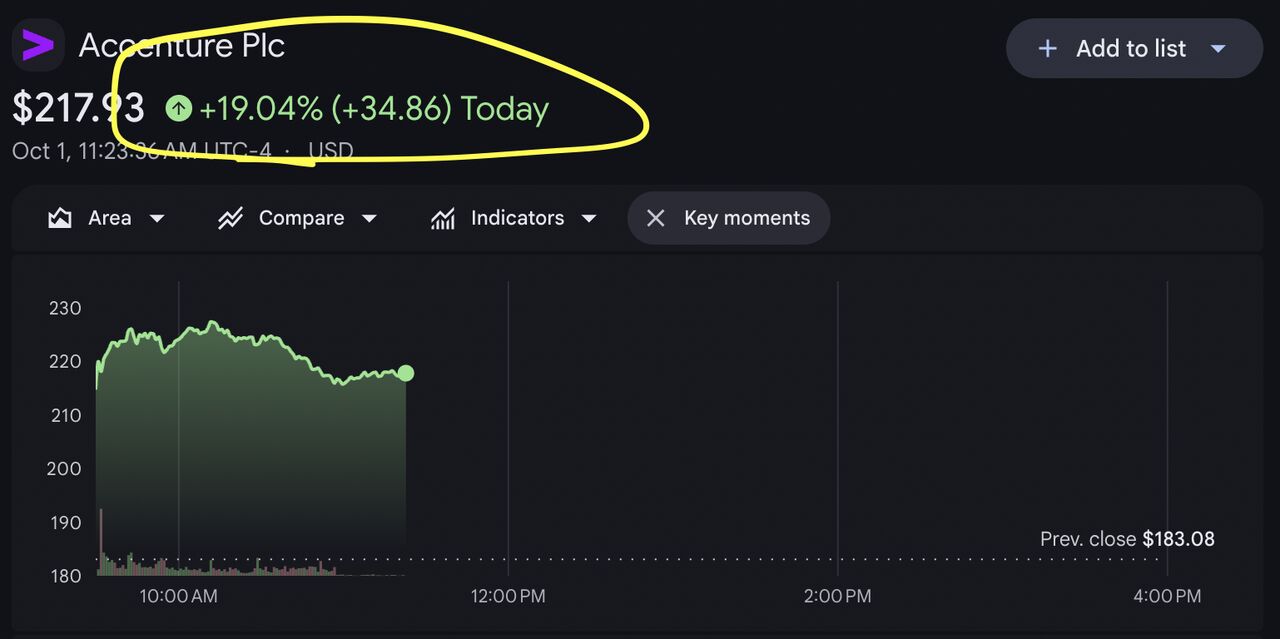
Accenture added $17B in market cap Thursday, jumping nearly 16% in their best trading day ever as AI consulting took off.
Also this week, Anthropic disclosed plans to spend more than $518B on AI infrastructure over the next decade. And, OpenAI added Salesforce, HubSpot, ServiceNow and dozens of other companies to a marketplace that lets customers spend existing OpenAI commitments on partner software.
And maybe most interestingly, the legacy SaaS companies ended one of their best quarters in history: Salesforce, Workday, ServiceNow, Veeva Systems and Adobe added roughly $140B in market.
Look at what is happening:
- Anthropic: Has hundreds of billions in infrastructure commitments that still come due if growth slows.
- OpenAI: Is making it easier for companies to put more of their software budget inside one existing commitment.
- Salesforce and other SaaS incumbents: Can increase revenue from customers they already have as AI usage grows.
- Accenture: Gets paid to solve everything that happens after a company decides it wants AI.
We may be able to switch models quickly.
The infrastructure contracts, software commitments, AI credits and implementation work surrounding them can last a lot longer.

Learn more at atonom.ai
Anthropic Plans to Spend Over $518B on AI Infrastructure Over 10 Years
Dario Amodei’s slowdown speeches are part of his sales pitch. He's trying to convince us he’s the responsible one, while he wants us to finance untethered expansion.
80% of those commitments are noncancelable or payable regardless of how much they actually use.

Earlier this month, he wrote:
We must slow the pace at which we improve the capabilities of AI models.
Anthropic’s long-term commitments include:
- $111.1B to Google
- $110B to Amazon
- $31.4B to Microsoft
Their IPO prospectus bluntly says new models drive revenue.
Many customers can cut their spending, while Anthropic is required to pay their suppliers.
Delaying a major release could slow revenue growth while their payments still come due.
The real test is whether Amodei will delay a major release when safety requires it, even if that means missing the revenue plan.
I want to see how Anthropic would fund that decision, including the revenue he’s prepared to sacrifice.
Until then, I put more trust in Anthropic’s contracts than their CEO’s speeches.
35 Companies Join OpenAI’s Enterprise Marketplace
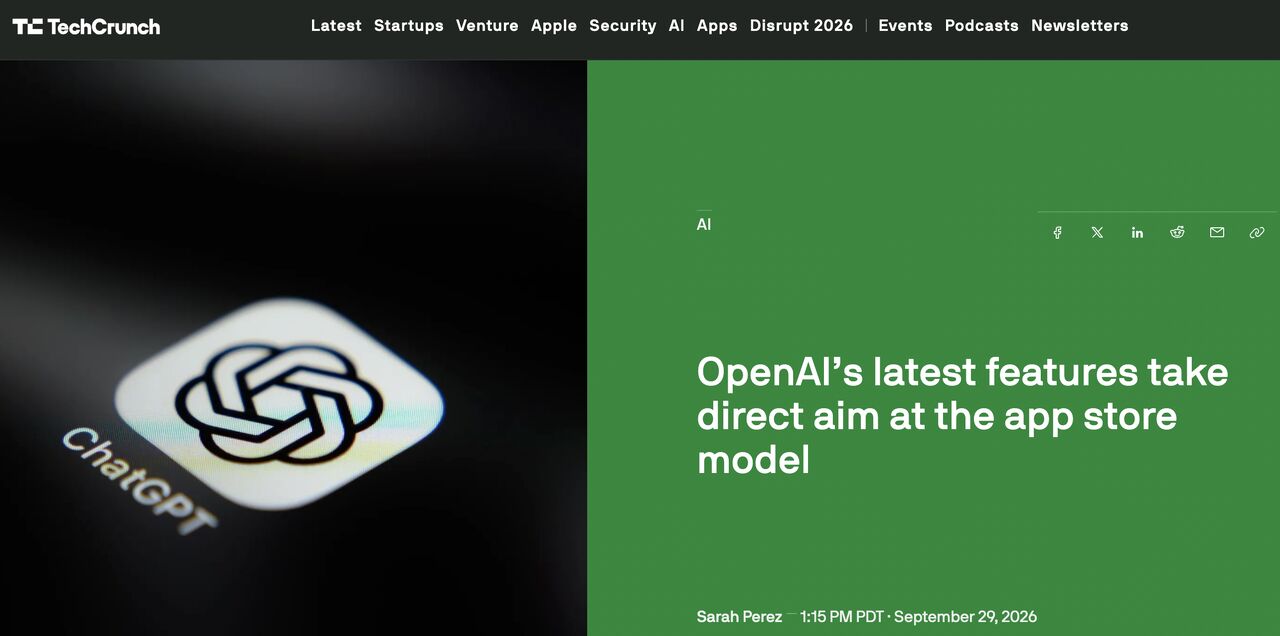
Salesforce, HubSpot and ServiceNow just joined 32 others in OpenAI’s enterprise model lock-in play to disrupt Salesforce's AppExchange and Apple's app store.
OpenAI could lose the model war and still lock us into their ecosystem.
This is their pitch:
Use part of your existing OpenAI commitment toward eligible partner products.
They’re building the AI “App Store” for enterprise software before we know which AI models we’ll want.
The marketplace makes our existing commitment more flexible. But that flexibility also makes a BIGGER commitment easier to sell us. More of the software we already buy can count toward the same contract.
Now imagine Anthropic Claude or Google Gemini starts resolving our customer-support cases more accurately, at a lower cost and our team wants to switch.
Finance will guaranteed block this because they will need to use the budget already committed.
Bingo, now we are locked-in.
The marketplace claims to offer access to some competing models, but we dont know the price or options, OpenAI controls it all.
A better model could arrive tomorrow, and still lose to a contract we signed today.
The crazy model wars continue …
Salesforce and Four of the Largest SaaS Companies Increased $140B in Market Cap in Q3
As investors bet on their AI growth, ... but that growth came as bigger software bills for us.
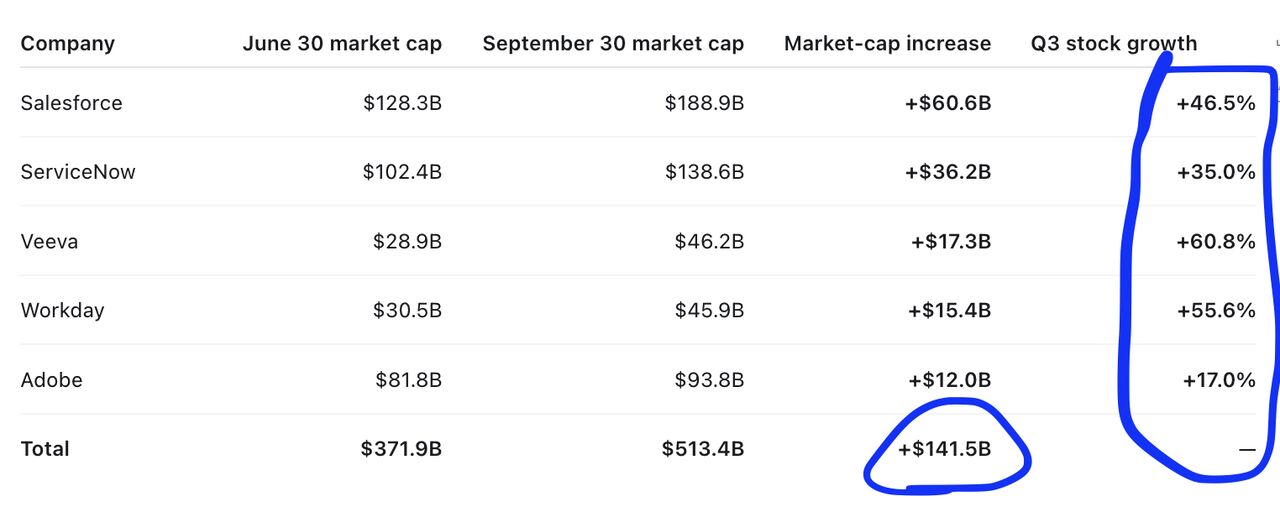
The Q3 stock gains:
- Veeva Systems: +60%
- Workday: +55%
- Salesforce: +46%
- ServiceNow: +35%
- Adobe: +17%
This growth is great for their shareholders. But we’re also their customers.
On Salesforce’s August earnings call, COO Miguel Milano said:
“50% of the bookings came from customers refilling the tank.”
He meant Agentforce. Customers used their AI credits and bought more.
Workday attributed more than 25% of new annual contract value to AI in their August results.
The “AI kills SaaS” argument misses that incumbents can charge us for more work without winning a new customer.
Fewer employee licenses offset the growing bill for AI usage.
And as we build agents around a vendor’s platform, switching may require rebuilding the automations our teams now depend on.
Their AI bonanza our increased bill. Their deeper integration becomes our switching cost.
Accenture Had Its Best Day Ever
Up more than 19% at one point in the day, adding $25B in market cap.
IBM jumped 5% adding $10B tied to the same trend, AI consulting.
People have been claiming AI was going to kill consulting. Instead, it’s triggering a massive consulting boom.
These numbers explain the context:
- Bookings from Accenture’s eight emerging AI and data partners grew over 3x this year.
- Revenue from that work more than 2x.
- Overall consulting revenue grew 6%.
There is no question that AI is automating repetitive consulting work. But it’s creating even more work rebuilding companies around AI:
- Data
- Workflows
- Security
- Customer systems
- Org design
Every large company wants AI. Very few know how to actually deploy it across the organization.
That gap is becoming a MASSIVE consulting market.
For two years, people have argued that AI would destroy knowledge work businesses.
They got the first part right: AI is eliminating work.
They got the bigger part wrong: It’s creating even more.
The Macro View
The technology is still changing incredibly fast.
The economics around it are getting locked in much earlier.
Anthropic needs enough growth to support massive infrastructure commitments. OpenAI is giving companies more ways to spend money they have already committed. Salesforce can sell more AI usage into the same customer account. Accenture gets paid when companies realize buying access to AI was the easy part.
A few things stand out:
- Models can change quickly. Contracts cannot.
- Fewer software seats do not necessarily mean smaller software bills.
- More automation can eliminate work while creating an enormous implementation market.
- Switching models may be easy technically and expensive operationally.
The model wars might move every few months.
But once the budget, workflows and infrastructure are built around one ecosystem, the money may move a lot slower.

Learn more at atonom.ai
