
This week, Salesforce and HubSpot laid out their AI strategies at their major customer events, Dreamforce and UNBOUND.
Both are making software do more of the work, ... while giving us fewer reasons to pay for human seats.
Apple is making a related bet through Siri: that we’ll trust their AI enough to pay for expanded access. All three need to prove what that spending gets us.
Here’s what stood out:
- Salesforce opened the interface. Claude Code can become the place we work, with Salesforce providing the data and workflows underneath.
- HubSpot showed a CRM that updates itself. More work handled by agents could mean fewer human seats to sell.
- Salesforce had an outage during Dreamforce. Our AI employees still depend on systems that can stop working.
- Apple confirmed future fees for expanded Siri access. We still don’t know the price.
As we plan for 2027, what does it actually cost to win and serve a customer, and how reliably can we do it?
Count the people, platforms and agents. The savings need to show up in our P&L, and the technology still needs to be more reliable.
Let’s start with the bet Salesforce just made.
Salesforce just conceded the AI interface.
Watching Marc Benioff at Dreamforce today, I think Salesforce made one of the biggest strategic bets in their history.
For over 25 years, Salesforce didn’t just own the data. They owned the place where people worked.
Now, with "AIforce" and "Claudeforce", somebody else’s AI can be the interface while Salesforce provides the data and workflows underneath.
Salesforce is betting that’s where the value lives.
But, if somebody else’s agent becomes the place I work, that agent isn’t limited to Salesforce.
We already see this at Atonom. Our AI Employees / Agents can sit above Salesforce and HubSpot, interact with both in real time, and move or sync data as needed.
That begs the question of “How important is the backend?”
And Wall Street is asking the same question. Needham & Company analyst Scott Berg put it directly:
Will Salesforce giving up the UI for customers using Claude to access the Salesforce data negatively change how customers view the Salesforce platform?
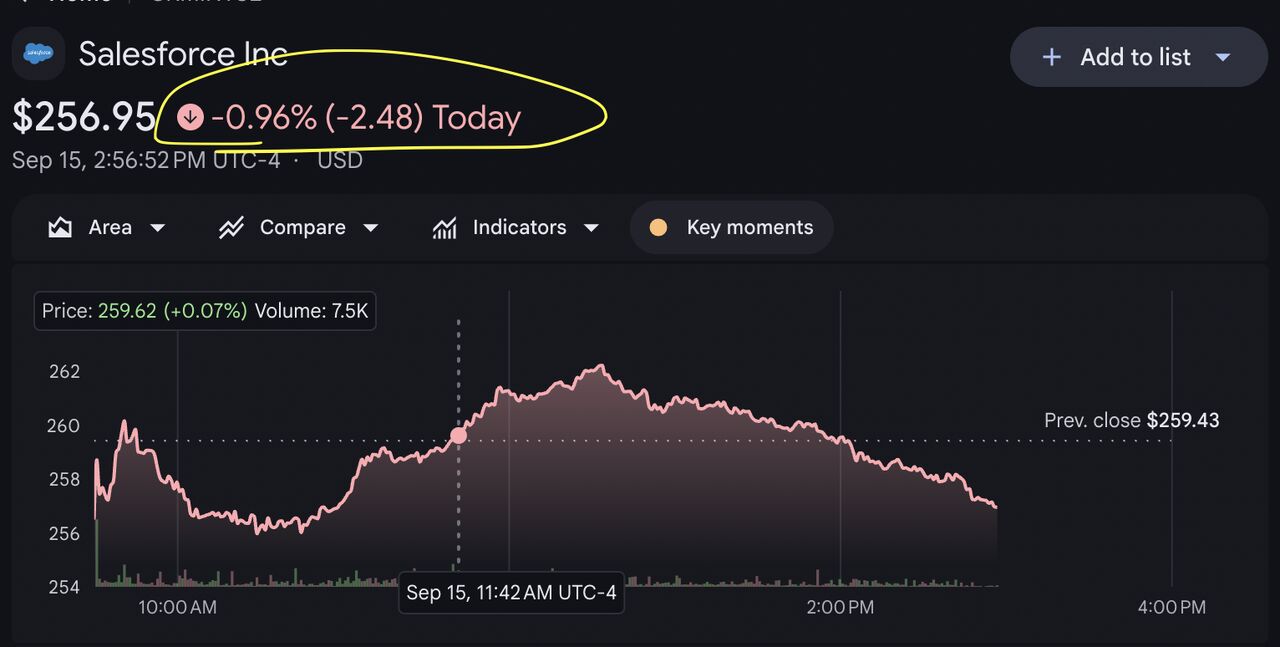
Salesforce is also underperforming both the S&P 500 and IGV today. I wouldn’t read too much into a few hours of trading, but investors certainly aren’t giving Dreamforce an obvious vote of confidence.
The strategic question is much bigger:
What happens when accessible everywhere becomes replaceable underneath?
Salesforce is betting the answer is that their data, workflows and business logic still matter enough.
I’m not convinced.
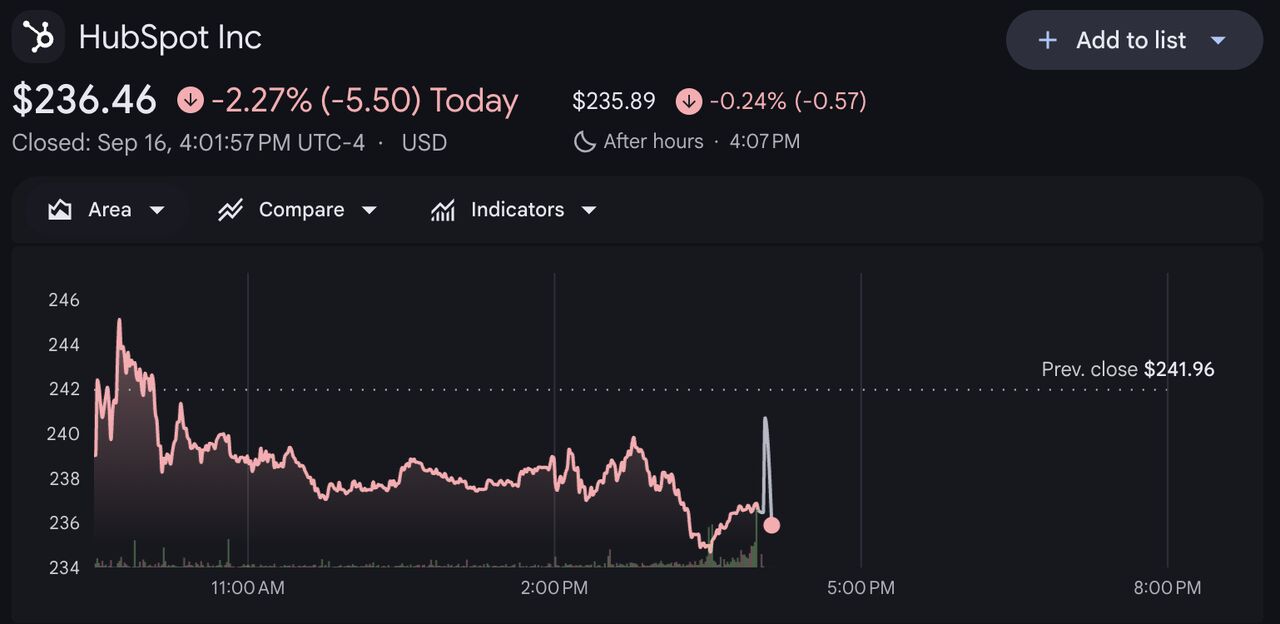
Today, HubSpot unveiled a CRM that updates itself. Their shares fell over 2%, losing more than 5× the S&P 500
One session doesn't mean everything.
But across Dreamforce and UNBOUND, I think Salesforce and HubSpot are confronting the same problem:
AI could make our CRM more valuable while making per-seat pricing harder to justify.
- Salesforce’s AIforce brings CRM data and workflows into Claude Code and Slack.
- AIforce could drive more work through CRM leaving fewer human seats to bill for.
- HubSpot’s Smart CRM updates itself. Breeze assigns work to agents.
Ahead of UNBOUND, Stifel Bank maintained Hold, worried about when AI would generate meaningful revenue.
“AI is creating an interface revolution”
Marc Benioff said "Our customer history, permissions, and workflows still matter. Agents need them."
But if agents handle more prospecting, follow-up, and service, we could buy fewer human seats and more AI usage.
A higher software bill could still be a great deal if our total cost of winning and serving customers falls.
This all becomes a renewal conversation, ... cost per closed deal and resolved case, including the people, the platform, and the agents.
That standard applies to stand alone AI Employees like ours at Atonom, too.
If we’re paying for AI productivity, the savings need to show up in our P&L in growth and savings.
Salesforce had a global outage yesterday in the middle of Dreamforce.
At the same event, As Salesforce leaders were on stage selling the future of autonomous business, all of their customer's automation and AI completely stopped.
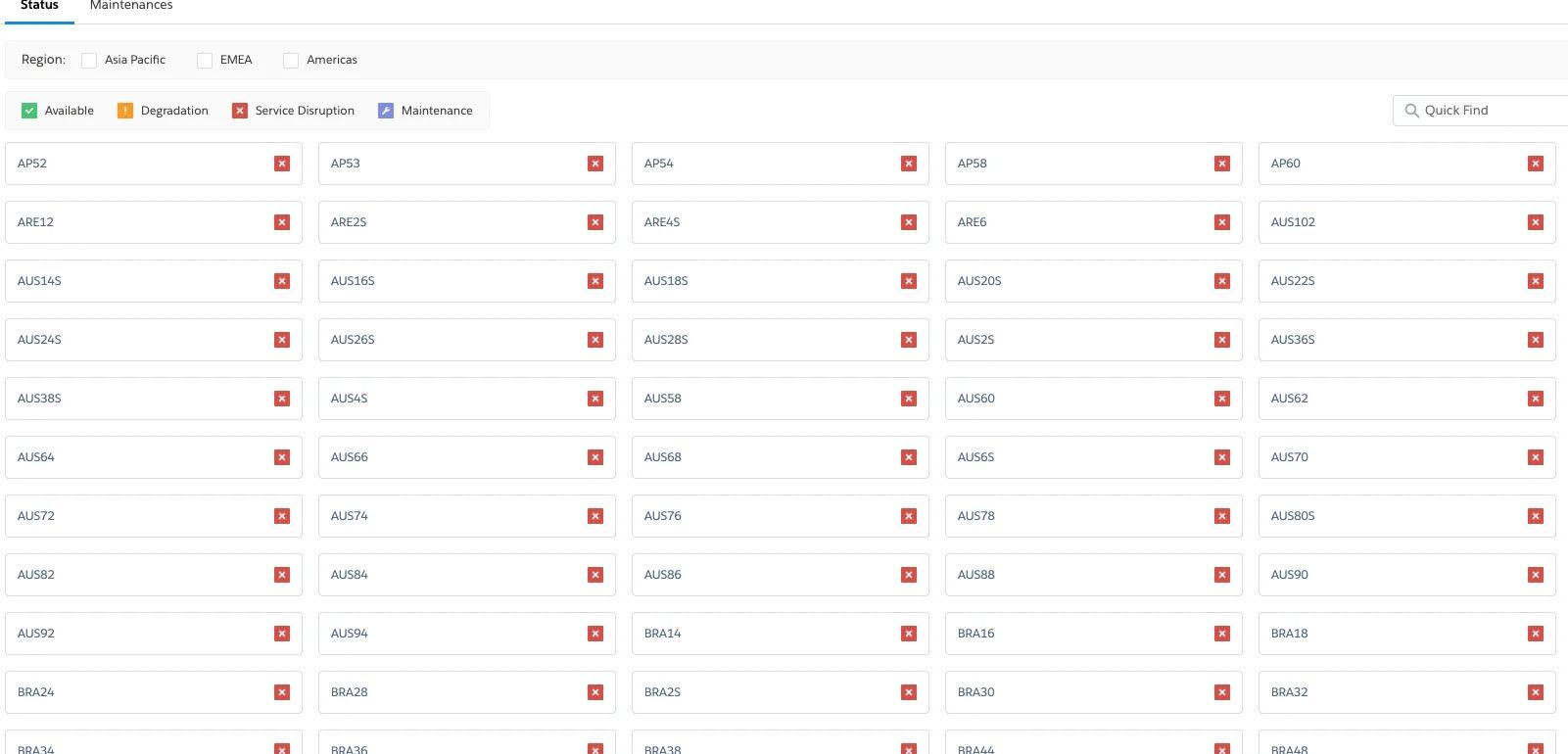
During the downtime:
- Most customers couldn’t even log in.
- Some couldn’t submit support cases to get help.
- Many scheduled jobs still weren’t running after access returned.
We get excited about AI doing more of our selling, follow-up, and customer service.
But AI employees have the same vulnerability human do.
If systems like Salesforce, HubSpot, ServiceNow and Atlassian go down, we lose access to the customer history, data and workflows, and we can service our customers.
Building a more autonomous business means decoupling our AI agents, models, and core business systems.
Putting every layer with one vendor may simplify buying but clearly concentrates risk.
This next phase of building needs redundancy at every layer.
This week is a reminder that AI can't replace good business strategy.
Last week, Apple confirmed future fees for "expanded" Siri AI access, ... without giving us the price tag.
This could be their next iTunes moment.
In 2003, Apple already had the Mac and iPod. They made buying music super easy: $.99/song.
This time, look at their starting point:
- 1.6B active iPhones
- 450M+ Apple Intelligence-capable iPhones
- 1.5B+ paid subscriptions already across Apple services and App Store apps
Apple could lose the race for the best AI and still win the business of selling it. But both Siri and Apple intelligence have disappointed us before.
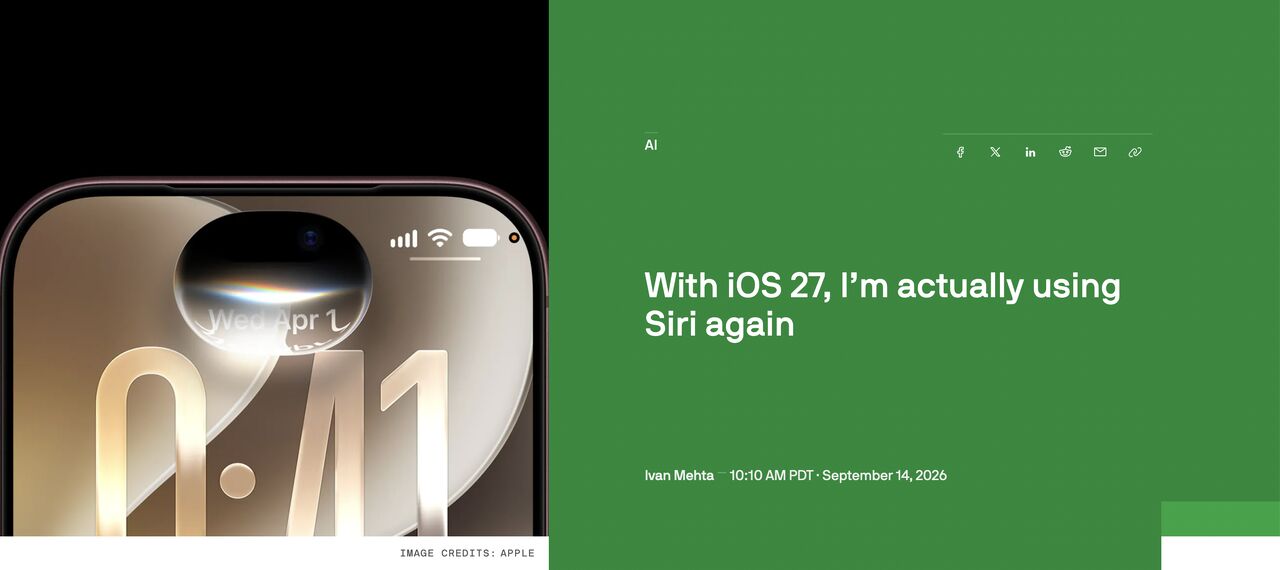
So, why should we build a habit around Siri before knowing what real cost will be, especially when we already have ChatGPT and Claude?
Charging for more usage is reasonable. Earning our trust again is really the harder sale.
The Macro View
The interesting thing this week is that AI is starting to split apart pieces of software that used to come bundled together.
Salesforce can own the data while Claude owns the interface. HubSpot can automate the CRM itself. Apple can charge for intelligence on top of hardware people already own. And when Salesforce goes down, all of the automation depending on it goes down too.
A few things seem to follow:
- The interface is becoming less important than the systems underneath it.
- Per-seat pricing gets harder to defend when fewer humans need to use the software directly.
- Data, permissions and workflows become more valuable as agents depend on them to act.
- Reliability becomes a bigger competitive advantage when AI employees depend on software to keep working.
- Pricing is likely to move toward usage, outcomes and value created instead of simple access.
The software stack i
