

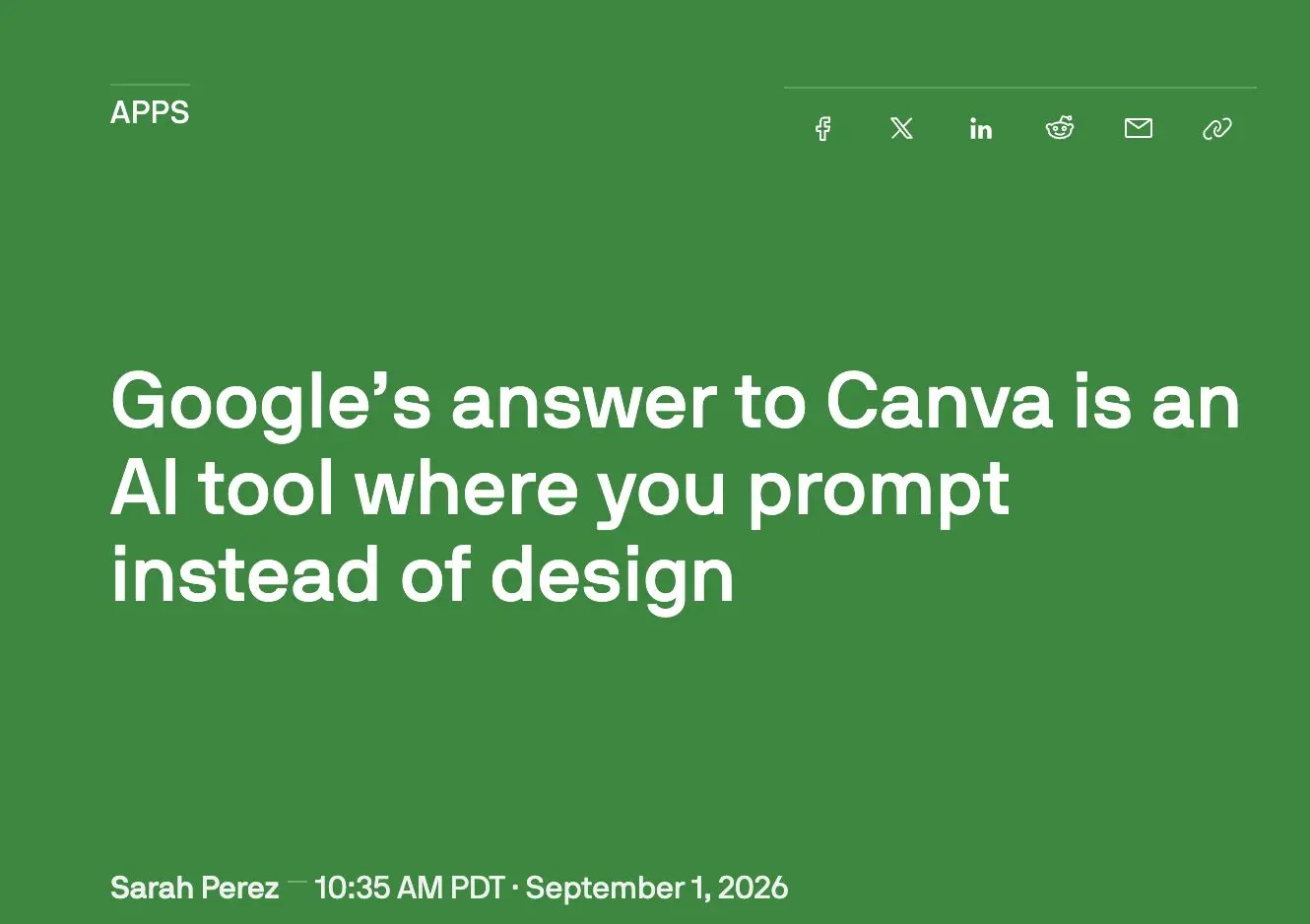
This week, Google released a Canva competitor inside Workspace, already used by more than 4B people.
Just two weeks earlier, Blackbird and Airtree marked Canva down wiping out $7B in value, from $42B to $34.9B.
At the same time, AI hype and fears have erased more than $2T from software stocks, while Salesforce, Workday, Atlassian and HubSpot are showing why some legacy software may actually become more valuable in an AI world.
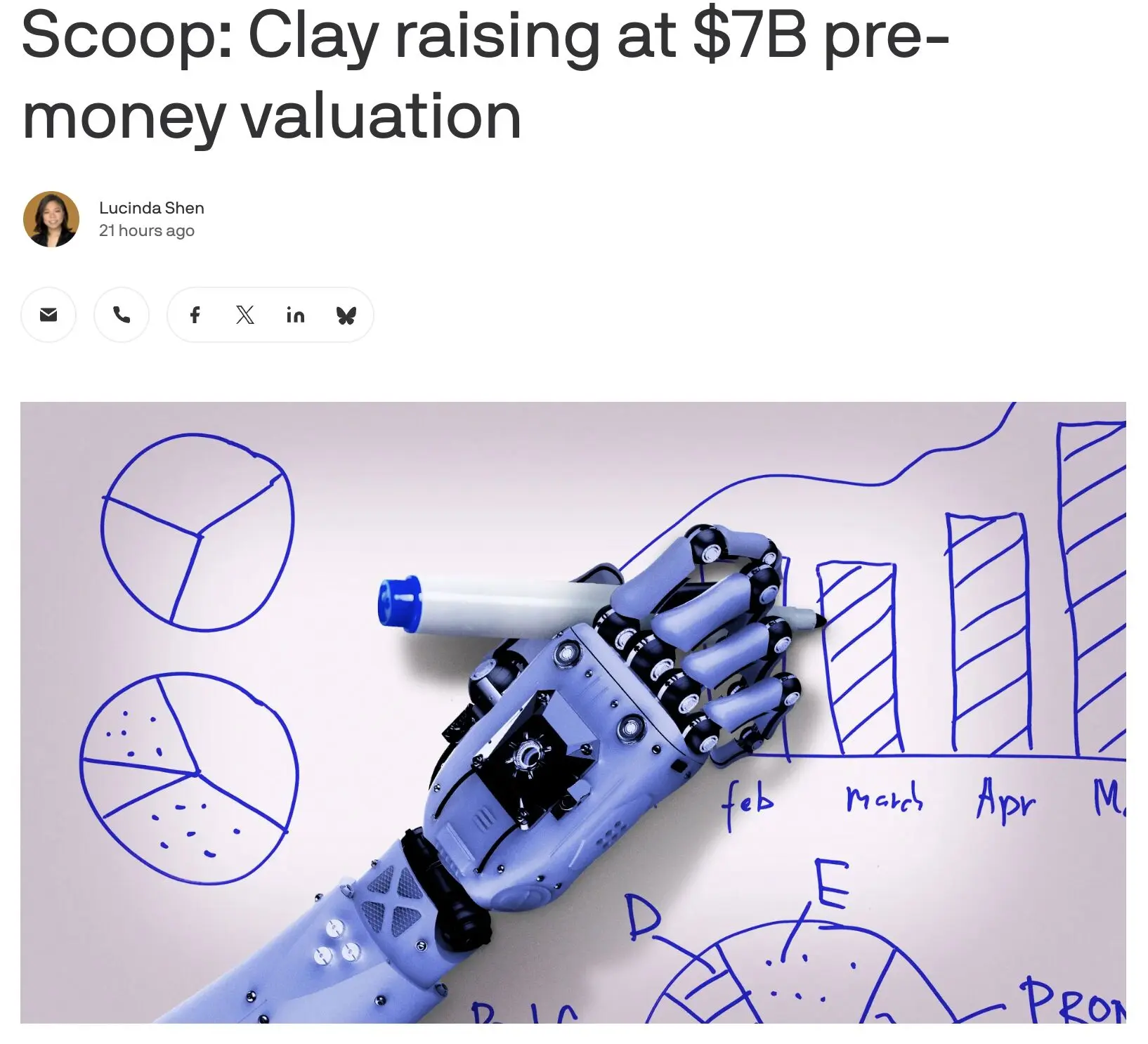
And Clay, a company built to automate GTM, just raised at a $7B valuation while growing its sales team 2.5x.
For the last few years, the AI thesis was that software would become easier to build and more work would become automated.
Instead, look at what is happening:
- Google: Can put a good enough Canva competitor directly in front of 4B+ Workspace users.
- Salesforce, Workday, Atlassian and HubSpot: Own the customer data, workflows and context AI agents need to actually do their jobs.
- Clay: Plans to grow from 40 salespeople earlier this year to more than 100 by year end, as enterprise ARR roughly tripled.
- Entry-level jobs: Workers ages 21 to 25 fell from 15% to 6.8% of headcount at large public tech companies, while SDR roles fell from 1.98% to 1.45%.
AI is making functionality easier to recreate.
But distribution, proprietary data, customer context, enterprise relationships and experienced people are much harder to recreate.
AI is making the product less scarce while making everything around the product more important.
The question is what parts of a company can now be reproduced quickly, and what still takes years to build.
Google released a Canva killer inside Workspace, ... already used by 4B+ people.
Canva just had $11B wiped from their valuation two weeks ago putting IPO plans in doubt.
And honestly Google doesn't really need to build a better Canva.
They just gave Google Pics to most paying users for free.
Still Canva is one of the strongest strong "up-and-comers":
- 265M users and $4B ARR
- 31M paying users
- $500M ARR from customers with 25+ seats
If anyone should win, you'd think it would be them.
But, ... Blackbird and Airtree cut their Canva valuation mark 17%, from $42B to $34B.
Google’s advantage is distribution. They can put a good enough editor where billions of people already work.
Google claimed their advantage plainly:
“You shouldn’t have to jump between applications to create and share visuals.”
AI is making software features cheaper to copy while making existing distribution massively more valuable.
This changes what counts as a moat.
Workflow ownership, proprietary data, network effects and deep customer integration are harder to bundle away.
Before building something, we need to ask:
Could a company with massive existing distribution add 80% of this to a product their customers already use?
If yes, features are probably not much of a moat.
If Google, Microsoft, Meta, Amazon or Apple can recreate 80% of our products with AI cheaply and quickly, and then bundle it in for free,
... how do we make new products and does AI give large companies monopolys?
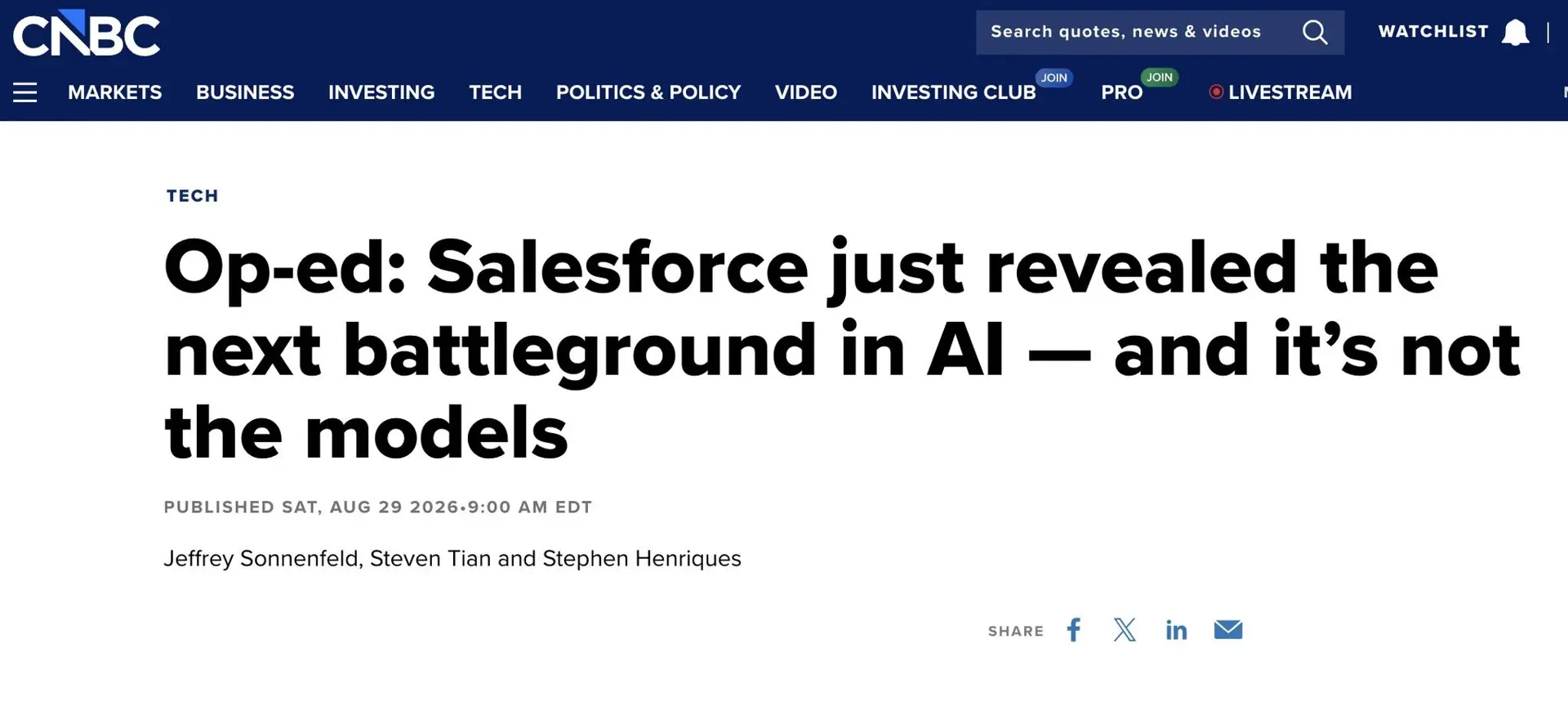
AI hype and fears have erased over $2T from software stocks.
But AI could make Salesforce, HubSpot, Workday and Atlassian more valuable.
Not because they have the best AI. But because they own the data and context AI needs.
AI agents can easily replicate software functionality (think Lovable, Replit, even Cursor, Claude Code, etc).
What they can't replicate is the customer history, workflow, permissions and institutional knowledge required to actually do the job.
Look at the numbers:
- Salesforce: Data 360 ingested 104T records last quarter, up 355%. Agentforce + Data 360 ARR reached nearly $3.9B.
- Workday: AI drove 25%+ of new ACV. 5,500+ customers use at least one Workday agent.
- Atlassian: Teamwork Graph contains 100B+ objects and connections. Rovo adopters are growing ARR 2x faster.
- HubSpot: 55%+ of Pro+ customers use agents or Breeze Assistant.
The models are becoming interchangeable. The data and context isn't.
An AI SDR can write an email with almost any model.
But selling requires account history, conversations, pipeline, product adoption, support issues, pricing and permission to act.
Marketing and CS are no different.
I think AI is going to split SaaS into two groups:
- Systems AI agents depend on.
- And software AI agents can bypass.
Clay announced a massive new round led by Wellington Management at a $7B valuation... and is now growing its sales team 2.5x
They had 40 salespeople earlier this year, will have over 100 by year end.
The AI company that automates GTM is hiring a LOT more humans to sell it.
The growth explains why:
- $100M+ ARR.
- Enterprise ARR roughly 3x in 9 months.
- Revenue from existing enterprise customers more than 2x.
- Valuation grew from $1.25B to $7B in 19 months.
Clay now has over 500 employees. At roughly 500 employees, 100 salespeople would be: 1 in 5 employees.
A few days ago I wrote about Replit CEO Amjad Masad saying more than half of Replit will be salespeople by year end.
Now Clay.
Two of the most know AI-native companies. Both automating huge amounts of work. Both investing heavily in human sales as they move upmarket.
AI is automating prospecting, research, enrichment, targeting and workflows. But it doesn't seem to be eliminating enterprise sales people despite all of the hype of AI replacing us humans.
We have seen this also at OpenAI, Anthropic, X, etc. This seems like a much bigger macro trend.
As I thought about end of year changes and 2027 budgets, feels like we should be scaling enterprise GTM vs the theory that AI will automate everything?
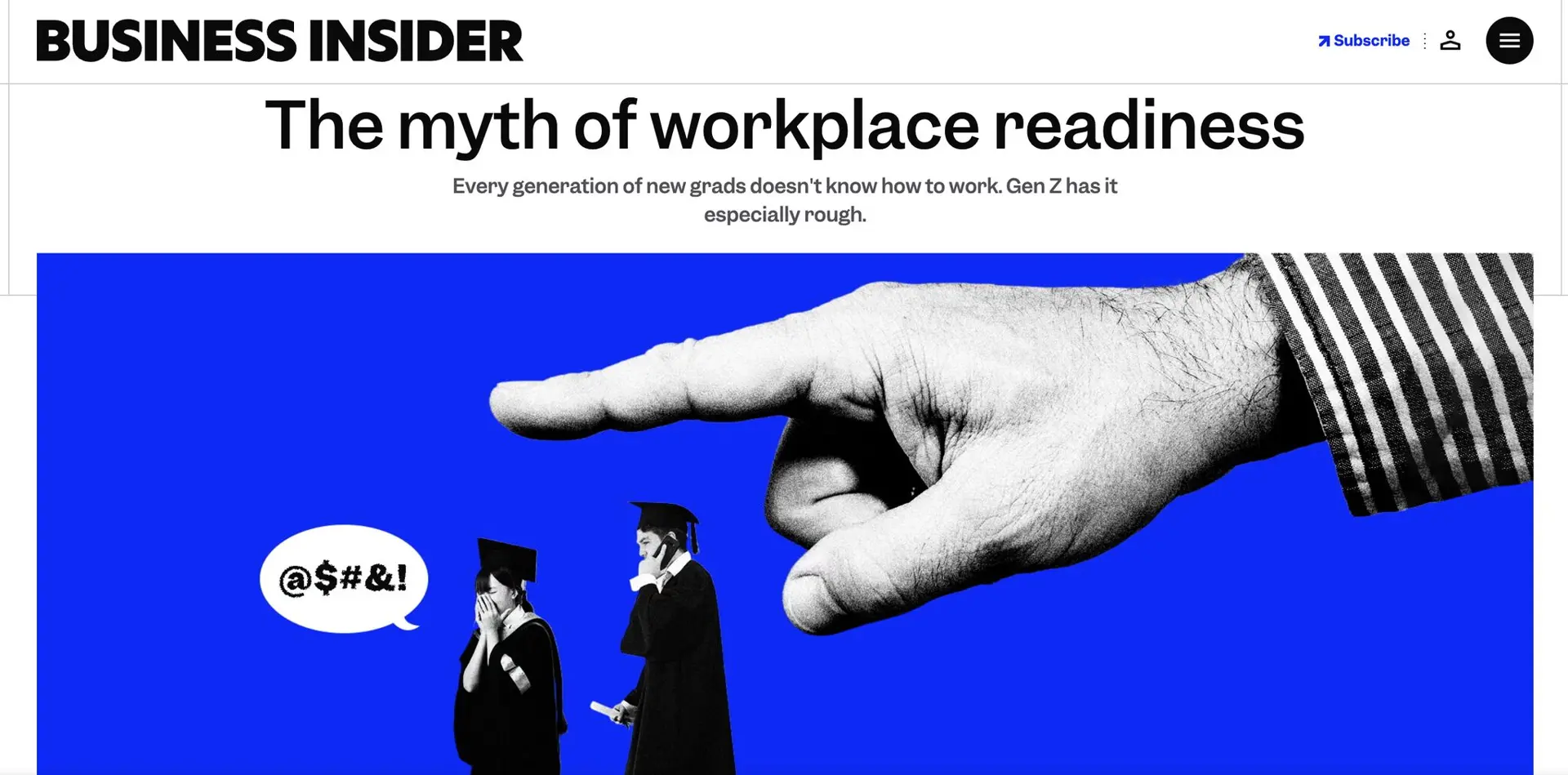
37% of HR leaders surveyed said they would rather use AI than hire a recent Gen Z college grad.
I think that should worry leaders as much or more than Gen Z grad.
Entry-level jobs weren't just low cost labor. They were how companies developed senior talent.
Looks at what's happening:
- Workers from 21-25 fell from 15% to 6.8% of headcount at large public tech firms.
- SDR roles fell from 1.98% to 1.45%.
- Employers say recent grads are well prepared for AI, but less so in communication, professionalism and critical thinking.
SDR jobs didn't just generate pipeline.
They taught people how to prospect, handle rejection, talk to customers and eventually become AEs, managers, sales leaders and execs.
Countless founders, execs and leaders first job was cold calling:
- Bill McDermott, CEO of ServiceNow: Sold Xerox copiers door-to-door
- Howard Schultz, former CEO of Starbucks: 50 cold calls a day selling Xerox
- Michael Dell, founder of Dell Technologies: Cold called selling newspaper subscriptions
- Sara Blakely, founder of Spanx: Cold called to sell fax machines
- John Paul Dejoria, co-founder of Paul Mitchell: Sold encyclopedias door-to-door
- Mark Cuban: Cold called in his first software sales job
The same is true in marketing, customer success and support.
But now AI is doing more of that entry-level work.
So companies are eliminating the jobs where people gain experience... but at the same time they are complaining that new hires don't have it.
AI can eliminate entry-level tasks. It can't eliminate the need to develop senior talent.
If AI does our entry-level work, who are we developing into our next VP of Sales?
The Macro View
For the last few years, the assumption was that AI would make more of the old software company unnecessary.
This week showed something more complicated.
Google can recreate a large part of Canva and distribute it to 4B people. Salesforce, Workday, Atlassian and HubSpot own data and context agents cannot simply recreate. Clay automates enormous amounts of GTM work while increasing its sales team 2.5x. And companies are automating entry-level tasks while still needing the experienced people those jobs used to develop.
The takeaway:
- Features are easier to copy. Distribution is not.
- Models are becoming interchangeable. Proprietary context is not.
- GTM tasks can be automated without eliminating enterprise sales.
- Entry-level work can disappear without eliminating the need for future senior talent.
AI can reproduce more of what companies do.
But it cannot instantly reproduce what companies have spent years accumulating around the product.
If a competitor could rebuild 80% of your product tomorrow, what would still take them years to copy?
Until next week…
