
This week, one of the most AI-native companies in the world said more than half of their company will be salespeople by the end of the year.
Salesforce showed why the AI PLG thesis may be wrong. Their growth is coming from larger deals, more products, more ways to charge, and a sophisticated enterprise go-to-market organization.
And HubSpot’s co-founder launched a $1 CRM that challenges many of the assumptions HubSpot was built on.
For the last few years, the AI PLG thesis was simple: better products and AI agents would reduce the need for the enterprise sales machine SaaS spent 20 years building.
Instead, look at what is happening:
- Salesforce: AI is increasing deal size, expanding what they can sell, and driving cRPO growth to 14%. Customers starting an agentic journey are averaging 2x annual order value. That is enterprise GTM, not PLG.
- Replit: 50M users and adoption across 85% of the Fortune 500. Now more than half the company will be salespeople.
- Box: Revenue growth slowed to 9%, but billings accelerated to 17% as AI expanded what they can sell.
- HubSpot: Its co-founder launched a $1 CRM built from the ground up around AI, showing how much the product itself can change.
AI is making software easier to build and adopt.
But at the enterprise level, it is also creating larger deals, broader deployments, and more complicated implementations.
PLG can create adoption. Turning that adoption into enterprise revenue still requires enterprise GTM.
At the same time, companies like HubSpot are being forced to rethink what the product should be in the first place.
AI is changing both sides of the software business: what gets sold and how it gets sold.
And right now, the companies winning are the ones getting both right.
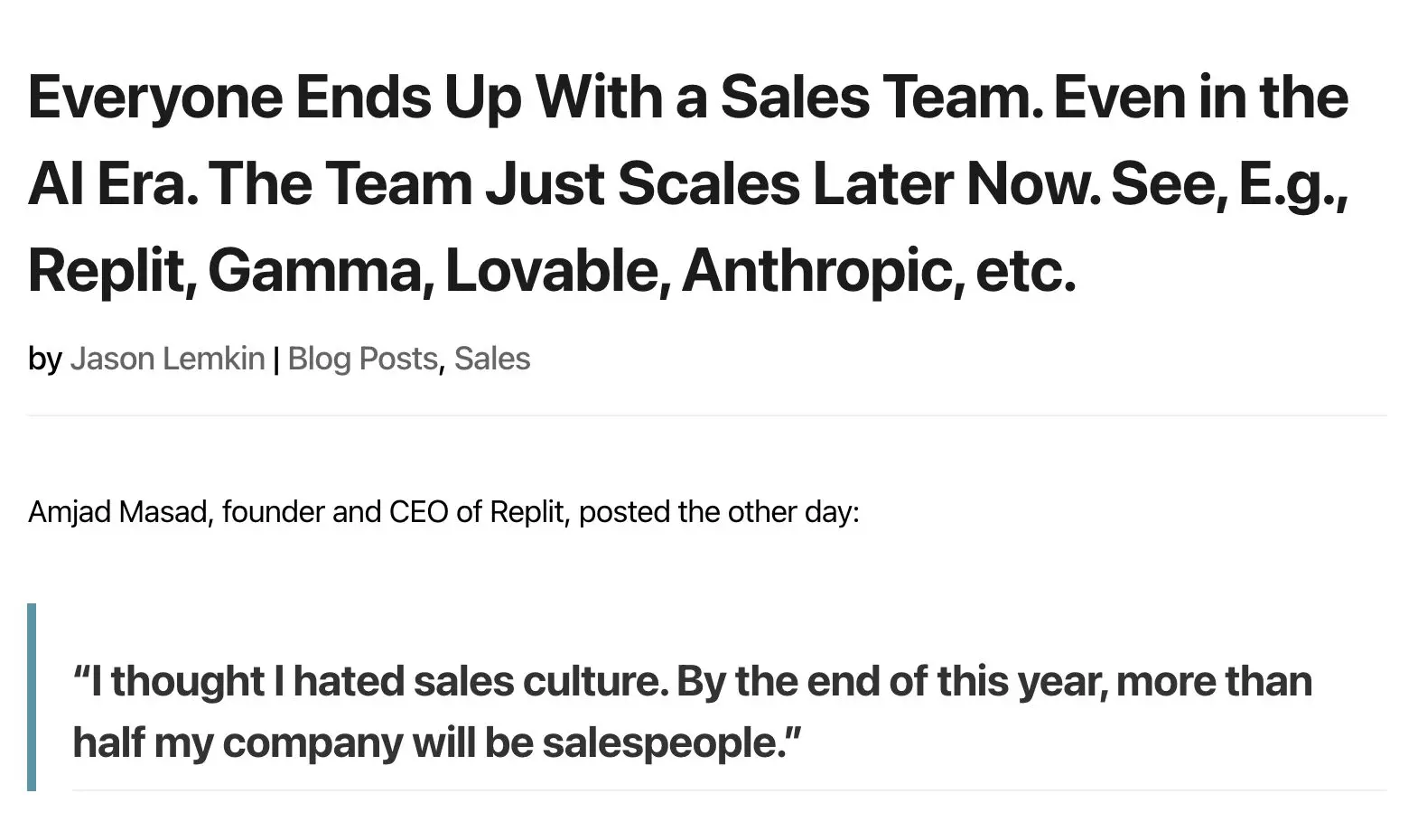
Replit says more than half of its company will be salespeople by the end of 2026.
At today’s headcount, that would mean more than 300 people dedicated to sales.
For one of the most AI-native companies in the world, this is a crazy change in narrative and the AI ecosystem overall.
To start, Replit grew first through a product leg growth (PLG) approach.
- More than 50M users.
- Adoption within 85% of the Fortune 500.
- Anticipate $1B in run-rate by year-end.
- Initially, they had only 4 sales reps that handled everything.
Their founder Amjad Masad was VERY outspoken that product should sell itself. He claimed Replit’s entire marketing department was his Twitter account.
That works to generate users. But users are not the same as enterprise revenue.
Large companies still have security reviews, procurement, implementation, legal requirements, executive alignment, and expansion decisions. They still need someone to guide them through the process.
And at the end of the day, people still want to buy from people.
AI-native companies may be able to reach some scale through PLG, but to get to the next level they must build a traditional sales organization.
The new AI PLG approach really only delays the brute-force go-to-market model that defined the SaaS era. They are all coming back to the same playbook: Replit, Gamma, Lovable, OpenAI, Anthropic, etc.
AI is changing how software is built and adopted. But it's still can't change how enterprise software is ultimately bought.
Salesforce reported earnings this week. Everyone bet AI would make PLG the winner.
Instead, I think we’re watching the resurgence of enterprise go-to-market.
One of the most important things SaaS built over 20 years wasn’t software. It was enterprise GTM. As AI moves beyond co-pilots, that matters more, not less.
As I mentioned earlier, even Replit announced that 50% of their entire company will be sales people by the end of this year.
That’s why the frontier AI labs are hiring from the enterprise software bench.
- Denise Holland Dresser, Salesforce and Slack to OpenAI
- Colin Fleming, ServiceNow to OpenAI
- Paul Smith, Microsoft, Salesforce, ServiceNow to Anthropic
Now the twist. Kaylin Voss has already gone back to Salesforce. Marc Benioff welcomed her back.
Before Salesforce reported, that was what I was watching. Not just Agentforce.
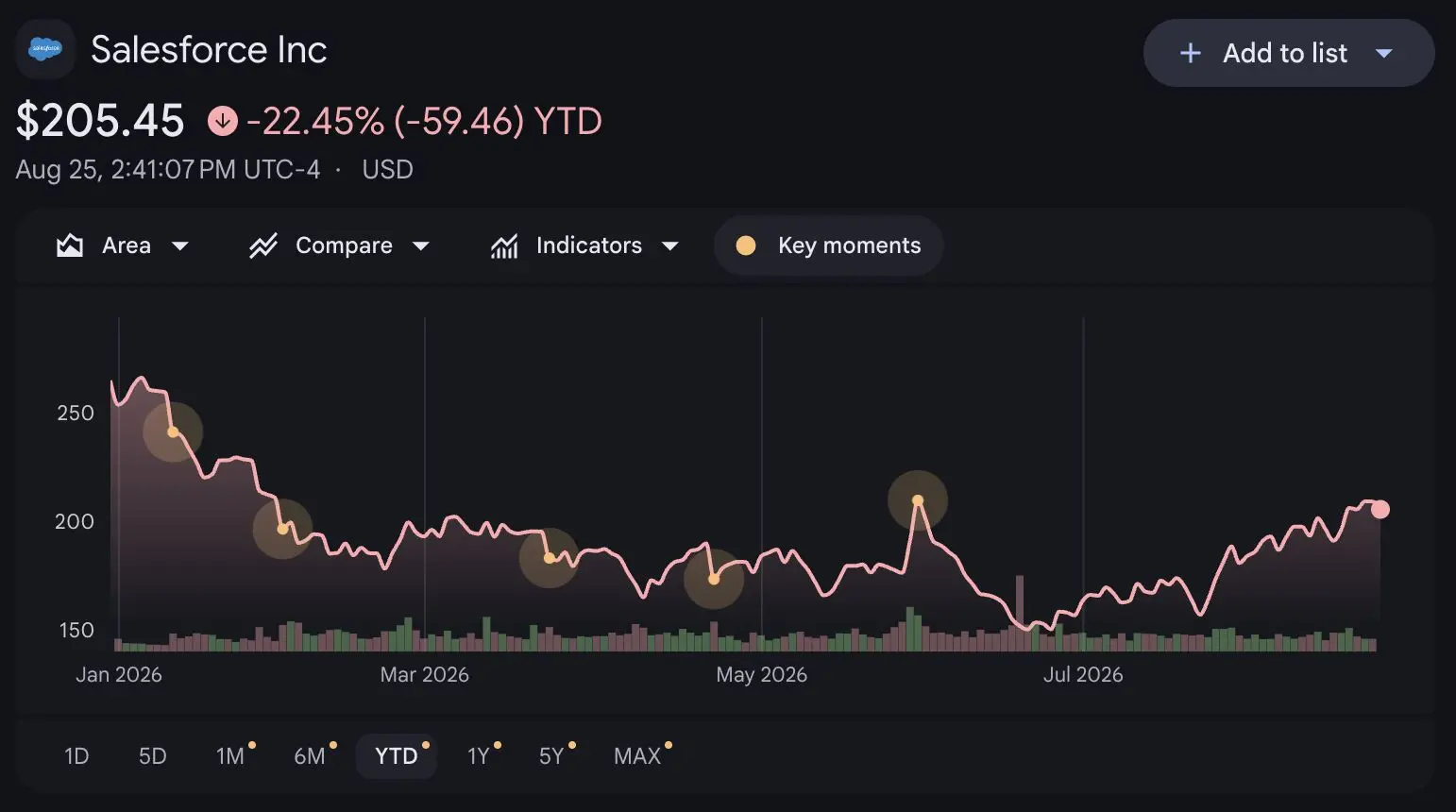
Marc Benioff knows how to build an enterprise go-to-market teams. The question was whether that engine was still driving growth across the business. The quarter gave us a pretty clear answer.
If enterprise AI is about organizational transformation, the winners won’t just build the best models. They’ll build the best enterprise GTM.
Box’s revenue growth slowed from 11% to 9%.
But their billings growth accelerated from 5% to 17%. Those numbers appear to tell opposite stories. Box’s AI strategy helps explain why.
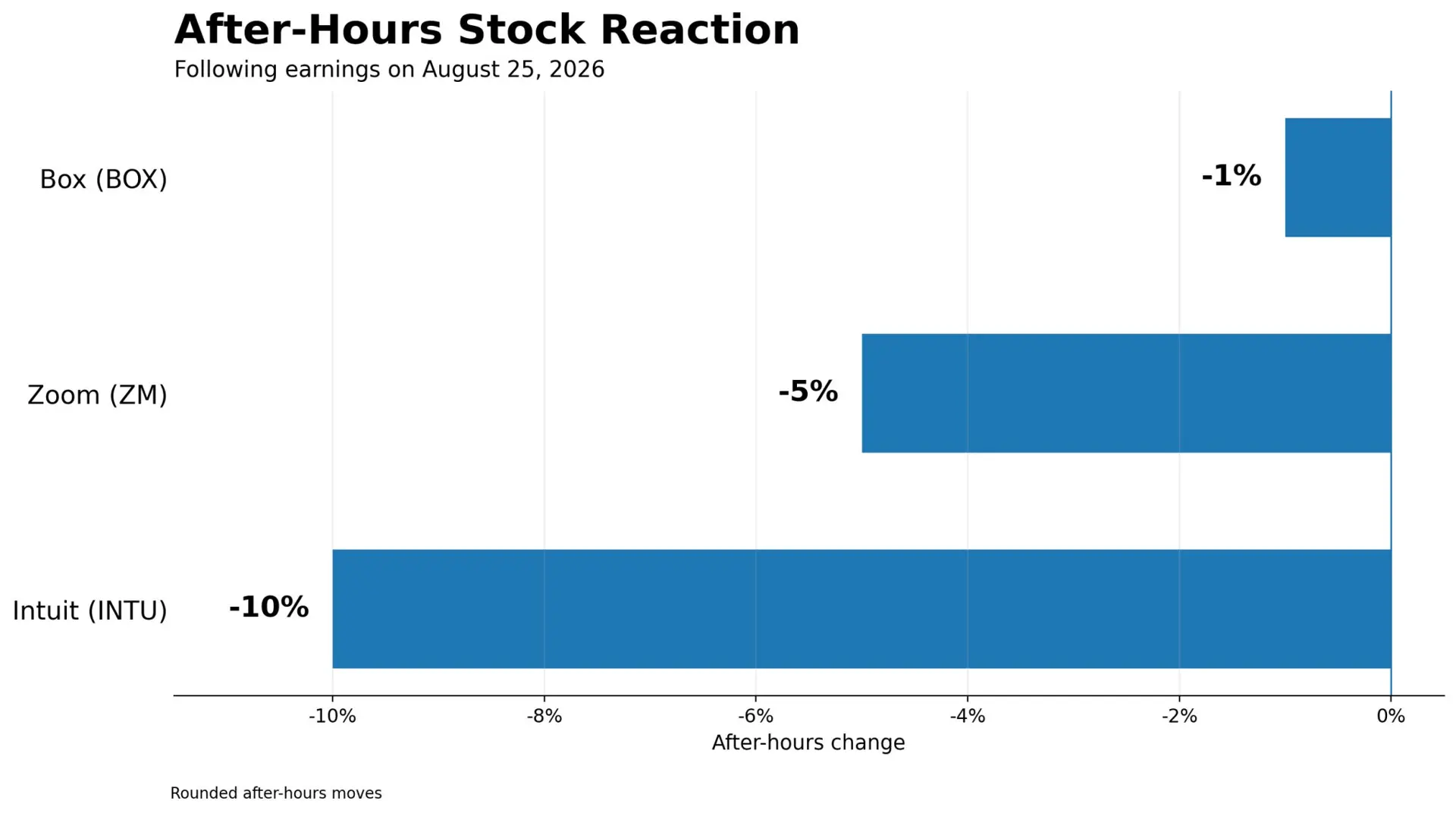
Last week, Box, Zoom, and Intuit reported earnings. All discussed AI. Only Box showed AI changing its business model.
Zoom fell 5%, Intuit 10%, and Box 1% after hours. Box raised guidance.
Box built an enterprise content management business. Now it is becoming an intelligent content platform.
Box CEO Aaron Levie said deals are now “multiples of what they could have been,” driven by higher pricing and new AI enabled capabilities:
- Document processing
- Contract lifecycle management
- Intelligent workflows
- Digital asset management
- AI agents
Larger deployments require enterprise sales, solution engineers, implementation partners, and systems integrators.
AI may reverse software’s push toward self-service. Enterprise AI requires integration, implementation, and organizational change. PLG alone is not enough.
- AI is moving from adoption to monetization.
- Platforms are expanding into new categories.
- Enterprise go-to-market is becoming more important.
Going into Salesforce earnings, I wasn't focused on Agentforce revenue alone. I was watching whether AI expanded the platform, increased deal sizes, and reframed what Salesforce could sell.
That is the real test: Is AI changing Salesforce’s business, or just adding another product?
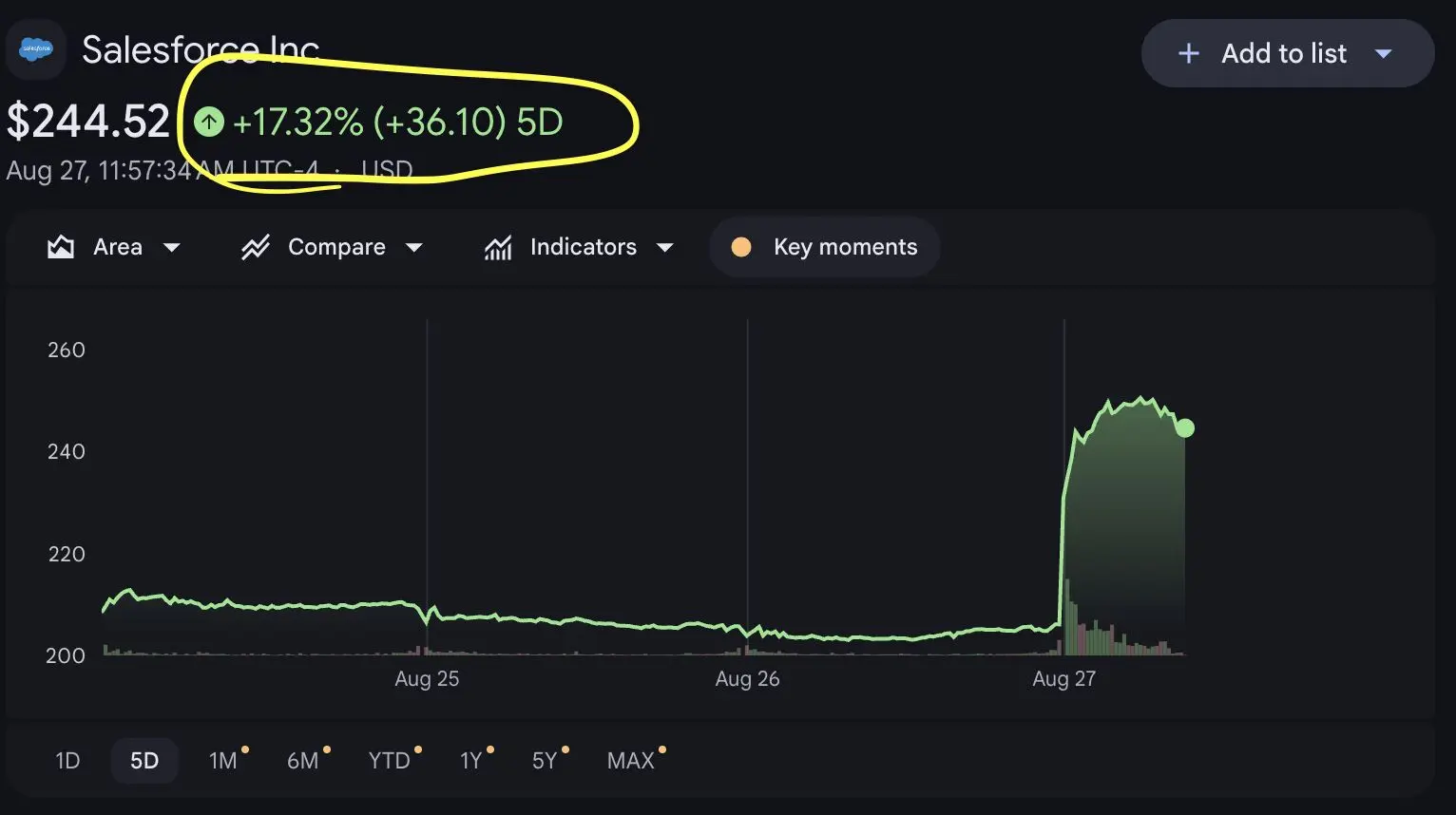
Salesforce absolutely blew out their quarter adding more than $35B in market cap.
But public markets weren't rewarding 11% revenue growth alone. They were rewarding their future growth.
For Salesforce, their future growth metric is cRPO (contracted revenue expected) that will be recognized over the next 12 months. It grew 14% to $33.5B.
Over the last three quarters:
- Revenue growth: 10% to 12% to 11%.
- cRPO growth: 13% to 13% to 14%.
Revenue is looking the the rear view mirror. While cRPO is looking ahead.
This new annual order value growth was the strongest in 4 years, while attrition was near a record low.
This signals a fundamental transformation in Salesforce. So what’s driving it?
I don't think this is a more seats story.
Salesforce is changing what it sells and how it gets paid:
- Deal size is bigger. Customers starting their agentic journey are averaging 2x annual order value, with a path to 3x or 4x.
- Deals are spanning their AI portfolio: Agentforce, Data 360, Slack, and core CRM.
- More ways to charge: users, premium editions, agents, consumption, and outcomes.
That transformation is now large enough to matter. Agentforce and Data 360 reached nearly $3.9B in ARR, up more than 210%.
Marc Benioff tried to dismiss the "SaaSpocalypse", calling the narrative "nonsense."
The truth is that Salesforce is no longer a SaaS company and is transforming to an AI platform.
Amazon started by selling books. Now they're destroying them to build AI.
Amazon is anonymously purchasing large orders of rare books, sending them to a specialized warehouse facility in Nevada, stripping the book bindings, scanning the pages to build AI training datasets, and then throwing away the destroyed books.
Anthropic was found doing the same thing, their book scan-and-destroy operation was known as "Project Panama" as their "effort to destructively scan all the books in the world."
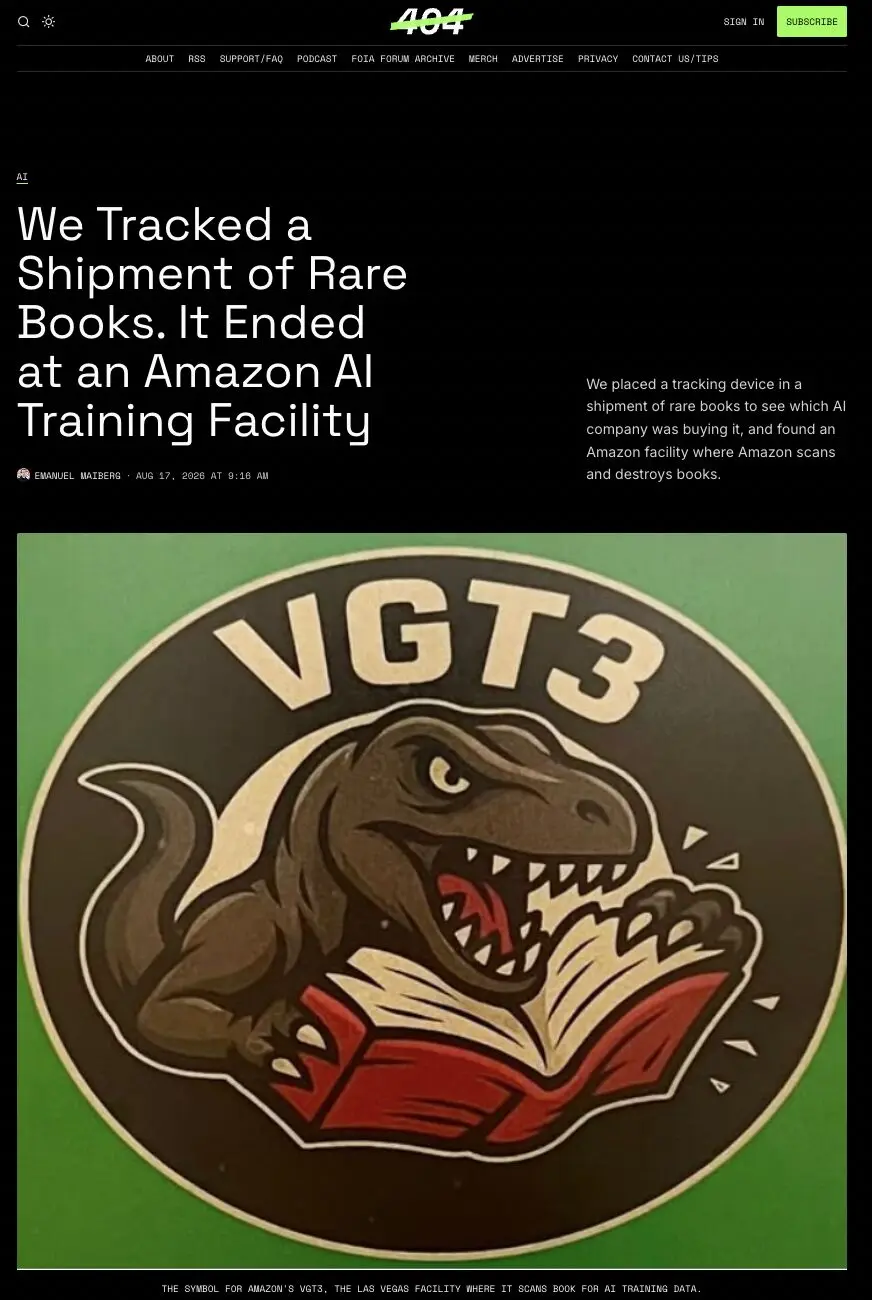
Anthropic gave the operation a codename "because we don’t want it to be known that we are working on this."
Amazon and Anthropic are not alone. This is becoming an "accepted practice" among frontier model building firms.
I understand the objective here. AI companies need massive amounts of high-quality human knowledge, and books contain centuries of human ideas, history, and experience.
But this practice raises an important question: Are there some things we shouldn't sacrifice?
In college I studied philosophy and humanities, including a year overseas studying ancient literature and history. One thing I learned is that books are more than information.
These books are physical records of human thought and experience. They show what people valued, what they discovered, and what they chose to preserve.
In some ways, our core humanity is contained in these physical artifacts. Not because the paper itself matters. But because they connect us directly to the people who came before us.
I genuinely believe AI will generate massive future value by learning from humanity’s accumulated knowledge. But every major technology shift requires judgment.
The question is not whether AI should learn from human knowledge.
It should. The question is whether every piece of human history should become training data.
Some things have value beyond the information they contain.
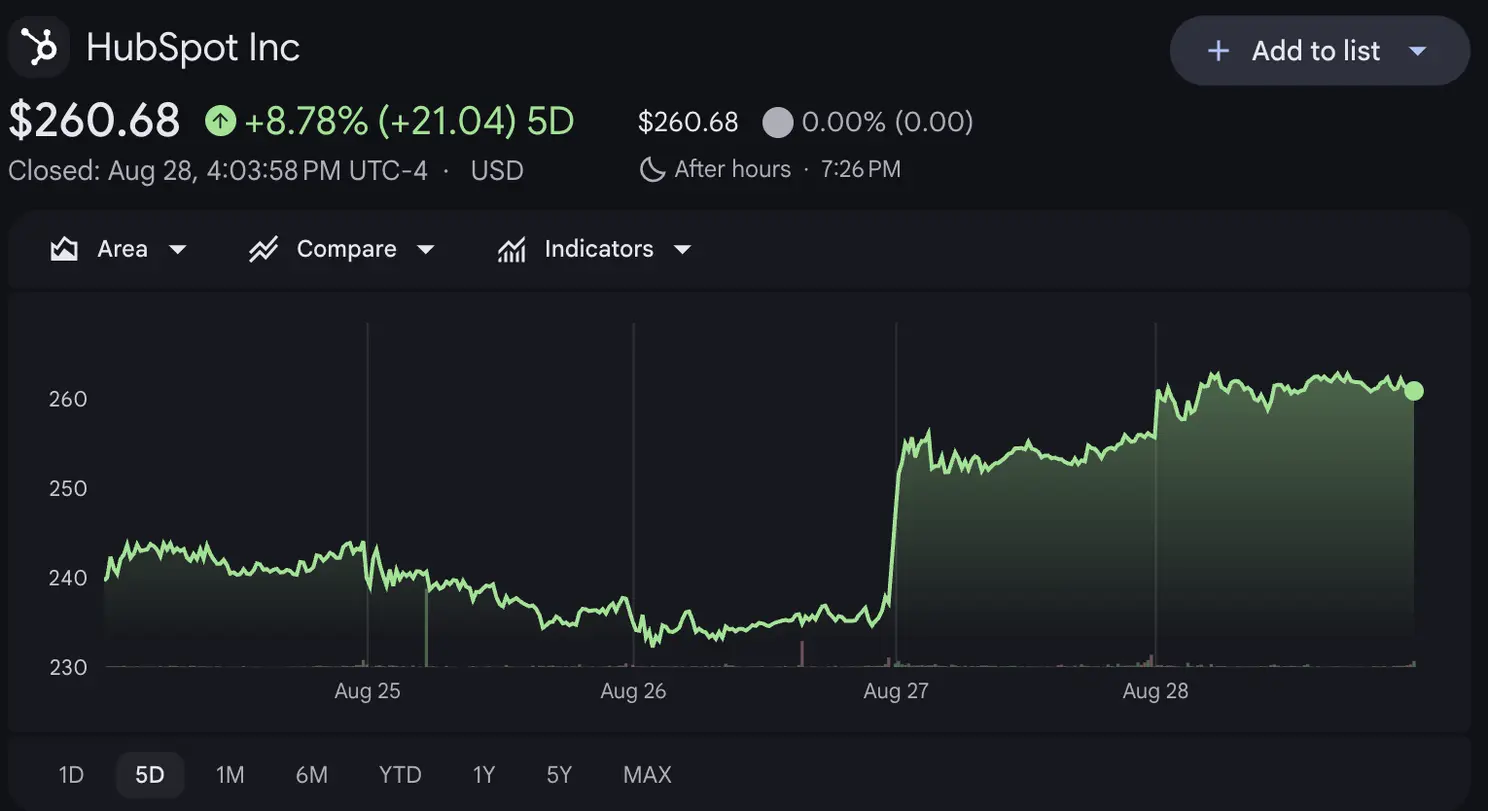
HubSpot's stock is down 36% this year, but up nearly 10% this week.
Today their co-founder launched a $1 AI-native CRM that challenges the assumptions HubSpot was built on.
Dharmesh Shah just launched YouSpot through HubSpot Next.
HubSpot has over 300,000 customers paying an average of $11,800 a year.
Conversely, YouSpot is built for the one-person company that starts at $1 a month.
Traditional CRM like HubSpot, Salesforce, Zoho or Pipedrive all assume someone has to:
- Enter the data.
- Keep it clean.
- Update the pipeline.
- Remember who to follow up with.
YouSpot assumes AI can do all that work. It connects to Gmail, Google Calendar, LinkedIn and X, and it builds the relationship context, finds missed follow-ups, surfaces opportunities and gives AI agents ongoing jobs.
He says this isn't AI just bolted on a CRM. He built it as an AI Agent the has a database to manage its work.
What I find fascinating is that HubSpot is letting its own co-founder build something that doesn't have to protect HubSpot's existing model.To build it he said he asked, ... If we were building CRM today with AI available from day one, what would we build?
Every legacy software company should be asking the same thing. Not, how do we add AI to what we already sell? Instead, we should be asking
"What would we build if we started over"?
The Macro View
For the last few years, the AI PLG thesis was that better products and AI agents would remove layers of the old software business.
This week challenged that.
Replit is building a much larger sales organization. Salesforce is growing through larger enterprise deals. Box is seeing AI increase deployment complexity. HubSpot’s co-founder is rethinking CRM from the ground up.
The takeaway for business leaders:
- PLG can create adoption. It does not automatically create enterprise revenue.
- As AI expands the product, the sale can become larger and more complicated.
- Established companies have to be willing to rethink the products they were built on.
- Enterprise GTM is becoming an advantage, not a cost structure to eliminate.
AI is changing both what gets sold and how it gets sold.
The hard part is still turning what AI now makes possible into something customers will buy, deploy, and expand.
If AI doubled what your product could do tomorrow, could your company sell, deploy, and expand it?
Until next week…
