
HubSpot announced 660 job cuts this week. CEO Yamini Rangan said: “This is not driven by AI-related efficiencies.”
AI can change which jobs a company needs without taking over those jobs.
Three stories in this week’s Autonomous show how that’s playing out:
- HubSpot is redesigning the organization. Revenue guidance stays unchanged. Management layers shrink. Product teams become accountable for customer outcomes.
- Mark Cuban and Ethan Mollick disagree on job security. Cuban points to AI skills. Mollick argues that knowing AI won’t overcome the limits of how our companies work.
- Jeff Bezos sees the possibility of a three-day workweek. I think employers will want to see what an AI-skilled team can accomplish in five.
Our salespeople can write better emails with AI. But deals still stall when customer data is missing, approvals take too long or nobody can resolve an unusual request.
We can teach everyone to use AI, ... and still lose to a company that makes buying easier.
HubSpot’s response is to change how their teams are organized and what they’re responsible for. Let’s start with what that means beyond the job cuts.

HubSpot just announced 660 job cuts, 7% of their workforce
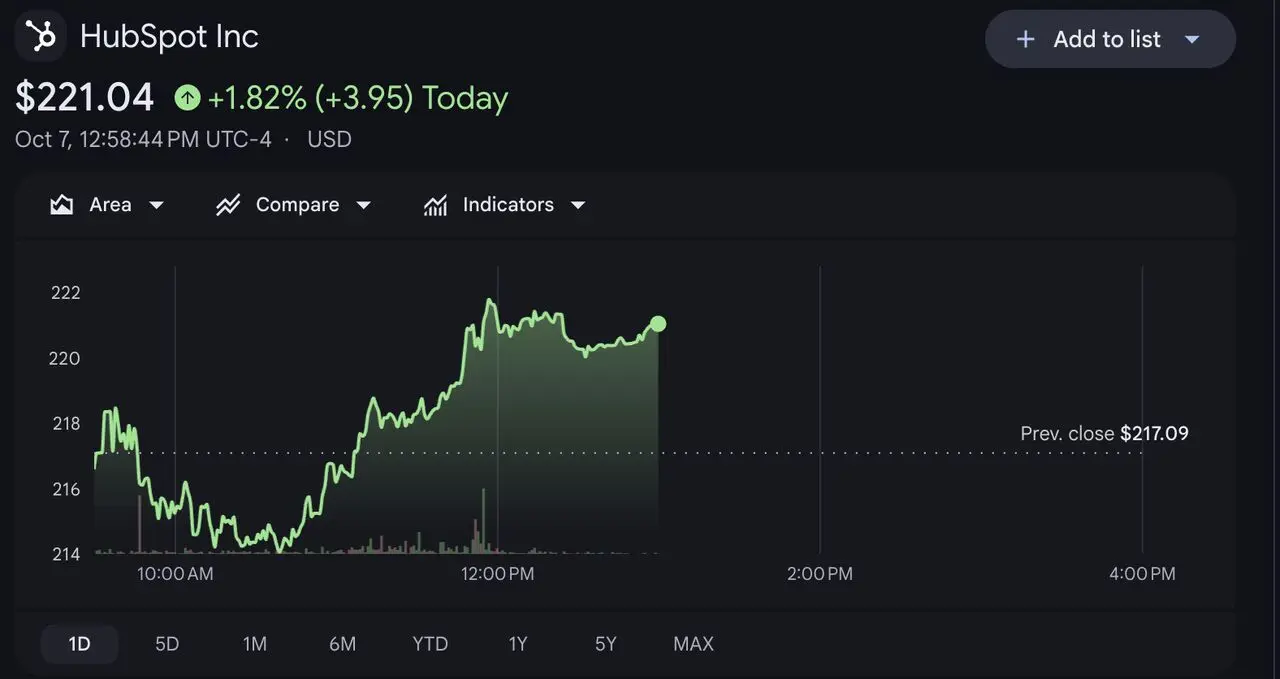
But the market looks cautiously optimistic the strategy, ... giving nearly $200M in market cap.
They kept Q3 and full-year revenue guidance unchanged. CEO Yamini Rangan said: “This is not driven by AI-related efficiencies.”
AI can change which jobs a company needs without taking over those jobs.
Their product teams are moving from owning separate Hubs to owning customer outcomes like generating demand and winning deals.
At Atonom, we’re helping companies build autonomous organizations by starting with the customer result, then designing the strategy and roles for people and AI teammates.
“AI won’t take your job. Someone who knows how to use AI better than you, will take your job.”b.”
Mark Cuban posted that yesterday. Ethan Mollick disagreed.
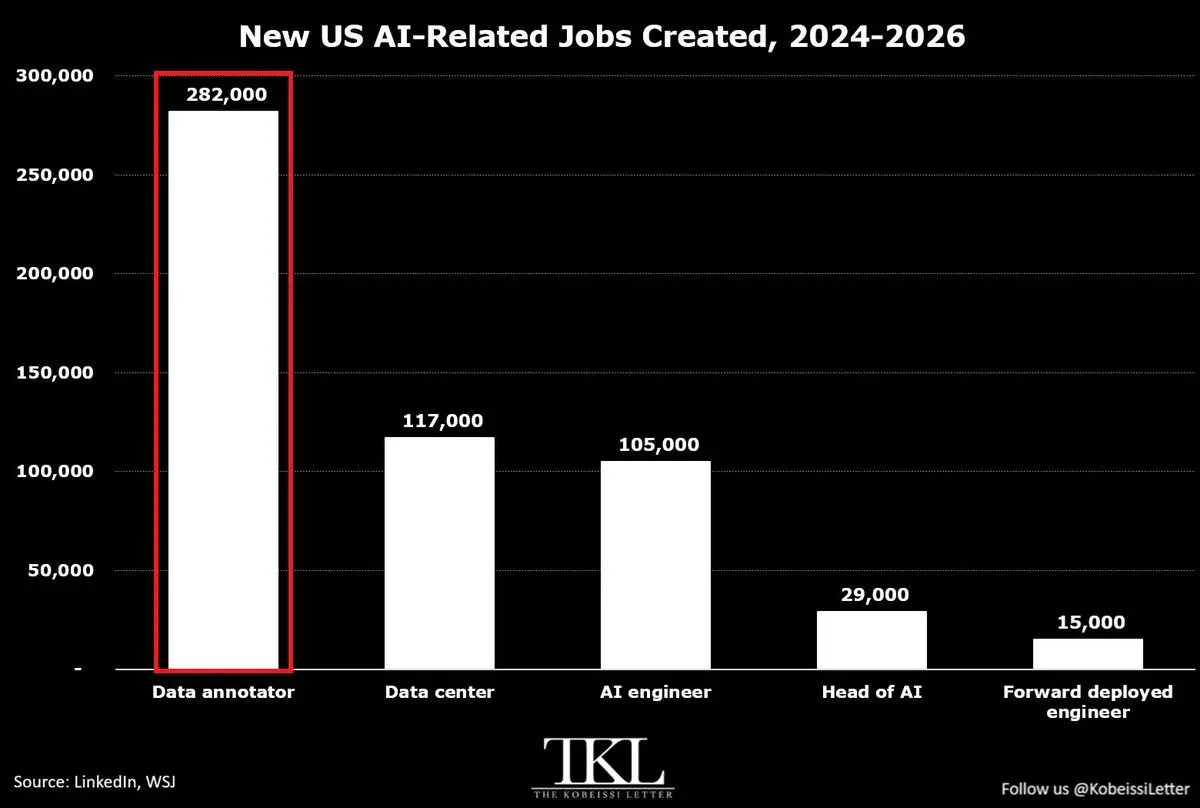
LinkedIn estimates AI has created 750,000+ U.S. jobs since 2023. The 2024–2026 breakdown includes:
- 282,000 data annotator jobs.
- 117,000 data center jobs.
- 105,000 AI engineer jobs.
That doesn’t tell us how many jobs AI has replaced.
Mollick’s point: people can learn AI and still be held back by how their company or customers work.
I think he’s right especially in GTM roles.
Our salespeople can use AI to write better emails. But if they’re still chasing customer data, have a strange request or are waiting for approvals, that deals stall.
We need people who can fix those delays and random problems.
We can teach everyone to use AI, ... and still lose to a company that makes the buying experience easier.
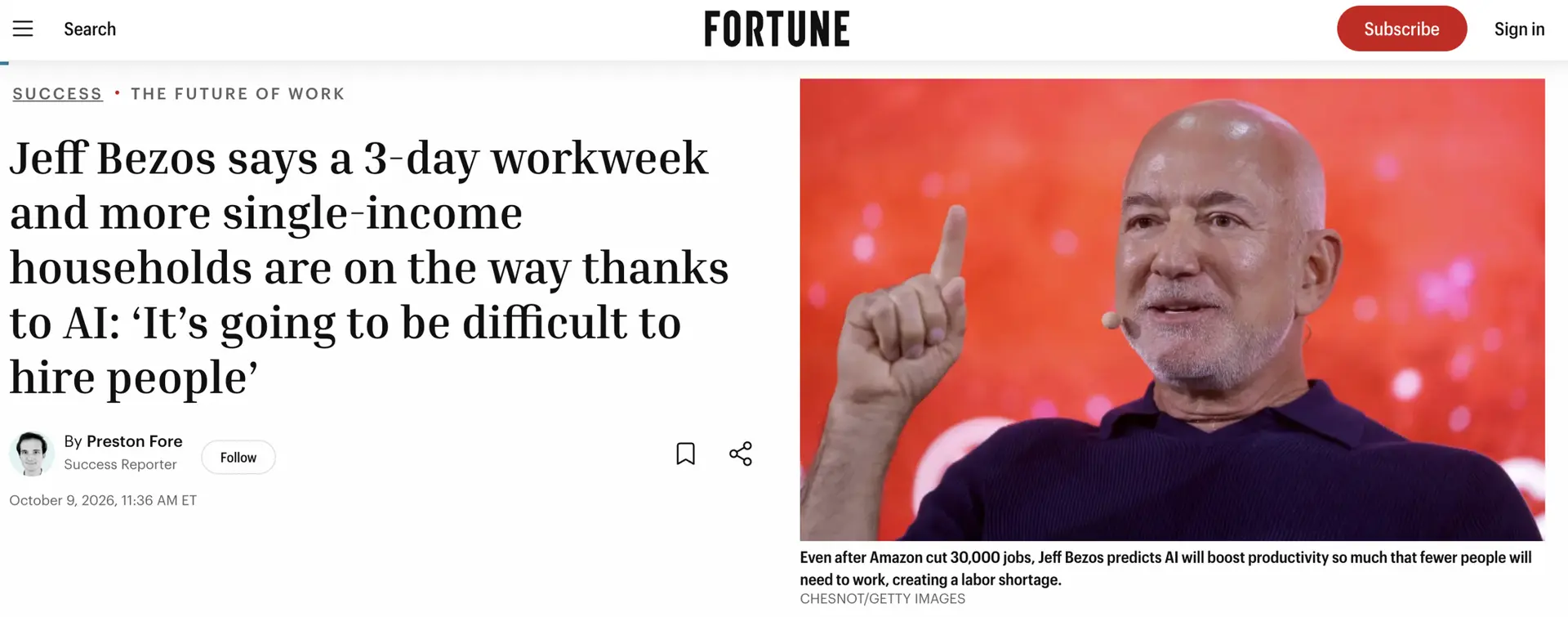
Fortune today: Jeff Bezos predicts AI could give us a 3-day workweek. I think that’s hype.
If you can get a week’s work done in three days, employers will want to see what we can do in five. And they’ll pay for it.
PwC found a 62% pay premium for jobs that require AI skills.
Companies will keep competing for people who can get more done with AI. That premium will keep growing while those skills are hard to find.
Still, some people will choose more free time over more money. That's great, a three-day week works for them.
But eventually, knowing how to use AI will just be part of getting hired.
And employers will inevitably still expect five days of work, with a lot more getting done.
The Macro View
We’re putting a lot of responsibility on individuals to learn AI. Management has to take responsibility for changing how the company works around them.
A salesperson can write better emails and prepare for meetings faster. But if pricing, approvals and customer information still require five people across three departments, the customer keeps waiting.
That’s why HubSpot’s decision to reorganize around customer outcomes matters beyond the layoffs.
As we build our 2027 plans, I’d focus on three things:
- Start with the customer result. What needs to get faster or better for someone to buy from us, get help or renew?
- Give teams ownership and authority. Decide what people and AI teammates are responsible for, including who handles the exceptions.
- Decide where the extra capacity goes. More customers served, better service, higher compensation or more time back. Those are management choices.
Bezos sees the possibility of shorter workweeks. Some people may choose that. I expect most companies will first see an opportunity to get more done, and compete for people who can deliver it.
Knowing how to use AI will increasingly become part of the job. We still have to build organizations where those skills produce results.
If our people get faster, ... but our customers still wait, we haven’t finished the job.
Until next week…