
We canceled every Claude license at Atonom.
We’re an AI company, and our own team was spending WAY too much time trying to make AI useful.
Emails took longer. Decks took longer. Reps were becoming responsible for building and fixing automation, ... on top of selling.
That was a management problem we needed to own.
The rest of this week showed why getting this right matters:
- Deel’s CEO said they added more than $140M in ARR in 90 days without increasing headcount.
- Amazon blocked Meta’s Muse from shopping on their site. At Connect, Meta announced new shopping integrations with Walmart and Best Buy.
- Charles Schwab and Allstate fell as investors considered what happens when agents help customers compare, negotiate and switch providers.
We’re trying to remove work from our companies. Our customers could use agents to remove work from buying, too.
That could change how many people we need to hire, how we reach customers, and how hard we have to work to keep them.
We need to stop confusing time spent using AI with work actually getting done.
Let’s start with what we got wrong inside our own company.

We canceled all of our Claude licenses
We’re an AI company, and our own team was spending WAY too much time trying to make AI useful.
This week, our CRO Gabe Larsen described the problem:
- Emails taking longer to write, and then they sound like AI slop.
- Hours spent fighting with AI over a deck that manually would be half the time.
- AI hackathons that produced garbage nobody used.
“We got so busy teaching people to use AI that we forgot to ask whether any of it was growing the business.”
So we canceled the licenses and stopped the insane token spending.
Management has to own this. If every rep has to invent, debug and maintain their own automation, we’ve added another responsibility to the sales job.
Higher AI usage can look like progress even while it takes time away from selling. Now, our AI ops team owns all of this.
The reps use them and get back to selling.
Maybe we give Claude back to everyone. But a few weeks without it made one thing painfully clear, ... we’d started confusing being busy with AI with getting our work done.
Deel added $140M without increasing headcount
This week, Deel co-founder and CEO Alex Bouaziz said they added more than $140M in ARR in 90 days without increasing headcount.

I think hiring more people before testing automation is a complete management failure.
Deel helps companies hire and pay people worldwide, handling payroll, HR and employment compliance. They’re also selling Akai, the automation platform they built internally.
Bouaziz claims they’ve:
- Built 8,000+ agents.
- Automated work equivalent to 600 full-time employees.
- Automated 85% of payment reconciliation.
Deel offers a full refund if their engineers can’t automate 1,000 hours of work in the first 30 days.
That’s a measurable commitment we can evaluate against a staffing plan.
At Atonom, our hiring Cloud Employee handles candidate sourcing, screening and interview scheduling all autonomously.
Before we start writing another job description, we need to evaluate if a Cloud Employee or AI agent can already do that job.
Which tasks can they own? What work still requires a person? Does that remaining work justify another hire?
“We need another hire” should come after we’ve answered those questions, ... not before.
Amazon blocked Meta’s shopping agent
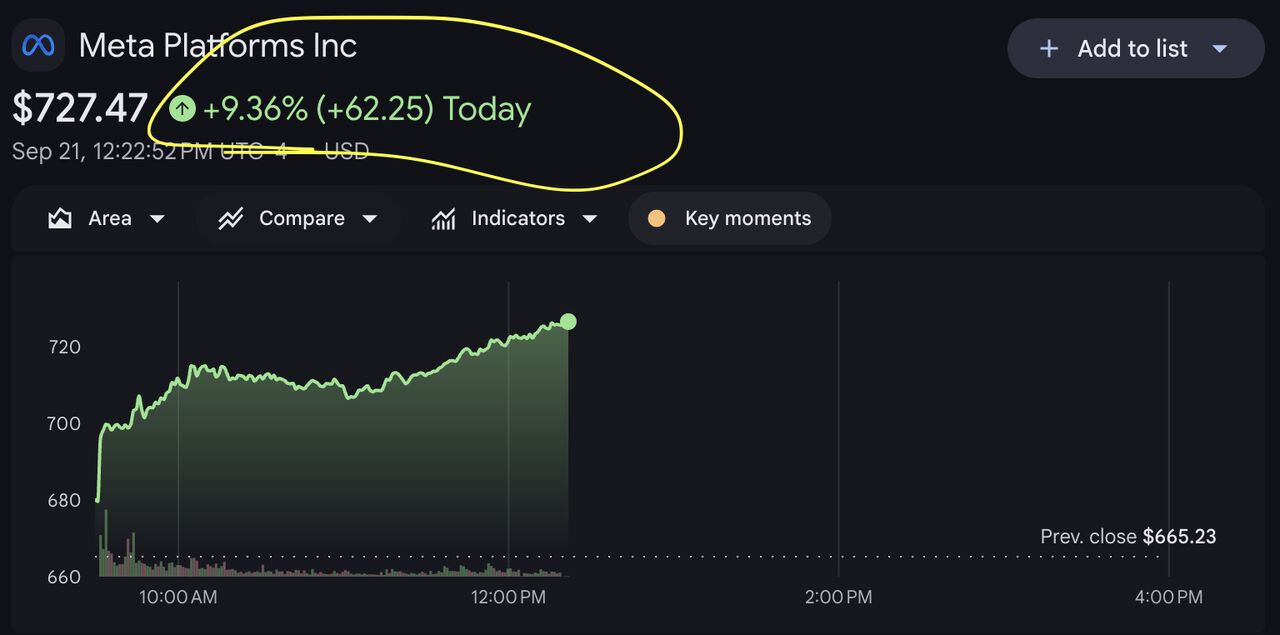
Meta had added $158B in market cap anyway.
Wells Fargo raised their Meta price target to $796 ahead of Meta’s annual AI and hardware event this week. Amazon’s block didn’t stop the rally.
Amazon says outside agents should “respect service provider decisions about whether or not to participate.”
But, ... I think they’re only protecting $$$, not passwords. They made $68.6B from advertising last year.
If a customer asks Muse to buy batteries, the agent could place the order without the customer ever seeing Amazon’s ads.
Companies are already deciding which agents they’ll let in:
- Amazon’s Alexa for Shopping is welcome. Muse is blocked.
- Salesforce brought CRM workflows into Claude Code last week.
- Walmart, Target and Best Buy are integrating shopping with ChatGPT.
Confirm the agent has the customer’s permission to buy. Give it access only to the data it needs. Then let it place the order.
At Atonom, we build Cloud Employees for sales, CS and support. I think more customers will send their AI to ask questions, check pricing and buy. Our Cloud Employees need to be ready to do business with those agents.
Our customers don’t owe us clicks, pageviews or a conversation with our sales team.
They’re trying to buy something, and we’re arguing about how they’re allowed to buy it.
The SaaSpocalypse trade is spreading beyond software
This week, Charles Schwab and Allstate fell more than 5% from fears about Meta’s Muse.
Goldman Sachs calls these “consumer inertia” stocks. Their watchlist includes AT&T, T-Mobile, Netflix, Expedia and Booking.com.
We have spent years measuring retention without always separating loyalty from inconvenience.
Some customers keep paying because comparing, negotiating or canceling takes time.
An agent with permission could:
- Compare insurance quotes before every renewal.
- Find a better rate for cash sitting in an account.
- Cancel subscriptions we stopped using.
- Compare and book a trip across competing providers.
An agent doesn’t have to replace a bank, insurer or travel platform to pressure their margins. Making customers more willing to switch could be enough.
That changes the renewal conversation. A customer who never questioned a price increase could suddenly arrive with three competing offers.
There is a real hurdle: people have to trust Meta with their inbox, calendar and purchasing decisions. Downloads don’t prove they will.
With Meta's Connect starting, I think we seeing just the beginning of what Zuckerberg's been working on.
The Macro View
AI could lower the cost of serving a customer while making that customer harder to keep.
We want agents to remove repetitive "bad" work from our teams. Our customers will want agents to remove the "bad" work of comparing prices, negotiating renewals and switching providers.
Some of what we’ve counted as customer loyalty may turn out to be just the inconvenience of leaving.
Inside our companies, we need to apply the same scrutiny. If our reps spend hours building, fixing and supervising automation, those hours belong in the cost of using AI. So does checking the output and redoing work that wasn’t good enough.
As we build our 2027 plans:
- Give someone responsibility for each automated workflow: what it completes, how reliably it works, and what it costs.
- Test what agents can handle before "hiring". Then decide whether the remaining work justifies another person.
- Review our renewals as if every customer could arrive with three competing offers.
We learned part of this the hard way at Atonom, ... being busy with AI can look a lot like progress.
The savings need to show up in our operating results. And our renewals need to hold up when a customer’s agent compares our price, service and results against the alternatives.
Until next week…