

Something real is changing with AI, and most of the talk around it feels like a way to not look at that directly.
Everyone wants to argue about the visible stuff. Models. Benchmarks. Valuations. Who’s winning. Those debates are easy because nothing has to change. You can sound smart and keep the org exactly the same.
What I keep seeing instead are leaders who feel unsettled and can’t quite say why. It’s not that the tools are faster. It’s that they’re answering a question that used to belong to people, and nobody explicitly handed that authority over.
A lot of roles existed to decide when work moved, who approved it, what mattered next. Reviews, handoffs, escalation, prioritization. Once systems can remember context and act without asking, those roles start thinning out, especially where the authority was procedural instead of judgment-based.
This isn’t really about speed, even though that’s how it gets framed. Speed is the decoy. The real change is that control stops being centralized. It leaks out one function at a time until no one can point to where it actually lives.
The systems aren’t magically smarter than people. They just don’t need permission loops anymore. And once that’s true, the old idea of who’s in charge gets a lot harder to defend.
The Growth Model is Outdated
Scaling used to be a lie everyone agreed to tell. Capital went in. Headcount came out. The org chart was the strategy. It worked because money was cheap, not because the model was good. Then the market flipped. Efficiency mattered. Then profitability.
So companies did mass layoffs and called it discipline. Margins went up and stocks popped. Then the market said, “Now grow.” And that’s where everything broke. You couldn’t rehire. You couldn’t squeeze burned-out teams forever. The old playbook was dead.
So everyone ran to AI...the answer to everything. Everyone wanted a strategy. Almost no one knew what it was supposed to do. And almost everyone screwed it up. They treated AI as a tool problem, not a labor problem. They used AI to make broken roles faster instead of asking whether those roles should exist at all.
You don’t “augment” this, you redesign around it. Humans own decisions. Machines own execution. That’s why leaders feel lost right now. Everyone knows headcount-led growth is over. No one knows what replaces it. So companies cut people on one side and talk about AI on the other, without changing how work actually gets done.
When growth models break inside companies, the pressure does not stay internal. Institutions feel it next. Not because they see the future clearly, but because their assumptions about work start to fail.
That tension is what’s really driving the regulation debate.
When Governments Lose Control
The AI regulation debate at Davos is really about unemployment. Governments keep pointing at hallucinations and safety, but that’s not what’s making them uneasy. Work is starting to disappear in ways that don’t line up with how laws, labor markets, or institutions move.

AI isn’t doing anything exotic or out of control. It’s breaking an old assumption most organizations were built on, which is that humans are the only unit of execution allowed inside the system. Once that assumption cracks, a lot of roles start to look less like jobs and more like habits.
That’s why regulation shows up so quickly in these conversations. Not because leaders don’t understand the risks, but because they want time:
- Time to adjust org charts that already feel wrong.
- Time to rethink incentives that were designed around headcount.
- Time to keep acting like this is optional, or gradual, or something you ease into if you plan carefully enough.
It’s not.
The work is changing anyway, and the longer leaders wait to deal with it themselves, the more likely it is that the redesign comes from the outside, written by people who don’t have to run the company when it breaks.
Engineering is one of the first places where the shift is obvious. Not because people are faster, but because the center of the job is moving.
Writing Code Was Never the Job
If your engineers are still spending most of their time writing code, you’re probably behind. Not doomed. Just behind. I know that sounds dramatic. It’s not meant to be. It’s just what I’ve watched happen.
Last week, Anthropic’s CEO Dario Amodei said their engineers don’t really write code anymore. They mostly review what the model spits out.
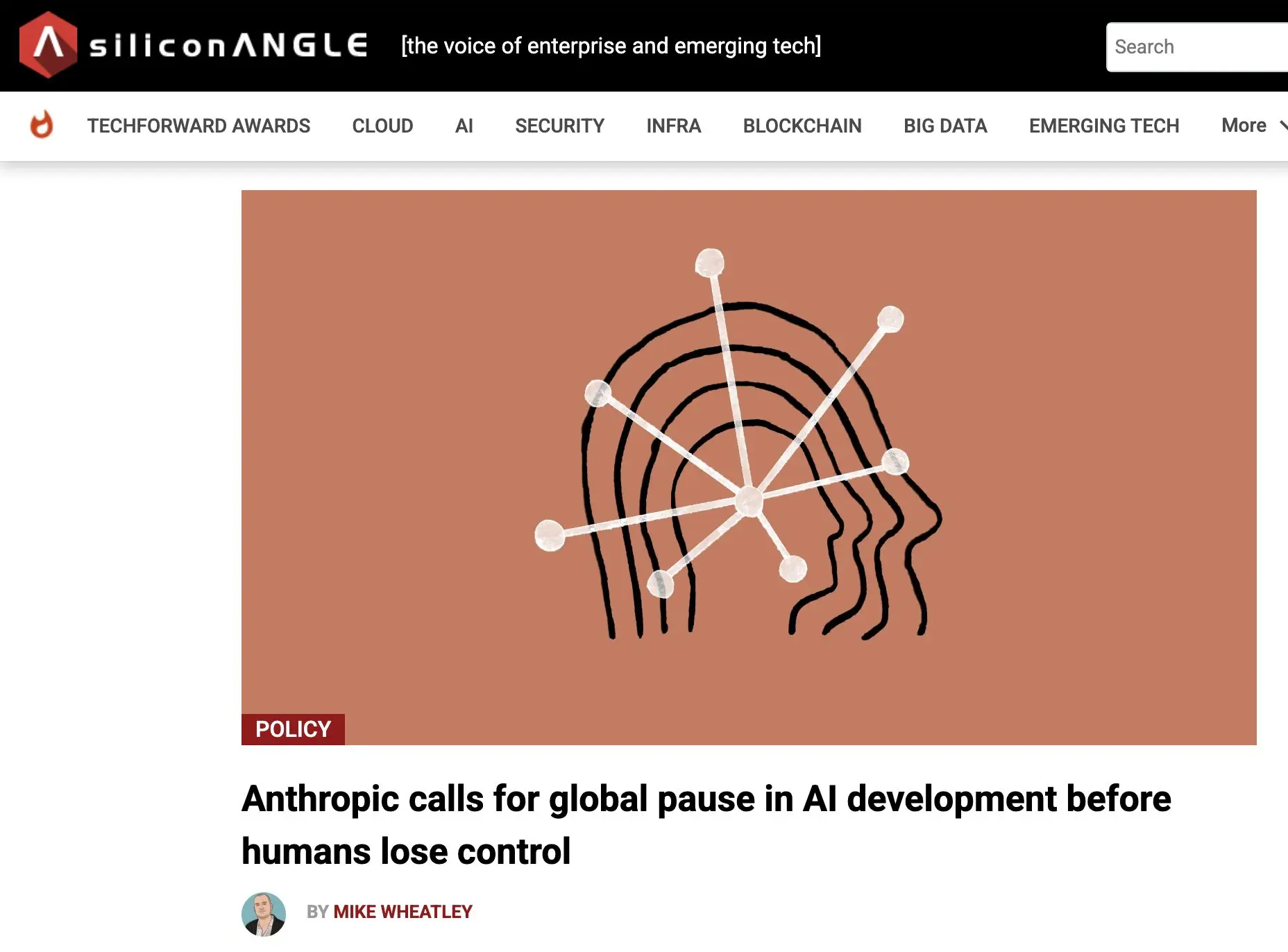
A lot of people brushed past that like it was a cute productivity anecdote. It wasn’t. It was a description of how the work already changed. Writing code was never the job. It was the mechanism. Owning the system that produces correct outcomes was the job. We just used humans as the compiler because we didn’t have a better one.
Now we do.
The junior role people keep talking about “augmenting” doesn’t really stretch. It will mostly disappears. The senior role doesn’t scale either. It narrows to a few people deciding what should exist and a few checking the system’s work. What goes first is most likely the middle, the glue layer, not with layoffs but by becoming unnecessary.
When I hear leaders ask how AI will help engineers write code faster, it sounds like optimizing the checkout line in a store that’s about to go self-checkout.
The work isn’t getting quicker, it’s changing shape, and the interesting part isn’t speed, it’s realizing fewer people are needed in that spot at all and that nobody’s really thought through what the place looks like once those lanes don’t fill back up.
Investors do not wait for job titles or org charts to catch up. They fund what they believe will replace labor, not what makes existing work slightly easier.
100M Raised by AI Startups
55 U.S. AI startups raised $100M+ in 2025. The lazy read is that the bubble is back and investors lost discipline again. It’s a comforting story but it's also wrong.
Takeaway One: This is not consumer hype money.
The capital isn’t chasing toys or demos. It’s going into infrastructure, agents, and vertical systems. The boring, expensive parts you only fund when something is expected to run at scale and not break.
Takeaway Two: Models are not the endgame anymore.
The big labs still raise the headlines, but the real money is moving to the layers that decide what gets done, when it happens, without a human hovering.
Takeaway Three: Repeat rounds should make you uneasy.
Investors don’t re-up because an idea is clever. They do it when something is already being forced into production and demand is outrunning the org’s ability to control it.
Fourth Takeaway: AI is being capitalized like labor, not software.
These aren’t SaaS bets. They’re substitutes for payroll and outsourcing. That’s why the checks are huge and patience is gone.
Most leadership teams still talk around this. They frame it as assistants, copilots, productivity gains. It sounds safer that way. But the capital isn’t betting on helpfulness. It’s betting on work getting done without asking permission.
What keeps nagging at me is how many AI strategies I still hear that assume humans stay in the loop by default, reviewing, approving, deciding, hovering. That assumption made sense a year ago. It makes less sense every quarter, and the money seems to have already moved on, even if the org charts haven’t caught up yet.
See the article here.
Some companies narrow their focus and build depth. Others keep expanding the surface area, hoping scale will substitute for coherence.
OpenAI’s Enterprise Focus
Everyone’s reacting to the headline: OpenAI is “going enterprise” in 2026 like it’s some bold new move. To me, it reads less like a strategy and more like a confession.

They invented the category. That part matters. What happened next matters more. Instead of sitting with it and building depth, they kept chasing motion. Consumer chat. Growth loops. Whatever the last demo wowed people with. Images. Video. Agents. Always something new, always explained as exploration, rarely explained in terms of what they were explicitly choosing not to do.
Then the numbers tightened. Leadership got reshuffled. And enterprise suddenly became the focus. Again, that feels less like strategy and more like pressure.
Meanwhile, the actual market already sorted itself:
- Google quietly became the infrastructure layer. Phones. TVs. Robots. Appliances. Enterprise systems. They didn’t win by shouting. They won by shipping boring, reliable, everywhere software.
- Anthropic did the opposite. Narrow focus. Programmers. Enterprise workflows. One job. Done well. They’re specialists, and the market rewarded them for it.
OpenAI raised so much money that coherence became optional. Once that happens, discipline usually leaves. You stop making real tradeoffs. Every adjacent idea feels defensible. Not because it’s right, but because the burn rate demands justification.
People talk about enterprise like it’s a switch you flip once growth slows elsewhere. In practice it never works that way. Enterprise shows up in how you build, what you don’t ship, how long you’re willing to wait, and how much mess you’re willing to tolerate. If that muscle isn’t there early, it doesn’t magically appear when the board gets nervous.
This keeps getting framed as a model race, which is convenient and mostly wrong. Models converge. What doesn’t converge is focus. Or trust. Or the willingness to disappoint entire markets so you can serve one well.
Under all of this is a quieter shift. Platform winners aren’t trying to put intelligence everywhere. They’re deciding where it’s allowed to operate and where it’s fenced in. Enterprise adoption doesn’t come from capability. It comes from trust built over time.
Google Made Memory a Product
Everyone’s arguing about models while Google turned memory into a product.
Last week Google announced “Personal Intelligence,” a memory system that connects Gmail, Photos, Search, and YouTube into a single view of your behavior over time.
When those products were separate, Google could answer questions but it couldn’t act for you. It forgot too much. Every interaction reset. You were always starting over.
Now memory is connected.
The system doesn’t need to be told what matters. It already knows what you pay attention to, what you ignore, and what usually comes next. Now that memory is connected, the system doesn’t need to be told everything. It already knows what you care about, what you ignore, and what usually comes next.
That's a big change.
AI stops being something you use and starts being something that moves work forward. It surfaces things you didn’t ask for. It closes loops you didn’t finish. It skips steps you didn’t realize you were repeating.
That’s why this matters in AI.
Smarter models help you think. Memory lets the system decide what happens without asking. And once that starts, work feels very different.
Zoom Out
AI is changing who gets to decide, who gets to act, and how much permission is still required along the way.
This week you can see it showing up in pretty obvious places.
Jobs that existed to review and coordinate are starting to shrink. Investors are putting real money into systems that can do that work without waiting on people. Governments are uneasy because control is slipping out of the structures they understand. And at the platform level, the winners are becoming a control layer for intelligence, not just a place to run it.
What’s changing is that systems with memory and autonomy don’t need constant oversight anymore. Once that happens, centralized control erodes, one function at a time.
