
For two years the AI conversation has been about the models. This week it was about what companies do when AI changes what they're worth.
Nobody shipped a breakthrough. The moves that mattered were companies deciding what they actually sell: (1) their data, (2) their spare capacity, (3) their org chart, (3) their people's judgment. And one company just moved the goalposts on how we'll talk to machines at all.
Here is what happened:
- HubSpot, down 65% in a year, told customers their enrichment data "may be shared with other customers" starting August 4, enrolled by default.
- Meta added $98 billion in market value in a day by renting out its unused compute, and erased $12 billion from Nebius and $7.5 billion from CoreWeave in the same announcement.
- Anthropic's Claude Code team threw out its engineering org chart and replaced it with five archetype roles. None of them are managers.
- Ford Motor Company rehired 350 veteran engineers after an AI-first quality strategy cost billions in recalls, then hit No. 1 in J.D. Power quality for the first time in 16 years.
- Meta released Brain2Qwerty v2, an AI that turns the brain's magnetic signals into text with no surgery, and open-sourced the training pipeline.
Five stories but the same pattern. When AI resets what the market pays for, every company gets forced to answer the same question: what do we actually own that's still valuable? Some answers are smart. Some are desperate. This week had both.
For business leaders the question isn't whether AI changes your model. It's whether the thing you monetize next is one your customers gave you on trust.
HubSpot is monetizing the last asset the market might value
HubSpot is down 65%, is one of the key SaaSpocalypse victims, and just ran what appears to be a desperation move by selling their customers' data.
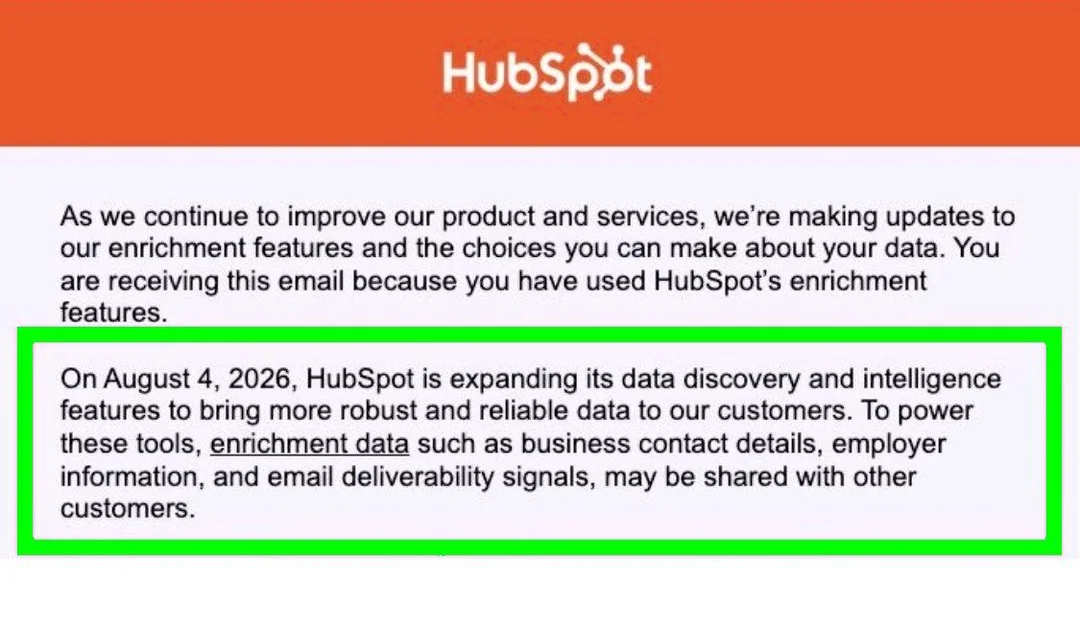
Starting August 4, enrichment data (business contact details, employer information, email deliverability signals) "may be shared with other customers."
Those are HubSpot's words from an email sent this week.
If your account already uses enrichment, you are enrolled by default. HubSpot calls it admin-controlled. But it isn't one switch, ... admins on Reddit have mapped at least 3 separate toggles: (1) enrichment sharing, (2) tracking-code intent, and (3) AI training on sent emails. All tied to Product Terms and a DPA that changed July 1.
Why take this risk? Look at their last 12 months:
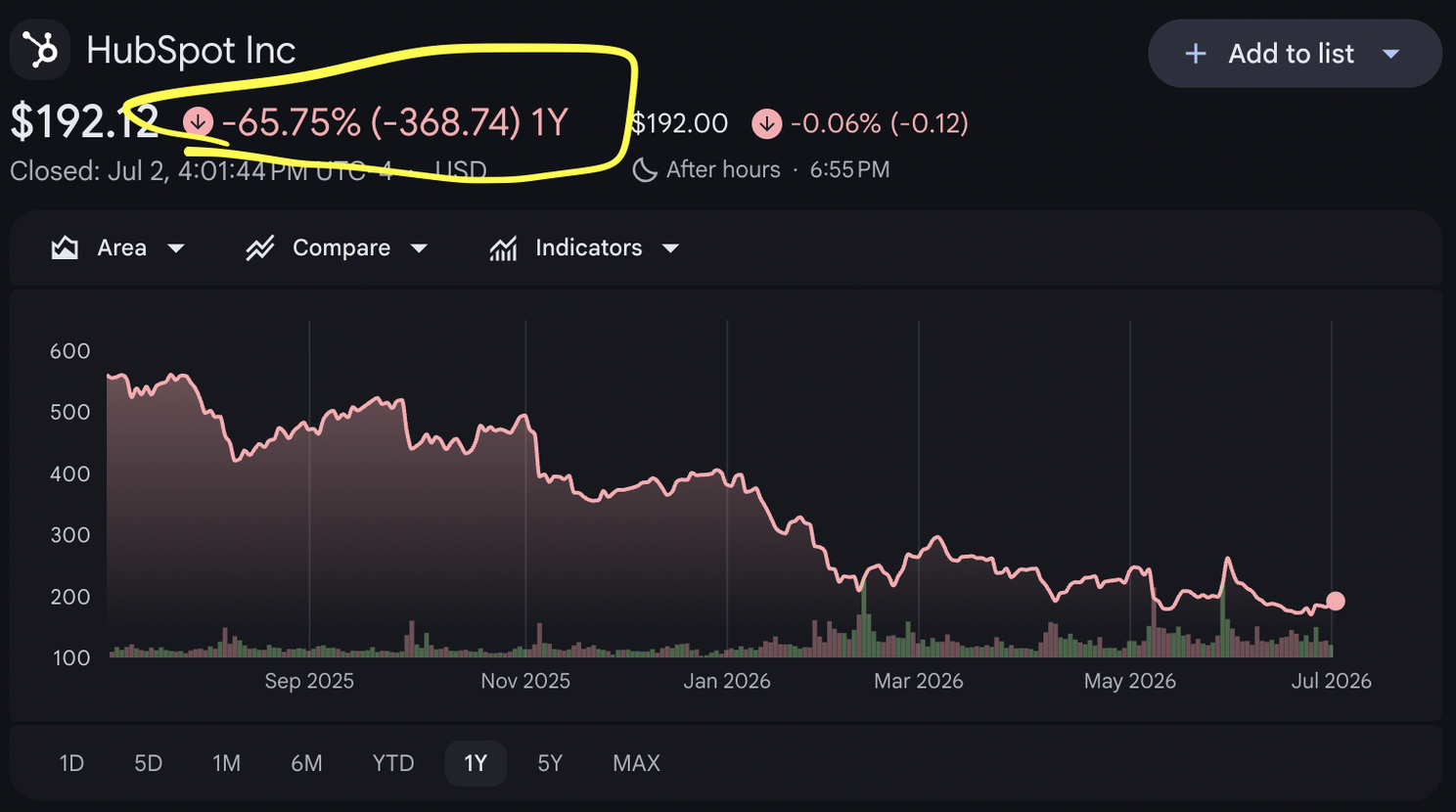
- HUBS closed yesterday at $192, down 65.75% in a year
- The 52-week high was $568, and market cap is now under $10B
- AI search wiped out roughly 140M visits from their inbound engine
But the business isn't collapsing. Revenue grew over 20% last quarter AND they raised guidance. What collapsed is the market's belief in their model based on the AI disruption.
When markets stop paying you for software growth, you find something else to sell. And the most valuable asset inside HubSpot is not Breeze. It is the contact and engagement data sitting in a couple hundred thousand customer accounts.
This is ZoomInfo's playbook, ... pool the customers' data and sell it back as "intelligence." EXCEPT ZoomInfo customers knew exactly that trade going in. HubSpot built its entire brand on the opposite pitch, they literally wrote the book on inbound and permission.
A CRM has one real moat: the customer's belief that their data is theirs.
This does not feel like an AI strategy. It feels like a company monetizing the last asset the market might value.
What's your take, is this smart pivot? And if you are using HubSpot, ... are you opting out before August 4?
HubSpot found something new to sell because the market stopped paying for the old thing. Meta just did the same, except its version added $98 billion instead of burning trust.
Meta turned its "mistake" into a business overnight
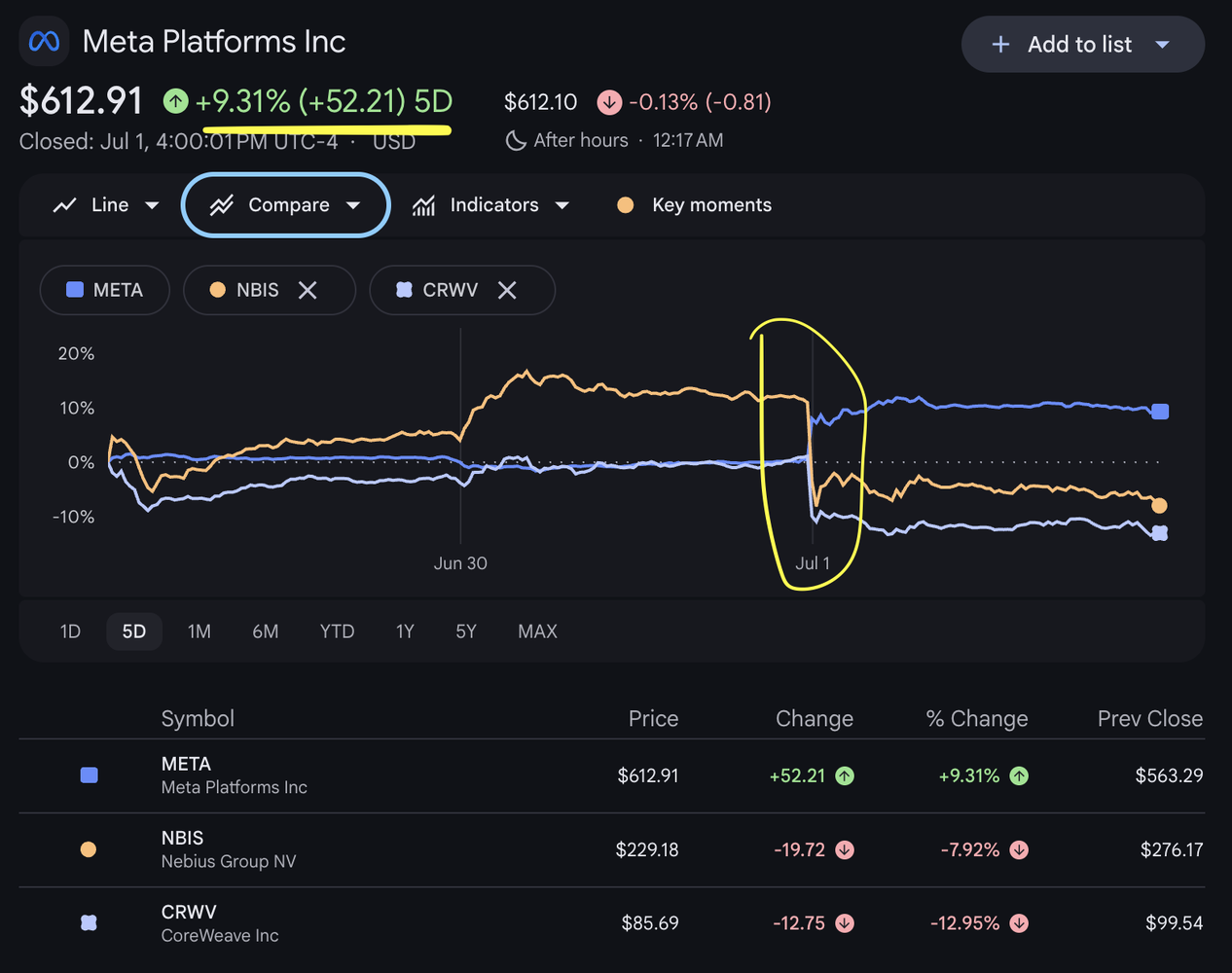
Meta added $98 billion in market value yesterday by turning its unused computing power into a business.
The same announcement erased:
- $12 billion from Nebius
- knocked CoreWeave down 14% ($7.5 billion in market cap)
Their biggest future customer had become their competitor overnight.$145 billion, ... That's what Meta is spending on data centers this year. Nearly double last year.
For months, Wall Street called it reckless. Then Meta revealed the hedge, and the stock jumped 8%.
Zuckerberg saw it coming. He told shareholders in May that companies ask to buy Meta's spare capacity every single week. He kept saying no, because Meta wanted it. That just changed.
- $600 billion committed through 2028.
- If the bet pays off, Meta uses every chip.
- If it overbuilt, it rents the rest.
Overbuilding was believed to be Meta's mistake. It just became its next business.
Meta repriced its infrastructure. Anthropic just repriced something harder to see: the org chart itself.
Anthropic replaced its org chart with five archetypes, none of them managers
Anthropic’s Claude Code team just reset their engineering org chart and replaced it with five archetype roles, ... none of them are "managers."
Boris Cherny, who leads the group, posted the new structure. It represents another example in the shift from a traditional company structure (very brute force) to the autonomous enterprise.
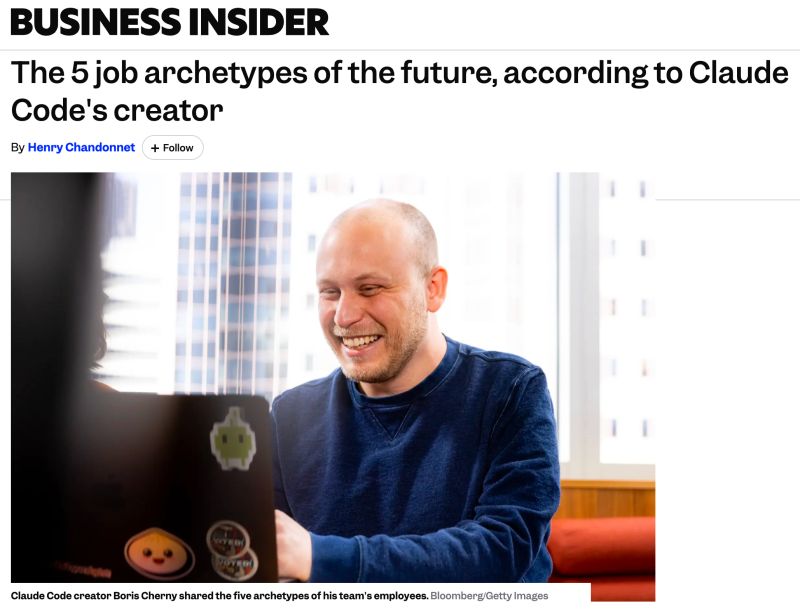
This is the math behind the shift:
- Traditional software engineer: 3 pull requests per week.
- AI-native builder: 10 to 30 pull requests per day.
This extreme leverage is why Anthropic generates $5M in revenue per employee and Cursor is about $3.3M. Traditional legacy SaaS considers $200k–$300k a really strong benchmark. This is a 10x to 20x efficiency difference.
Cherny stopped sorting by department and started staffing by product lifecycle archetype:
- Prototyper: Spins up new ideas.
- Builder: Converts prototypes to production-grade product.
- Sweeper: Simplifies code, kills clutter, optimizes performance.
- Grower: Iterates toward market expansion.
- Maintainer: Owns the mature, secure system.
None of these match to legacy SaaS roles. Some of his best Prototypers are designers. Some Maintainers were hired as PMs. The title on the badge stopped telling you what the person does.
And the mix changes with the stage. Early on you want Prototypers and Builders. Once it's working you lean on Growers and Maintainers. Same people, different chapters.
For twenty years we built companies the other way. Hire more engineers. Add a layer of PMs. Stand up a design org next to them. Then hire managers whose whole job was moving information between the three.
That middle layer seems to be the first thing to go.
When one person can carry an idea from sketch to shipped, nobody needs to coordinate the handoff. You need fewer, better people who can wear three of these hats at once.
The org chart was never the strategy. It was just the cost of getting people to talk to each other. That cost is now moving to near zero.
But before you flatten your org and cut your most experienced people, look at what just happened at Ford.
Ford bet on AI over experience and lost billions
Ford Motor Company rehired 350 veteran engineers after a bad AI strategy failed to replicate their expertise and cost billions in recalls and warranties. After bringing back the experienced team they hit No. 1 in J.D. Power quality for the first time in 16 years.
For years Ford leaned on AI to run quality control and let a lot of its most experienced engineers, the "gray beards" go. The catch is that the AI only knew what those people had already taught it. When they left, the knowledge left with them.
The damage:
- 51 recalls in the first half of 2026, more than any carmaker in America.
- Over 11M vehicles effected.
- One recall covered 4.4M trucks, including the F-Series.
So Ford reversed course. It brought the gray beards back to catch failure points, retrained the younger engineers, and fixed the AI that was supposed to replace them.
It worked. Ford climbed from 15th to No. 1 among mainstream brands in three years and expects the turnaround to save $1B this year. Its CEO, Jim Farley called it an overnight success four years in the making.
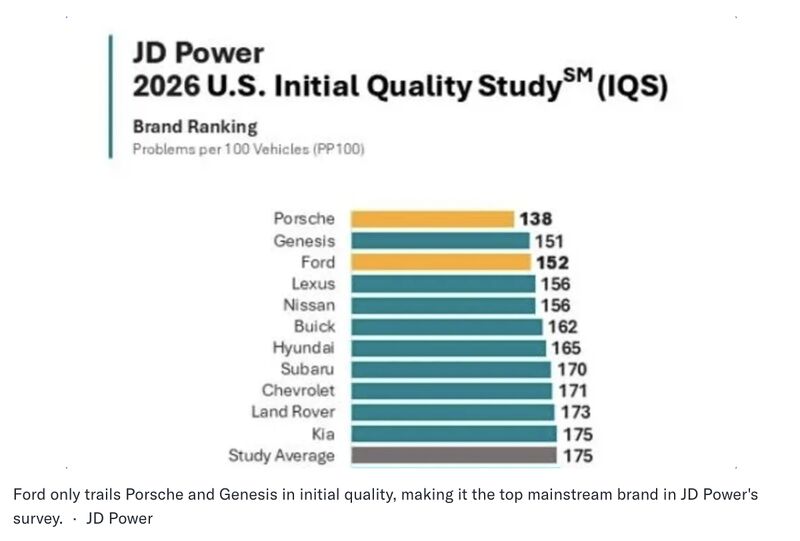
Their head of engineering admitted the mistake: they assumed AI alone would build a quality product, ... it didn't.
Every company cutting its most experienced people right now is making the same bet Ford just lost. AI is easy to buy. The judgment that makes it work is not.
Ford Motor Company didn't have an AI problem. It had an experience problem.
Everything above is companies adjusting to the current wave. The last story is about the next one.
The next interface isn't voice. It's thought.
Every massive shift in tech removes friction between the human and the machine. Meta just removed the last physical barrier.
You don't need a chip in your brain anymore. Meta just dropped Brain2Qwerty v2, an AI that turns the brain's magnetic signals into text, without surgery. The metrics from the study are crazy:
- 61% accurate on average.
- 78% accurate for the best participant.
- Then they put the entire training pipeline on GitHub for free.
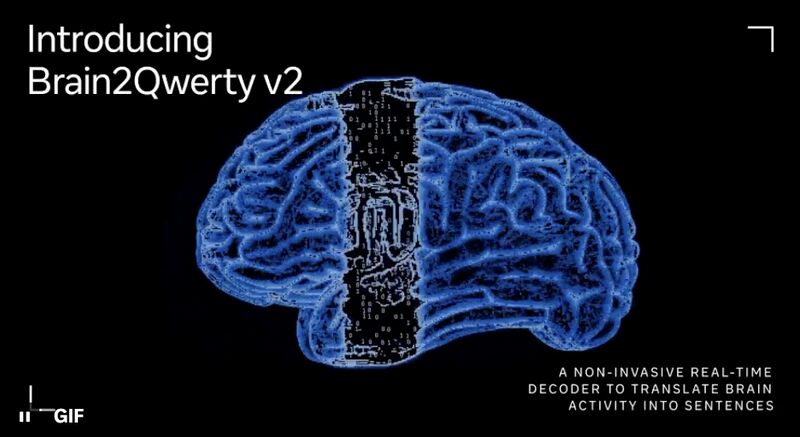
Basically, we are tracking toward non-invasive telepathy and nobody had to drill into a skull. (Instead of a chip, volunteers wore a non-invasive MEG sensor helmet). Every major jump in computing has really been a jump in how we talk to the machine:
- First came punch cards.
- Then keyboards.
- Then the mouse.
- Then voice.
- Next is thoughts.
None of those were small shifts. The keyboard gave us software. The mouse gave us the consumer internet. Voice changed how we search and learn. Each layer let more people in and made everyone faster.
Thoughts are next, and it’s showing up much sooner than planned.
Right now, what we can build is gated by how fast we can type and talk. Soon, our only limit will be how clearly we can think. Most companies are still hiring and training for the first one.
Every time the technology input changed, a massive new wave of companies got built on top of it. Someone is going to build for this one, too. That window is just beginning to open.
61% is not the headline. The direction is.
The gap between science fiction and science fact just got a lot smaller.
The Macro View
Five stories, one forcing function. AI is repricing what every company owns, and each one answered differently. HubSpot reached for the one asset it was trusted to protect. Meta turned its most criticized line item into a revenue stream. Anthropic rebuilt its org around leverage instead of coordination. Ford Motor Company learned that the judgment feeding the AI was the asset all along. And Meta's research team opened the window on the next interface entirely.
The pattern to watch: The companies winning this transition are monetizing what they built. The ones losing are monetizing what their customers gave them.
For business leaders the question is the same one HubSpot just answered badly: when the market stops paying for your old model, what do you sell next? If the answer is trust, you've already lost. If the answer is leverage, capacity, or judgment, you're playing the right game.
The fear gets the headlines. The opportunity goes to whoever figures out what they actually own, and moves. Go chase it.
