
This week made the priorities of the AI economy painfully clear: fund the compute, find the people who can make it work, and move fast enough to survive the mistakes.
Taiwan Semiconductor (Taiwan Semiconductor), the company who makes NEARLY ALL of the AI GPUs in the world, grew profit 77% and lost $145 billion in market value the next day. IBM had the worst day in its 115-year history because customers were paying for AI servers out of their existing software budgets. Anthropic launched a $1.5 billion consulting firm. Apple sued OpenAI after more than 400 former employees left to help build a competing device.
Here is what happened:
- TSMC reported $22 billion in quarterly profit, and Wall Street decided that still was not good enough.
- IBM admitted it did not move quickly enough as AI infrastructure spending starved the rest of its business.
- Anthropic followed OpenAI into consulting because the model is getting cheaper, but making it work inside a real company is not.
- Meta added $300 billion in market value after admitting its AI strategy was broken, then shipping, correcting, and shipping again.
- Apple took the AI talent war to court, accusing OpenAI of using former employees to take years of hardware knowledge with them.
- The University of Chicago banned AI from first-year law courses because the entry-level work AI replaces is also the work that teaches people how to think.
Here is what gets me. Every one of these stories is really about the same thing: AI is moving scarcity somewhere else.
AI compute is scarce, so it is draining budgets from software. People who can deploy AI are scarce, so model companies are building consulting firms. Elite engineers are scarce, so companies are suing over where they go. Judgment is scarce, so universities are protecting the environments where it gets built.
The technology is getting easier to access. Everything required to make it useful is getting harder to find.
The question is no longer whether AI works. It is what gets starved, sued, or completely redesigned to make it work.
TSMC grew profit 77% last quarter
The next trading day its stock had its largest point drop ever, falling over 7% and erasing NT$4.66T, about $145.6B in market value.
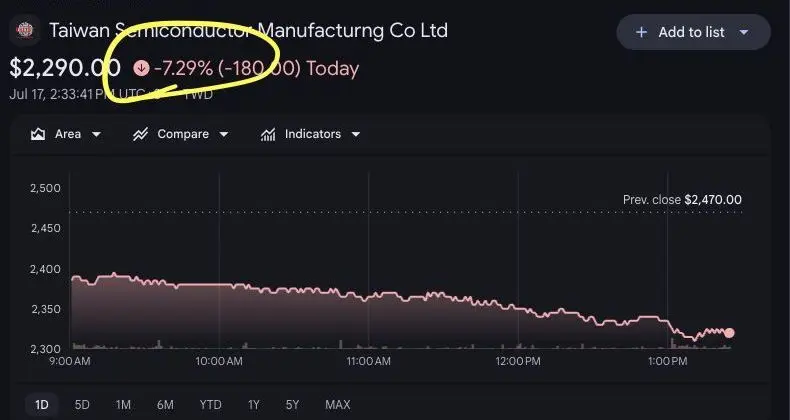
The quarter:
- $40B in revenue, up 34% in US dollars
- $22B in profit, up 77%
- 68% gross margin
- Full-year revenue growth forecast raised to slightly above 40%
Then the selling spread through the US companies building the AI infrastructure:
- NVIDIA: revenue up 85%, stock down 2.4%, about $120B erased
- Broadcom: AI chip revenue up 143%, stock down 5%, about $89B erased
- Micron Technology: revenue went from $9.3B to $41.5B, stock down 5.7%, about $54B erased
- AMD: down 5.3%, about $43B erased
- Intel: down 5.8%, about $28B erased
Nearly $480B disappeared from those six companies. Here is what gets me. None of these companies reported collapsing demand. TSMC and Micron reported record quarters. NVIDIA nearly doubled its data center business. Broadcom’s AI chip revenue more than doubled.
The market has started treating crazy growth as the minimum.
This is why I do not think AI is in a bubble. I think the expectations around it are. There are AI startups with huge valuations, no profits, and no evidence customers will pay enough. That part may be a bubble.
But TSMC made $22.4B in one quarter. NVIDIA reported $81.6B in quarterly revenue.
The warning sign will be when orders slow, margins collapse, or expensive factories sit empty.
That is not what these companies reported.
If 77.4% profit growth was disappointing, what number would have been good enough?
The hardware players are printing massive cash even if Wall Street is throwing a tantrum. But look at where that capital is actually coming from. It is being ripped directly out of traditional enterprise software budgets to fund those infrastructure purchases.
AI gave IBM the worst day in its 115-year history
Down 25% and $67B in market cap erased.
"We did not adapt and move quickly enough." Those are CEO Arvind Krishna's words, from a letter to investors yesterday.
The strange part: IBM was supposed to be one of the AI winners. In January they told Wall Street their AI book of business had passed $12.5B, and the stock jumped 8%.
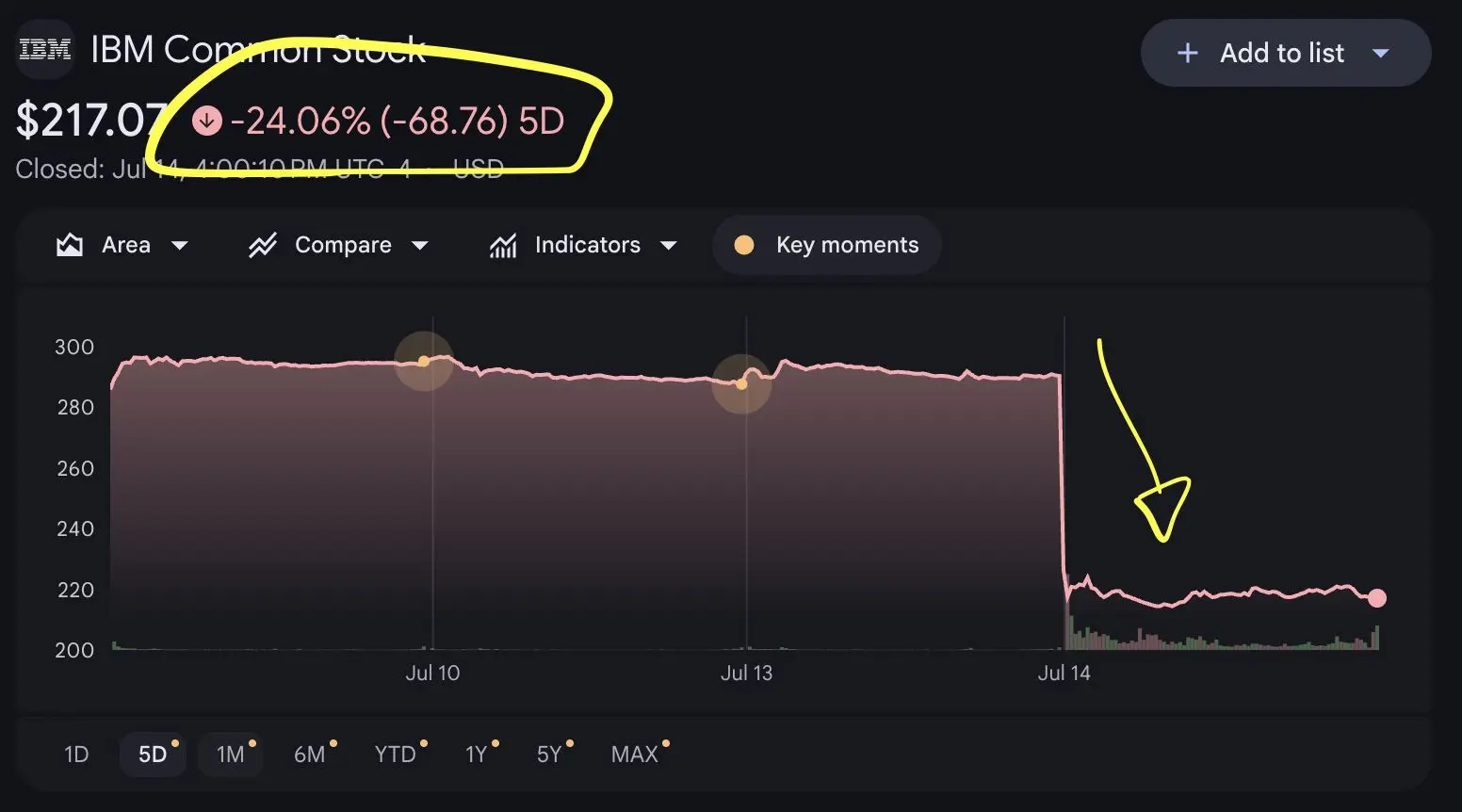
Now look at today:
- IBM pre-released its Q2 numbers a week early. $17.2B in revenue, about $660M short.
- Infrastructure fell 7%. Software grew 5%.
- Customers rushed to buy AI servers and memory ahead of price hikes and paid for it out of their mainframe and software budgets.
- The panic spread: Workday fell 10%, ServiceNow 8%, Accenture 7%, Salesforce 6%.
Here is what gets me. IBM didn't fail at AI. Their AI business more than doubled last year. The rest of the business got starved to pay for AI. Enterprise budgets didn't grow to fund AI, so the GPU order gets paid out of someone's software renewal.
Two weeks ago I wrote about the memory squeeze, when SK hynix dropped 12% in a day. First it hit the chip makers. Now it is showing up in software income statements. IBM is just the first one to say it out loud.
If you sell software, your renewal is now competing with a GPU order. Are you seeing this GPU tax in your deals yet, ... and how are you protecting your number?
When legacy software renewals get cannibalized to fund raw compute, the software vendors themselves are forced to change what they sell. If standard software seats are losing their value, the economic moat shifts entirely from the code to the deployment.
Anthropic was just valued at $965B for building the most advanced software on earth
Yesterday made its next big bet, ... a consulting firm??
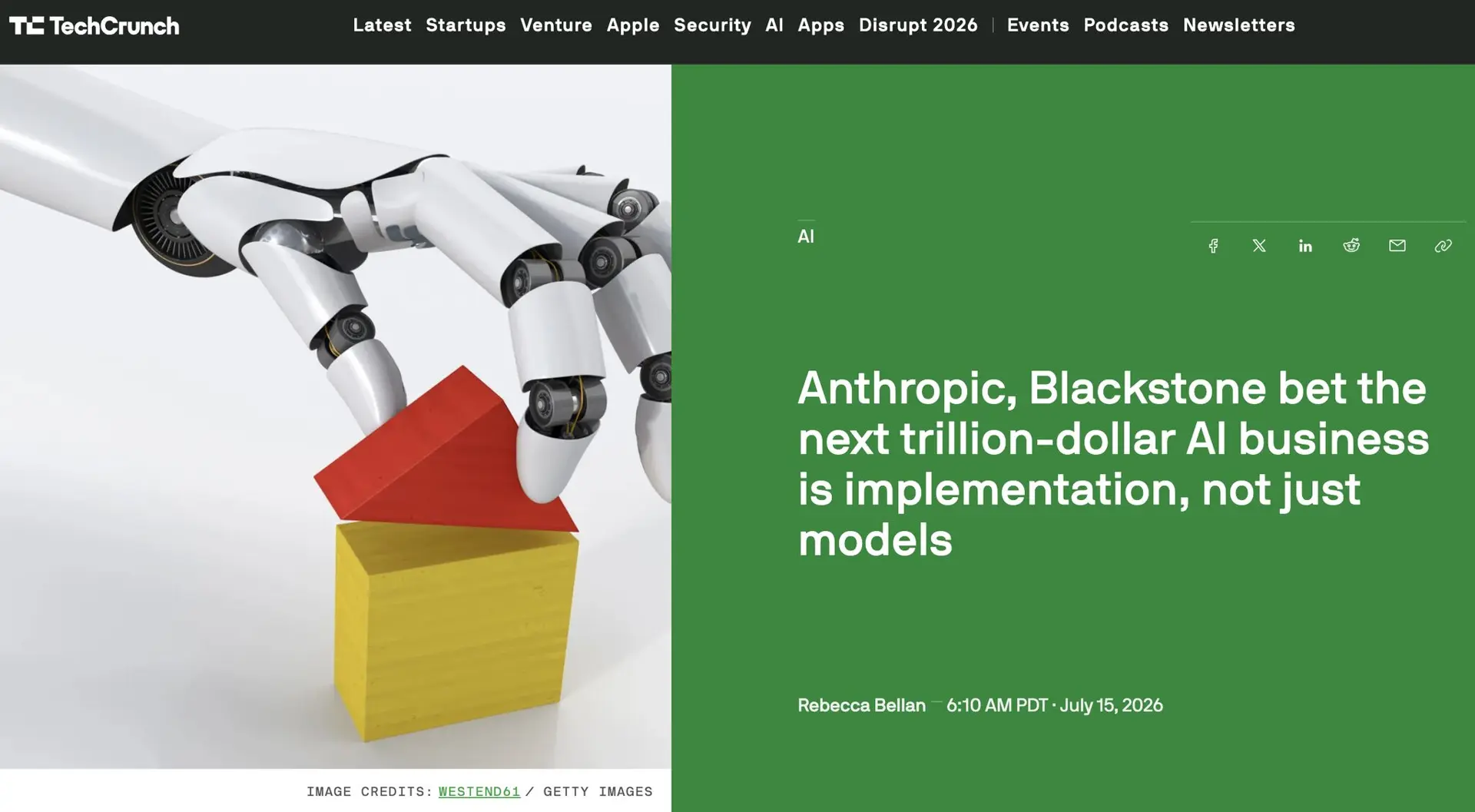
Ode with Anthropic is a $1.5B AI implementation company, a joint venture with Blackstone, Hellman & Friedman, and Goldman Sachs. It follows OpenAI's own version, The OpenAI Deployment Company. Both labs are now selling people, not just tokens.
The details:
- Ode employs 100 engineers, and more than half are former founders. Blackstone calls them "special forces."
- It was built on Fractional AI, a boutique that ended an 11-month OpenAI partnership the moment this venture acquired it.
- The PE backers will feed their own portfolio companies in as customers.
- Deloitte and Accenture just stood up rival forward-deployed engineering practices.
The AI consulting war is on. Ode's CEO Chris Taylor didn't hedge: "It's pretty easy to imagine this as a trillion-dollar company someday if we execute well."
The really interesting this is that SaaS has been removing services OUT of the business, ... services revenue killed your multiple. Now the two most valuable AI labs are building services firms on purpose.
Because the moat moved. Meta made intelligence cheap last week. Open source is making it free this week. The really scarce asset isn't the tech, it's the person who can make a model actually work inside a real company.
We have seen the very same thing at Atonom. Our deployments struggled despite amazing tech. Then we built a consulting team that runs our "6 Pillars" AI implementation system. Now, demonstrable ROI on every deployment.
The model is becoming the commodity. The deployment is becoming the business.
Winning that deployment game requires relentless organizational velocity. While old-school companies run a slow playbook of denying and stalling, the modern winners are surviving by shrinking the time between making a mistake and fixing it.
On June 12, Mark Zuckerberg told his company that Meta's AI reorganization was full of mistakes.
Thirty days and a 23% $300B rally later, that memo looks like he is serious. His words: "we've made mistakes and will almost certainly make more." By June 25, the stock had bottomed out.
Then Meta moved:
- July 1: Announced Meta Compute, renting out spare computing power. Roughly $98B added in a day.
- July 7: Shipped Muse Image, a new image model.
- July 9: Shipped Muse Spark 1.1, ... straight into the AI coding market at OpenAI and Anthropic.
- July 10: Started a price war, with Zuckerberg back on X after 1,099 days: $1.25 per million tokens vs the $5 and $10 premium tiers.
- July 11: Reports of Iris, a custom GPU chip with Broadcom, targeting September manufacturing.
And when something broke, same speed. Muse Image let users remix photos from any public Instagram account. That feature never should have shipped. But users revolted, talent agencies pushed, and Meta killed it in 3 days: "this feature missed the mark."
The market cap impact: from the June 25 low to Friday's $669 close, Meta gained 23% and over $300B in market value.
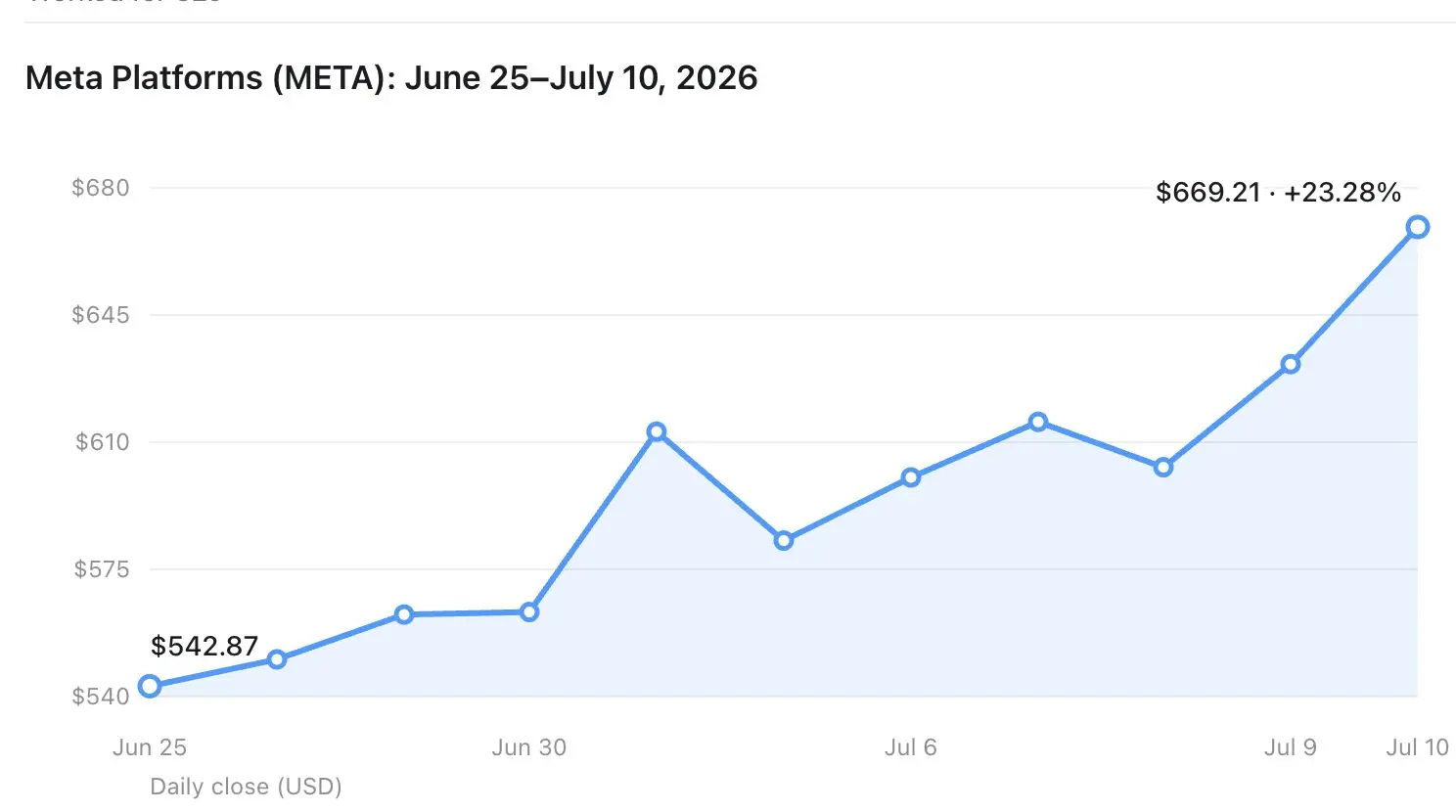
The market didn't reward the memo. It rewarded the execution that followed. The legacy playbook is deny, stall, acquire. Zuckerberg ran it in reverse: admit, ship, correct, repeat.
The advantage was never admitting the mistake. It was shrinking the time between admitting it and fixing it.
To ship and correct at that speed, you need the absolute highest density of elite builders. Because that talent is so scarce, the battle for top engineers is moving out of recruiters' inboxes and straight into federal court.
Apple put ChatGPT in the iPhone in 2024. Friday it sued OpenAI
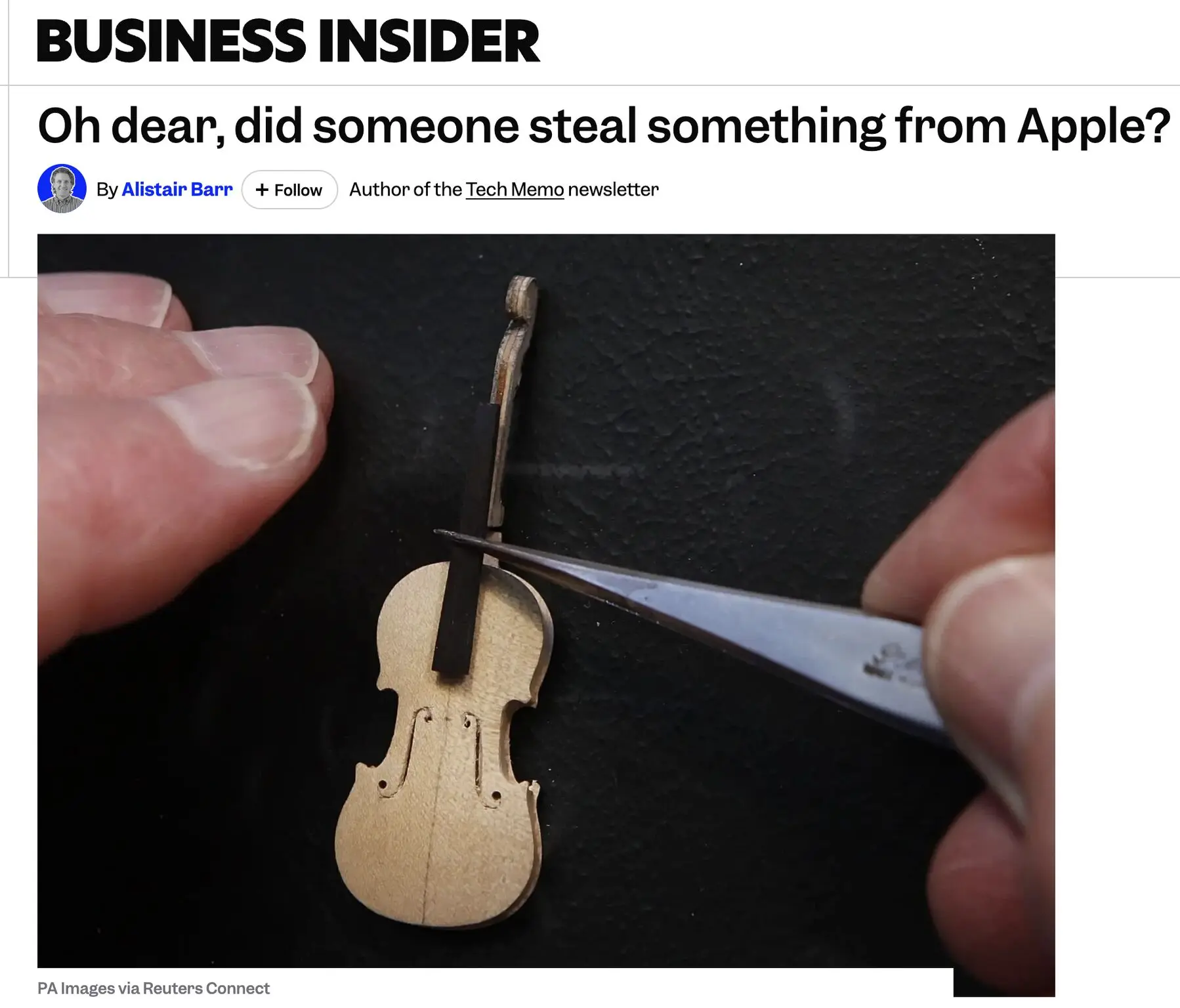
With 400+ former Apple employees now inside OpenAI building a competitive device. The AI talent war has now entered a new phase.
A 41-page complaint calls OpenAI's hardware business "rotten to its core." It names OpenAI and io Products (the Jony Ive firm OpenAI bought for $6.4B).
Apple alleges:
- OpenAI hardware chief Tang Tan, a 24-year Apple veteran, used secret project code names in recruiting and had candidates bring "actual parts" to interviews.
- A "Need to Know" doc gave new hires advance notice of Apple's exit security checks.
- An engineer kept his Apple laptop and downloaded dozens of files on unreleased products.
OpenAI's blunt reply: "We have NO interest in other companies' trade secrets."
Apple sent a warning letter in February with no answer. So Apple filed right as OpenAI is preparing to go public.
First we saw Noam Shazeer leave, then Ilya Sutskever. Then the core Gemini architects. Legacy tech companies keep losing their most important people because retention packages can't counteroffer raw equity upside and speed.
So, when you can't stop people from leaving, the new retention tactic is to sue over what left with your people.
In this case:
- Discovery opens OpenAI's hardware program to Apple's lawyers.
- The injunction fight creates pre-IPO overhang threat.
The talent war just moved from recruiters' inboxes to civil discovery. Apple’s real advantage is the people and know-how behind its products. Secrecy protects that.
But at what point does a talent war become just IP theft?
The fight for senior builders is an outright street-fight because the upstream pipeline is fracturing. If entry-level grunt work is automated by machines, operators have to actively protect the environments that teach junior talent how to build real judgment.
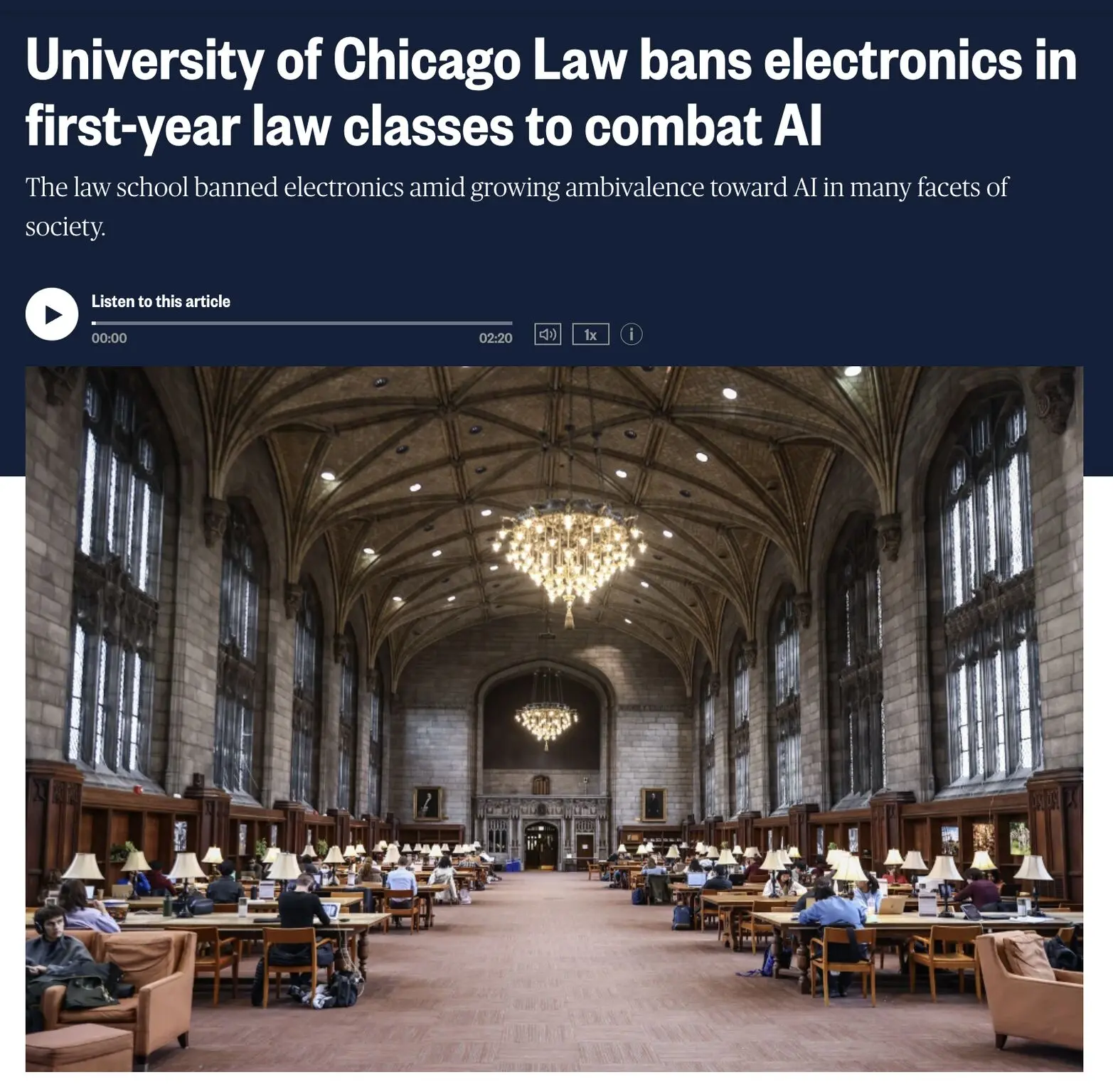
The University of Chicago Law School just banned laptops, phones, and tablets for every first-year student
The reason isn't distraction, ... it's AI. But this is not an "anti-AI" post. Actually, it might be the smartest AI adoption plan I have seen yet.
On July 9 the school released "Rethinking Legal Education in the AI Era." All nine first-year courses go device-free this fall. Exams in class, on paper, no internet.
The headlines call it a retreat from technology. But look at the rest of the policy:
- Older students get new AI classes
- Law clinics get AI tools for real cases
- Every major paper is defended out loud, in person, no AI to lean on
The school spent a year asking the firms that hire its graduates. They all said the same thing, ... don't let AI touch the first year.
Here is what gets me. All of these law firms run on AI, and they still drew this conclusion. AI took the document review, the memos, the first drafts. Only 38% of 2025 hires came straight from law school. The training ground for young lawyers is going away.
Dean Adam Chilton: "What are the essentially human skills that we should be training that AI can't replace?"
Every one of us are running the same experiment in our businesses. AI is now doing more and more of the entry-level work in every department. That grunt work is how young people learn to read a room and make a call. Your junior hires are your first-year class.
Chicago figured out you don't have to choose. Protect the years that build judgment, then hand people every AI tool you have.
Get the sequence right and you win twice, ... full AI value today, a bench of leaders tomorrow. How are you doing both?
The Marco View
That is what connects the whole week. The first-order AI win is obvious: more compute, better models, faster output. The second-order effects are where companies are getting caught.
Software budgets get hollowed out. Implementation is becomming the bottleneck. Mistakes have to be corrected in days. Top talent walks out with years of institutional knowledge. And the entry-level work that built the next generation disappears.
The companies pulling ahead are not simply adopting AI faster. They are absorbing the consequences faster.
For business leaders, that is the real test: can you fund the compute, deploy the technology, keep the people who matter, and rebuild what AI quietly breaks along the way?
