

Welcome to this week’s edition of Autonomous. If you spent this week watching startup fundraising acrobatics and sci-fi marketing narratives, you missed the real story. Over the last seven days, the AI market experienced a tectonic shift. The sleeping giants didn't just wake up, they slammed their chips on the table.
While frontier labs are burning calories on IPO positioning and obscuring token pricing, the hyperscalers: Microsoft, Meta, and Amazon are using their massive free cash flow to permanently alter the landscape. We are officially transitioning out of the "AI Demo Era" and entering the Era of Leverage.
Across all the noise this week, four distinct macro trends have emerged that every B2B leader, SaaS operator, and Go-To-Market strategist should understand:
- The Hyperscaler Takeover: The "startup vs. incumbent" debate is on. With Microsoft launching its in-house MAI Superintelligence models, Meta's Muse Spark adding $113B in market cap in a single day, and Amazon committing a staggering $200B to rebuild around AI, the infrastructure kings are committing to the AI horse race. They aren't raising capital, they are deploying it at a scale startups mathematically just can't match.
- The Fear-Based Marketing Trap: The market is currently hypnotized by the "sci-fi panic" narrative. Frontier labs like Anthropic and OpenAI are framing every new model release as an existential threat to drum up hype. But it’s a distraction. If you look past the "too dangerous for the public" branding, you don't find a digital superintelligence, you find a highly efficient debugging tool. It's time for the enterprise to stop falling for the apocalyptic marketing and start demanding clear ROI.
- The Collapse of the Token Economy: The era of subsidized AI is ending. As labs like Anthropic slash third-party access like OpenClaw to protect their IPO narratives, the broken nature of "token-based" pricing is exposed. Tokens are a utility, not a product. The market is aggressively pivoting toward "Outcomes-as-a-Service," where you pay for the work done, not the compute used.
- The End of Human Middleware: The ultimate consequence of AI isn't just software efficiency, it's org structure collapse. Tech giants like Meta and Block are actively decimating the middle management layer. If a role primarily exists to move information from point A to point B, AI just absorbed it. We are beginning to trade people managers for autonomous pods.
The market is no longer rewarding the promise of intelligence, it is rewarding the structural, financial, and operational leverage that intelligence creates.
Let's dive into the details of exactly what happened this week, and what it means for you.
Microsoft Woke Up
The sleeping giant just woke up. Microsoft may be the most underpriced AI company in the world right now. Everyone is still watching the startup circus.
- OpenAI $122B fundraising round
- Anthropic 's pricing antics
- xAI / SpaceX $1.5 trillion IPO
Valuation headlines everywhere.
Meanwhile, the real innovation war just shifted. Last week, Google released Gemma 4 an open-source, on-device AI model that can run locally across phones, laptops, and edge devices. This will instigate an entire industry of edge AI products ... just wait (remember I called this out).
Then Microsoft made a more subtle but crazy monumental move. They entered the AI model war.
April 2nd, Mustafa Suleyman's (Microsoft's AI CEO) MAI Superintelligence team dropped three new in-house frontier models. Prior to this, Microsoft was essentially a distributor of OpenAI models rather than a model builder. Imagine what Microsoft is going to do with the $90 in current cash now that they have engaged.
While the startup frontier labs are now spending enormous energy on revenue optics, pricing mechanics, and IPO positioning, Microsoft and Google are funding the future with free cash flow.
- No fundraising roadshow.
- No valuation narrative.
- No pressure to optimize for the next round.
Just innovation, infrastructure, product, and distribution. That’s where real innovation compounds. Yes, the startup world may still own the headlines. But these companies own the next cycle. Google woke up last year. Microsoft just did. And once a giant like that starts moving, entire markets reprice around it. The sleeper has awoken.
As the hyperscalers reclaim the throne, the market is rewarding those who turn massive R&D spending into immediate leverage.
Meta’s $113B Single-Day Market Grab
Meta just added $113B in one day with their launch of Muse Spark, their new AI Model. That is Wall Street saying Zuckerberg just forced Meta back into the center of the AI race.
After the Llama stumbles and the $14.3B Alexandr Wang bet, Meta finally showed up, and it was what the market needed to see. It is not just another model launch. It is the first real sign that Meta’s AI spending is turning into leverage.
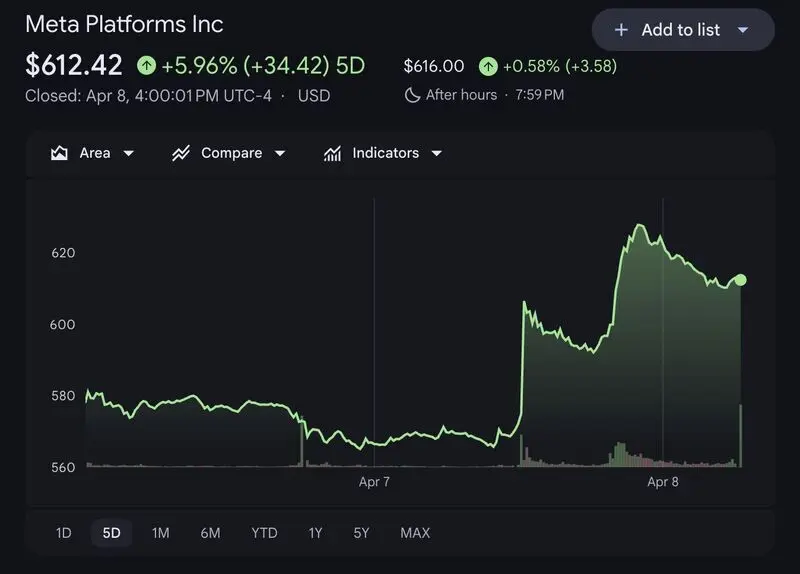
For the last year, Meta looked like a company buying GPUs, talent, and time. Yesterday, it looked like a company turning all three into momentum. That is when markets reprice.
Interestingly, Meta said its AI-related capital expenditures in 2026 will be between $115B and $135B, ... they nearly paid for it entirely in 1 day. The key is that it's not just a model release. Wang explained "now it powers all of Meta AI." And Meta has something almost nobody else has: global consumer distribution at absurd scale.
That is why $113B moved in a single day. The market was not rewarding a demo. It was rewarding the realization that Meta may no longer be chasing ... it may be one of the few companies capable of shaping the next phase of the market. The race is consolidating fast. A few companies will become platforms. The rest will become suppliers.
But for any of this momentum to last, the industry has to move past the "fear-mongering" marketing tactics that are starting to alienate the enterprise.
The Fear-Based Marketing Trap
The AI industry has a "Boy Who Cried Wolf" problem and it’s damaging itself.
Every frontier lab release now follows the exact same script: “This model is SOOO powerful, it’s too dangerous for the public.”

This week? It’s Anthropic’s Claude Mythos Preview (Project Glasswing). Come on. Same branding. Same secret-project mythology. Same "gatekept" hype.
Let’s look past the marketing. This is NOT digital superintelligence. It’s a high-performance coding and reasoning model.
The logic is simple:
- A better model writes better code.
- A better coding model finds more bugs.
- More bugs expose more vulnerabilities.
That’s all. Being great at debugging doesn't make a model an apocalyptic cyber-weapon. It makes it a highly efficient developer tool.
The problem is the way these launches keep getting framed. Every release gets wrapped in the same script:
- too powerful
- too dangerous
- not ready for the public
We’ve seen this movie before:
- 2019: “GPT-2 is too dangerous to release.”
- 2024: "o1-preview poses existential risks."
- 2024: “Opus is a step change in safety risk.”
- 2026: “Mythos is a national security concern.”
This isn't a safety strategy, it's a fear mongering marketing tactic. And it’s a bad one.
Every time a lab uses fear to sell a launch, they create:
- Anxiety for enterprise buyers.
- Hesitation in the C-suite.
- Confusion for the general public.
AI should be sold on the value it creates, better code, faster debugging, and higher productivity. Not sci-fi panic. The irony? The same companies pushing innovation are undermining the very market trust they need to survive. Stop selling fear. Ship the product. Let the merits do the work.
When you sell fear instead of value, you end up with a pricing crisis, exactly what we are seeing with the recent frontier lab pivots.
Why Tokens are a Utility, Not a Product
Anthropic just sacrificed their early adopters to optimize their IPO cutting off OpenClaw. The era of subsidized AI looks to be over, replaced by a tactic to maximize revenue and undermine competition.
Anthropic just banned OpenClaw and ALL third-party wrappers, forcing users off flat-rate plans and onto a metered billing system that is intentionally obscure.
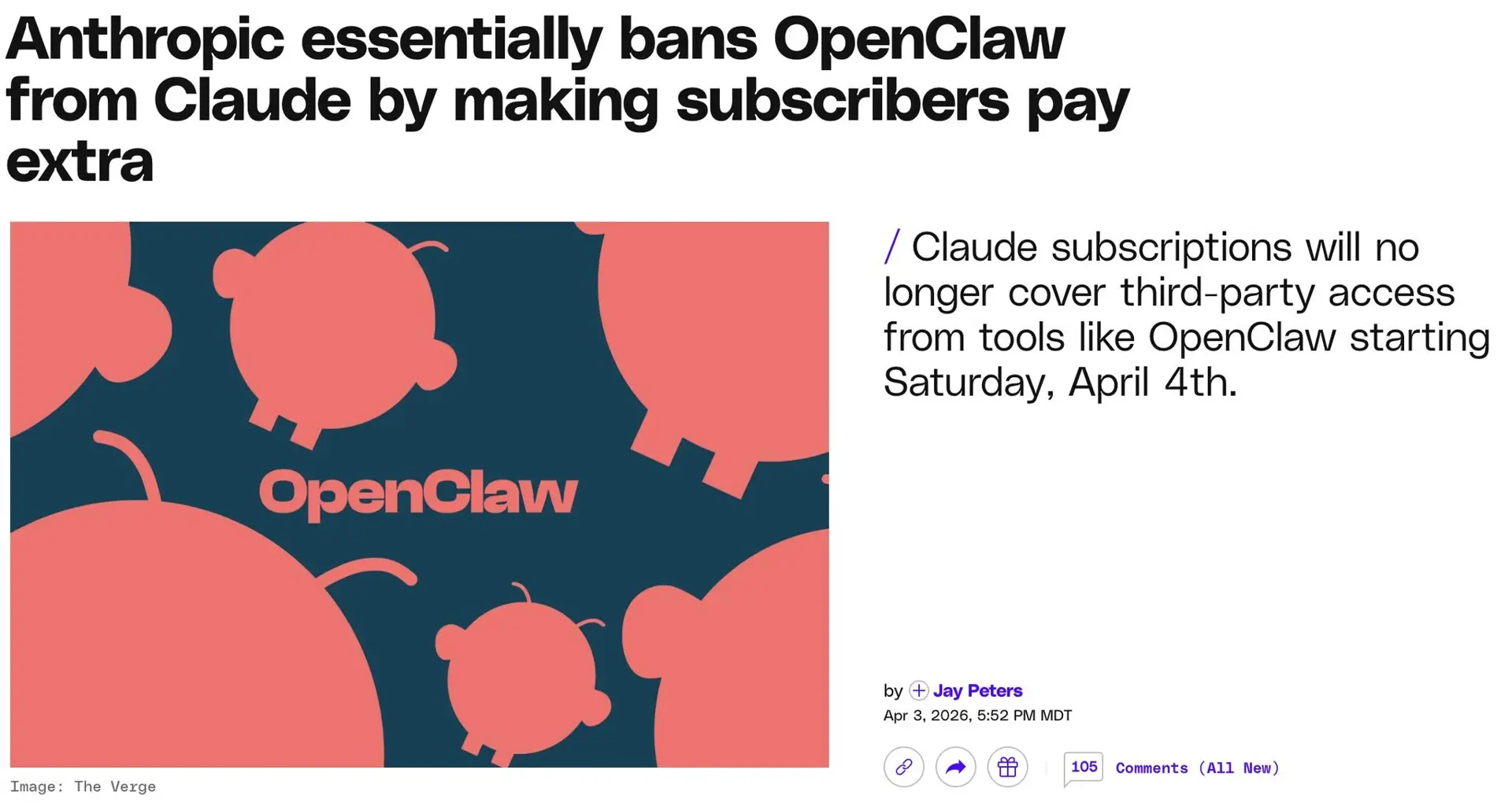
There is no subtlety in their April 4th strategy:
- 135,000 OpenClaw instances were entirely cut off Claude.
- Autonomous agent cost effectively just jumped from $20 a month to $5,000 a week.
- Anthropic is protecting a $380 billion IPO valuation.
- OpenClaw board member Dave Morin even “tried to talk sense into Anthropic, best we managed was delaying this for a week.”
Anthropic realized they were cross-subsidizing a class of digital labor they hadn't priced for, and they are choosing profitability over echo-system in their IPO race against OpenAI. But their current token pricing is a CFO’s nightmare. And generally, AI pricing is still fundamentally broken. Tokens are not value, they are a raw utility cost, like electricity or gasoline.
No operator wants to buy a metered bucket of obscure "input tokens." They want to buy outcomes. Ultimately the winners won't be the companies that play games with token arbitrage.
They will be the ones that price on outcomes. HubSpot just announced their version of "Outcomes as a Service" with their AI Agents.
Salesforce is trying something similar. At Atonom we are selling "Cloud Employees" with fixed rates as you would hire an employee. We are still early in understanding how to correctly price AI, and my take is that Anthropic's move may have been a short term IPO boost, but not great long term.
As pricing shifts toward outcomes, the human overhead that used to justify "per-seat" licenses is being systematically removed.
Structural Reset and the End of Human Middleware
The era of the 'Middle Management' is finally over. Meta and Block are decimating the middle of the corporate org chart to survive the shift to AI-native operations.
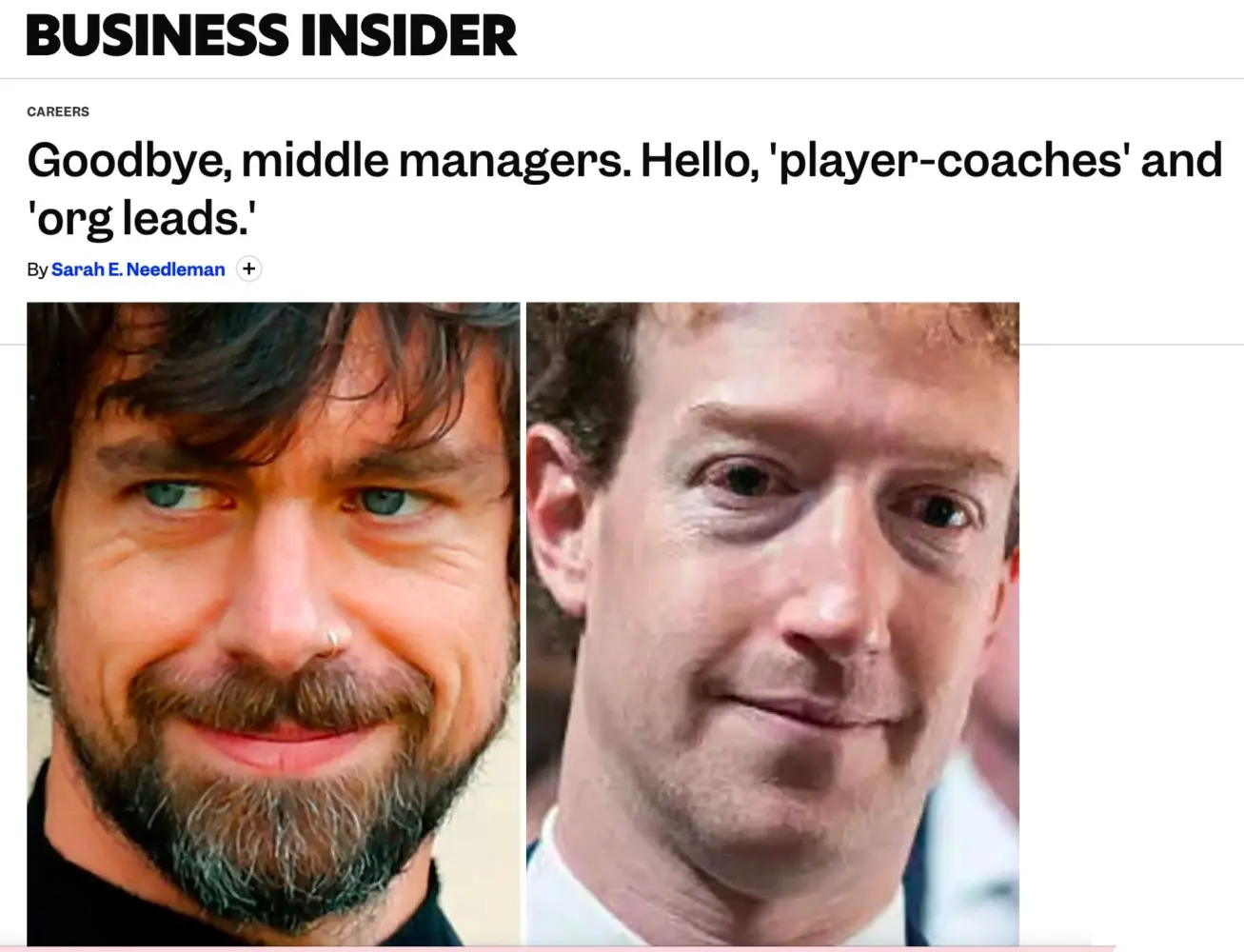
In a massive structural reset, these tech giants are phasing out the traditional "People Manager" role. You are either a 'builder' or a 'strategist'. There is no longer a middle ground.
These are the structural change highlights:
- Meta is collapsing management layers to "flatten" the org.
- Managers are required to become "Player-Coaches" (individual contributors).
- High-level leadership are consolidated into "Org Leads."
- The goal is to eliminate the "information relay" that slows down product cycles.
This is the end of Human Middleware. For 40 years, middle management existed to solve a communication problem: moving information from the executive suite to the front lines. In the Token Era, that is no longer a human job.
When AI can handle status updates, project tracking, and cross-functional coordination, the "coordinator" becomes a bottleneck. Companies are trading "people managers" for "autonomous pods." This is the first major restructuring of the AI-Native Corporate Era.
The "Year of Efficiency" wasn't a one-time event, it was the opening act. Meta and Block have realized that if a manager isn't coding, selling, or building, they are simply overhead in a world where AI handles the overhead for free.
Just as AI is changing the orginization structure, its transforming individual companies.
Amazon's transformation into a global AI powerhouse.
Amazon is not adding AI to AWS.
They are committing $200B to rebuild the entire company from the ground up.
If you read between the lines of Andy Jassy’s annual shareholder letter, here is the warning shot he just fired:
A few key observations:
- Amazon's Trainium AI chips business just hit $20B.
- AWS’s AI cloud revenue crossed $15B.
- Amazon is committing an unprecedented $200B in CapEx.
That crazy CapEx spend really is not that interesting.
Amazon just fully jumped into the AI model labs + Hyperscaler horse race, and did it with style.
Look at the estimated annualized revenue rankings right now:
- Anthropic: $30B annualized revenue
- OpenAI: $25B annualized revenue
- Amazon: $15B annualized revenue
- Microsoft: $13B annualized revenue
- Google: Unavailable, but significant
- Meta: Unavailable, but significant yet
If you combine Amazon's $15B Frontier lab revenue with its $20B Hyperscaler AI chip revenue... the combined $35B makes them a terrifying contender in this race.
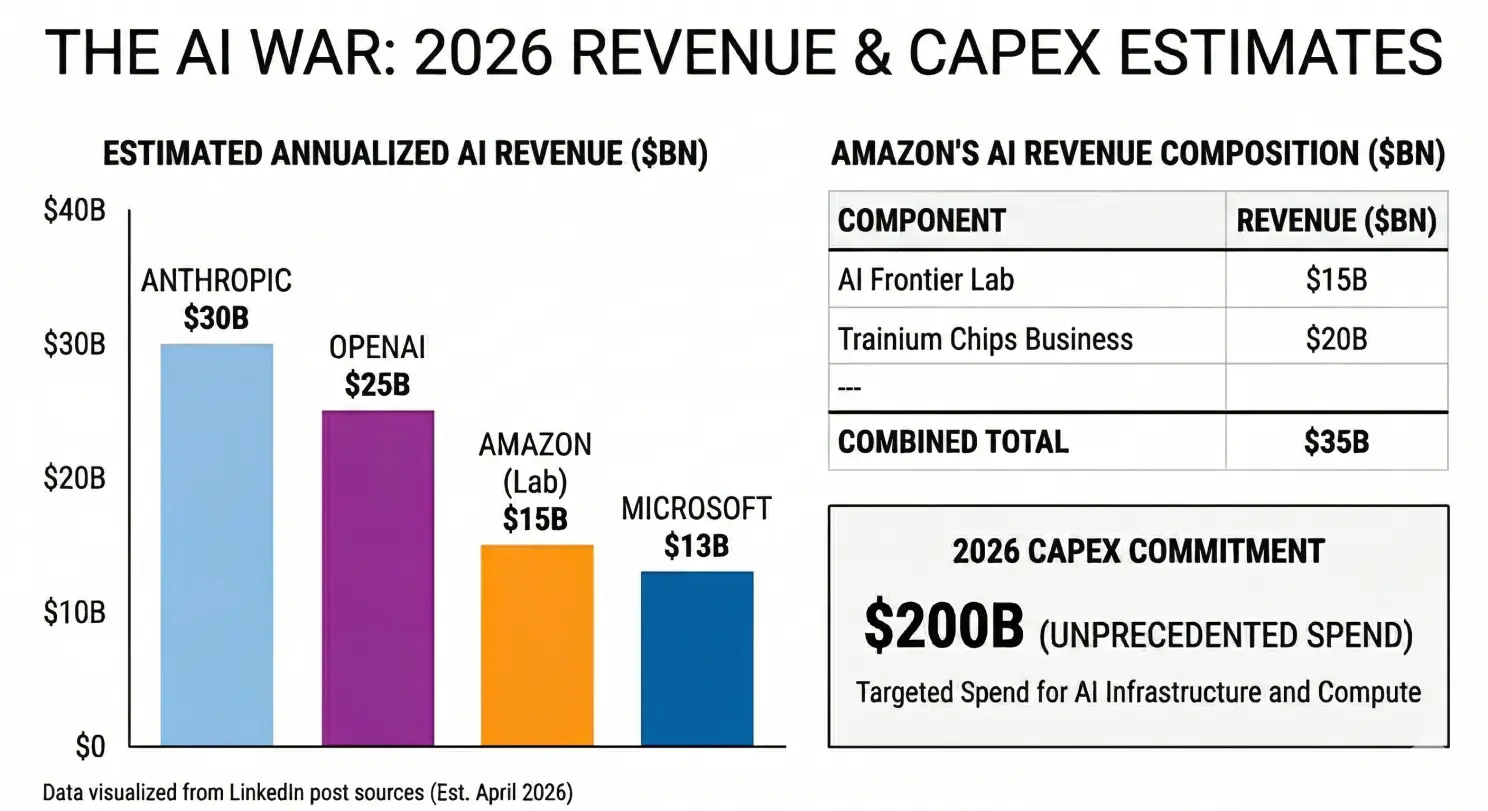
To me, Jassy's real shareholder letter is a warning shot to every other AI platform.
Just as Jeff Bezos did in 2006 when he remade Amazon from a bookstore into the global infrastructure leader, Jassy is remaking Amazon into a global AI powerhouse.
Bezos won the cloud war in 2006 and the stock has grown 12,785% since.
Can Jassy win the AI war in 2026?
The Macro View: The Industrialization of AI
If you zoom out and look at the sheer scale of what happened this week, the "science fair" phase of Artificial Intelligence seems to have officially closed. We have entered the industrialization phase.
When you combine Microsoft and Amazon deploying hundreds of billions in capital, Meta restructuring its entire corporate architecture, and the frantic repricing of the startup token economy, the signal cuts right through the noise. The market is violently shifting its focus from creating intelligence to deploying digital labor.
For B2B leaders, SaaS operators, and Go-To-Market strategists, the playbook has to be completely rewritten.
- If you are buying or selling tokens, you are trading in a volatile, obscure utility. The future of pricing is Outcomes-as-a-Service.
- If you are buying into the fear-mongering marketing, you are distracted. The real value isn't digital superintelligence, it's hyper-efficient execution and zero-cost coordination.
- If your organizational chart relies on "Human Middleware," you should at least consider a flatter org structure. The autonomous pods might be too much, but simplify the information relays.
The hyperscalers have officially engaged and are currently laying down the permanent, trillion-dollar infrastructure for the next decade. The game is no longer about who can build the most impressive underlying model. The game is about who can take that raw, commoditized intelligence and use it to build the autonomous enterprise.
The giants are awake. Act accordingly.
Until next week ...
