
For two years the AI boom has looked bulletproof. This week it showed where it can break.
Nobody announced a better model. The moves that mattered were underneath the models: the money, the supply chain, and the people. All three flexed in the same week.
Here is what happened:
- Yann LeCun called xAI a failure, and the math under the whole boom is why. Every new AI customer still loses money, and SpaceX dropped $317B in a single day.
- One part runs everything, the stacked memory, and a single company in Seoul, SK hynix, makes 61% of it. It had a bad day, and every chip name fell with it.
- Google lost two more top Gemini researchers to Anthropic, the second pair in a week. It can out-pay anyone alive and still couldn't keep them.
These are the three walls holding the boom up: the money, the supply, and the people. None of them came down this week. All of them moved. Knowing where they're thin is the entire job right now.
For business leaders, the question isn't whether AI is real. It's whether the parts you're betting on are ones you actually control: the vendor's burn, the supplier you can't see, the team that might walk.
Yann LeCun Just Called xAI a Failure
Yann LeCun just called Elon Musk's xAI a failure.
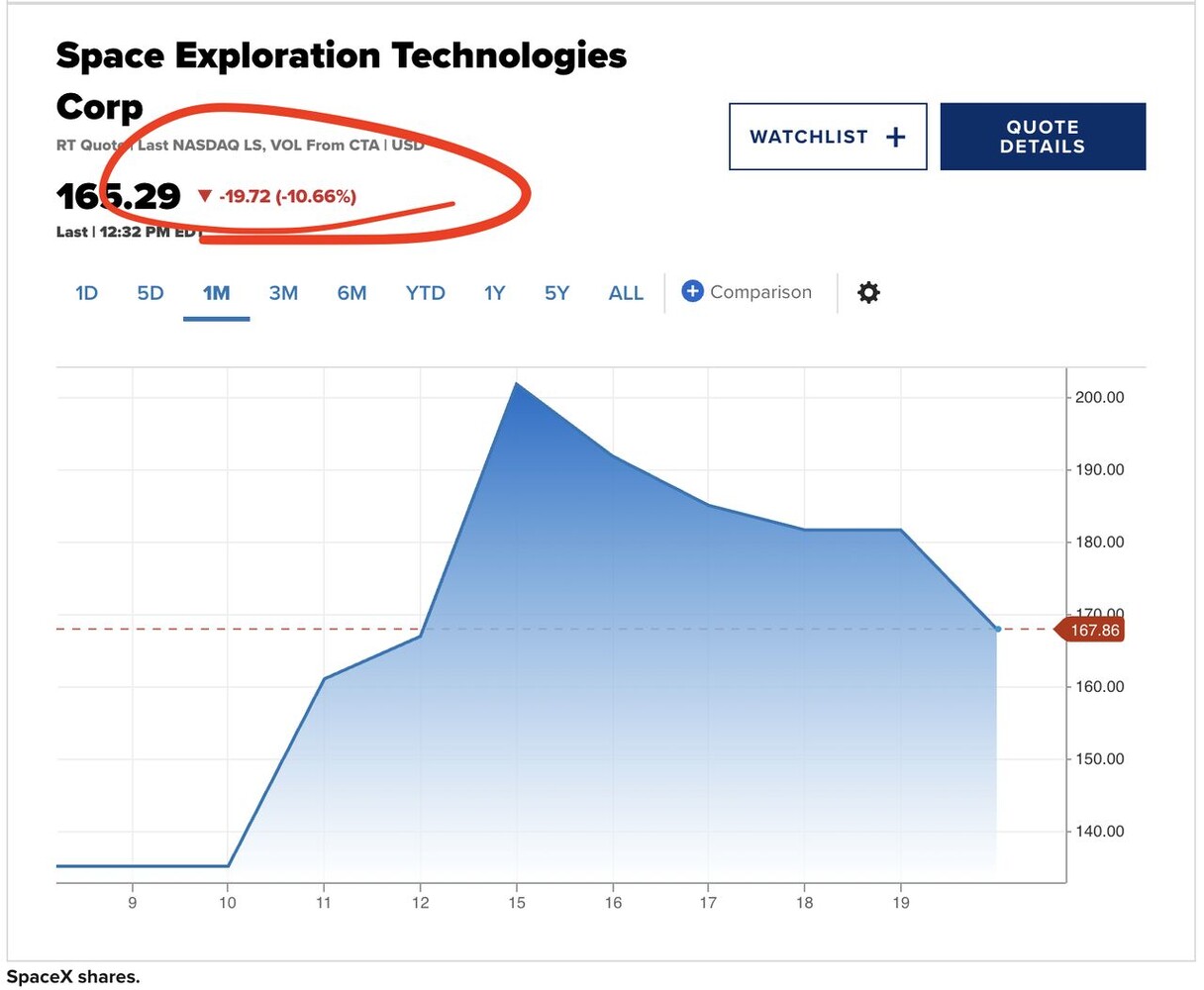
The company is worth $1.25 trillion but has lost over $317B today alone. LeCun, the Godfather of AI and formerly Meta's AI chief, is worried about the money.
LeCun highlighted that after Musk folded xAI into SpaceX, that unit lost $2.5B the next quarter, and said:
"XAI is kind of a failure, frankly, because the founding team has left."
Basically, just to cover his data centers, Musk rents compute to his rivals Google and Anthropic. He's enabling the people trying to beat him.
And this goes well past xAI. AI prices are rising and costs are falling, but not fast enough.
Every new customer still loses money, and investors cover the gap.
"That can't go on," LeCun says. Raise prices, cut costs, or it pops.
The market is already moving. SpaceX, which owns xAI, ran the biggest IPO ever. Two weeks later it's down three straight days and off over 10% today ($317B). The company lost $4.9 billion last year. Most buyers since the debut have lost nearly all their gains.
Despite being the largest IPO in history, SpaceX also just announced a bond offering today to raise even more cash to try to cover their burn.
This has still made Musk the first trillionaire.
One caveat to this debate: LeCun is funding a competitor and has feuded with Musk, who calls him out of touch.
The money is the first pressure point. The supply chain is the second, and it's even more concentrated. Most of the boom runs through one factory most people couldn't name.
The AI Boom Runs on One Part Made in One City
Most of America's growth right now comes from one thing, AI.
On Tuesday AI had one its worst day this year. For two years AI and the AI data center boom has carried the economy. The four biggest tech companies will spend more than $600B on it this year. Over the last two quarters, that spending added more to US growth than every American consumer combined.
It all runs on one part. The stacked memory that feeds the processor. One company in Seoul makes 61% of it. Tuesday, that company had a really bad day. SK hynix and Samsung Semiconductor fell about 12%. Korea's market tripped its circuit breakers twice.
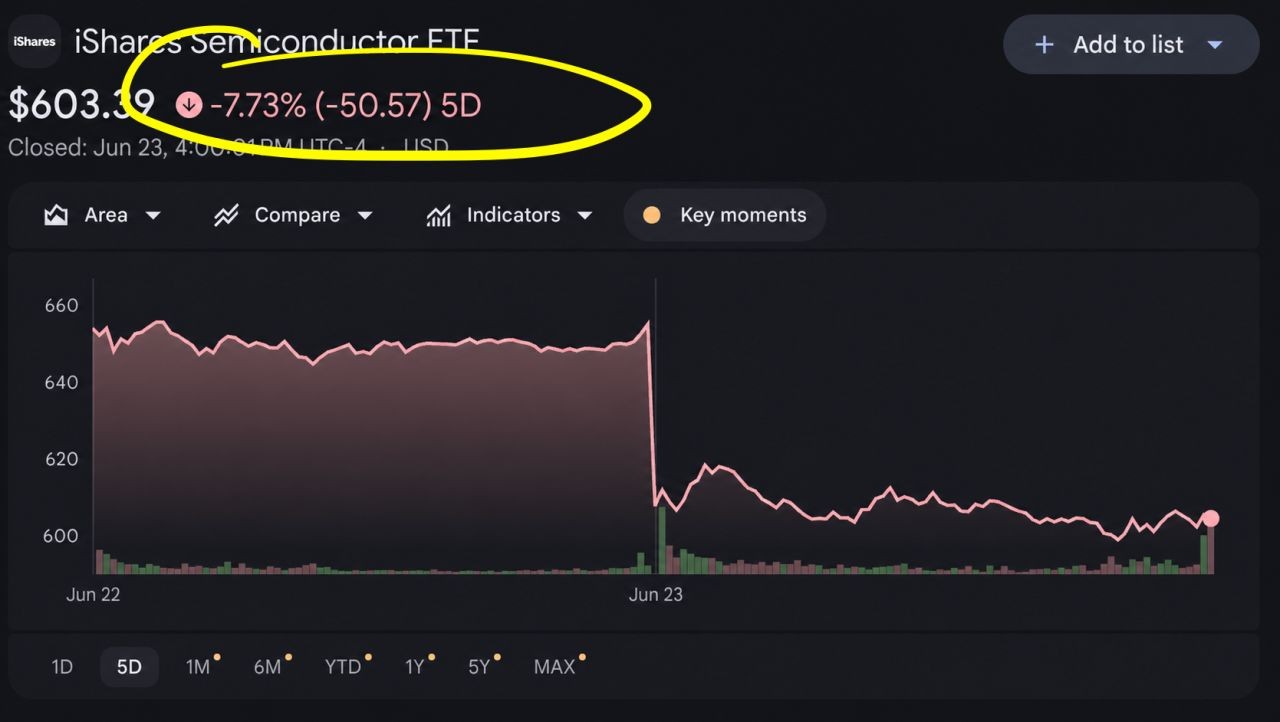
By the time New York opened, the chip index was down 8%. NVIDIA off 4%. AMD and Intel down 6%. Micron Technology down 13% the day before its own earnings.
When the part everything depends on has one supplier, that supplier's bad day becomes everyone's.
All of these companies are now on the hook:
- NVIDIA and AMD: Their next chips don't run without it.
- Broadcom and Marvell Technology: 70% of the custom silicon the giants buy.
- Supermicro and Dell Technologies: Can't ship a server faster than the memory arrives.
- Micron Technology, WD, and Sandisk: The memory names, moving as a group.
And the most important company in the market trades in Seoul, before Wall Street wakes up. You can't cleanly own it. The closest thing is Micron, where an overnight Seoul selloff shows up the next morning.
When things are going great, AI is a boon and is bolstering up the US and global economy. But days like this show that we are not as impervious as we sometimes feel and need to be a little more balanced.
You can't cleanly own the part everything depends on. You also can't keep the people who build the lead. Google is finding that out twice a week now.
Google Keeps Losing Its Best People, and Comp Isn't Why
Google just lost two more of its top Gemini researchers to Anthropic.
That's the second pair to leave in a week. John Jumper, a Nobel laureate, made the same move a few weeks ago.
I've heard people attributing this to compensation or vision. I don't think it's either, this is an upside problem.
Google is worth trillions. It can out-pay almost any company on the planet.
Google is worth trillions. It can out-pay almost any company on the planet. So the best people keep walking out the door because Google's big payday already happened.
Google went public 20 years ago. The market has likely already priced in much of the AI disruption upside into their stock in the last 2.5 years. They are currently worth 4.16T.
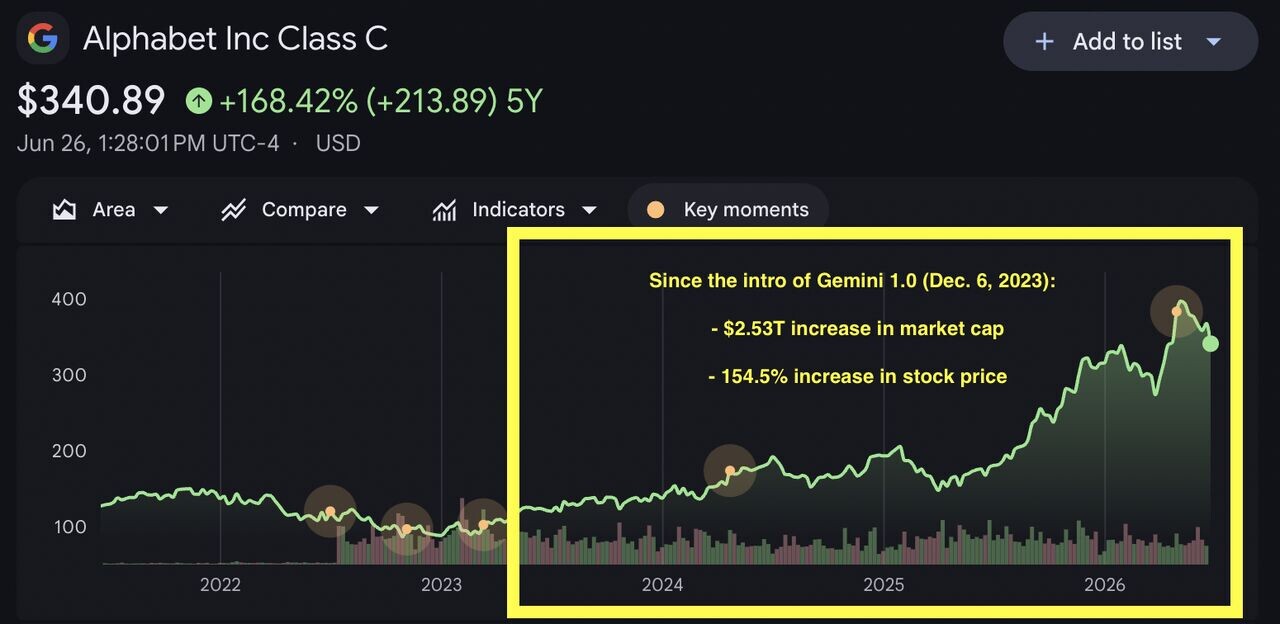
Since the introduction of Gemini 1.0 (Dec. 6, 2023):
- $2.53T in market cap growth
- 154.5% increase in stock price
Conversely, Anthropic hasn't yet. People joining now get real upside before that day comes.
Jonas Adler helped run Google's coding work. Alexander Pritzel worked on the early training everything else is built on, ... both walked.
Companies make this mistake all the time, they give retention bonus to stop the bleeding from 20% to even 100%. They tend to believe they're losing people on comp. They're losing them on upside.
Disruptions like AI force an aggressive re-balance of power.
Even though there is lots of AI fear mongering narrative out there, the truth is that this means there is unmeasurable opportunity for everyone. We just need to chase it.
The Macro View
The AI boom isn't fragile. But it isn't bulletproof either, and this week showed exactly where the seams are.
Three stories, one week. The money, the supply, and the people, the three things holding the whole thing up. None of them broke. All of them moved. Anyone reading the boom as a straight line up missed it.
For business leaders the question isn't whether to bet on AI. It's whether you can see the part of the bet you don't control: the vendor that can't fix its burn, the supplier you'll never meet, the team that can walk out the door. That's where the risk lives, and it's where the opportunity lives too.
The fear gets the headlines. The opportunity goes to whoever looks down, finds the thin spots, and moves anyway. Stay balanced. Then go chase it.
