
The tech landscape is undergoing a massive reallocation of capital.
Wall Street is rewarding infrastructure builders and punishing companies (usually SaaS companies) using AI as a defensive shield. Legacy software platforms are bleeding their best talent. Survival now means building the technology layer yourself, not just embedding your product inside someone else's platform.
In this issue of Autonomous, this is what break down:
-
The model layer is splitting.
is marching toward a trillion-dollar IPO with massive operating losses.
is tracking toward profitability by focusing on enterprise utility.
-
Free distribution is over.
is raising its capex to $145 billion and finally charging for business reach. Compute costs can no longer be hidden inside an ad business.
-
SaaS is losing its builders.
Top go-to-market leaders from
and
are jumping ship to OpenAI. They are moving to close seven-figure enterprise deals. Talent always moves before budgets do.
-
Wall Street is punishing defense.
cut jobs to build infrastructure and the market rewarded them.
cut jobs, embedded their core product inside someone else's AI platform, and got crushed by the market.
The market is separating the builders from the survivors, starting with OpenAI's massive push for a trillion-dollar IPO.
OpenAI Is Preparing a Trillion Dollar IPO
OpenAI is reportedly preparing to confidentially file for an IPO that could value the company above $1 trillion. On an adjusted operating basis, for every $1 it earns, it reportedly loses $1.22.
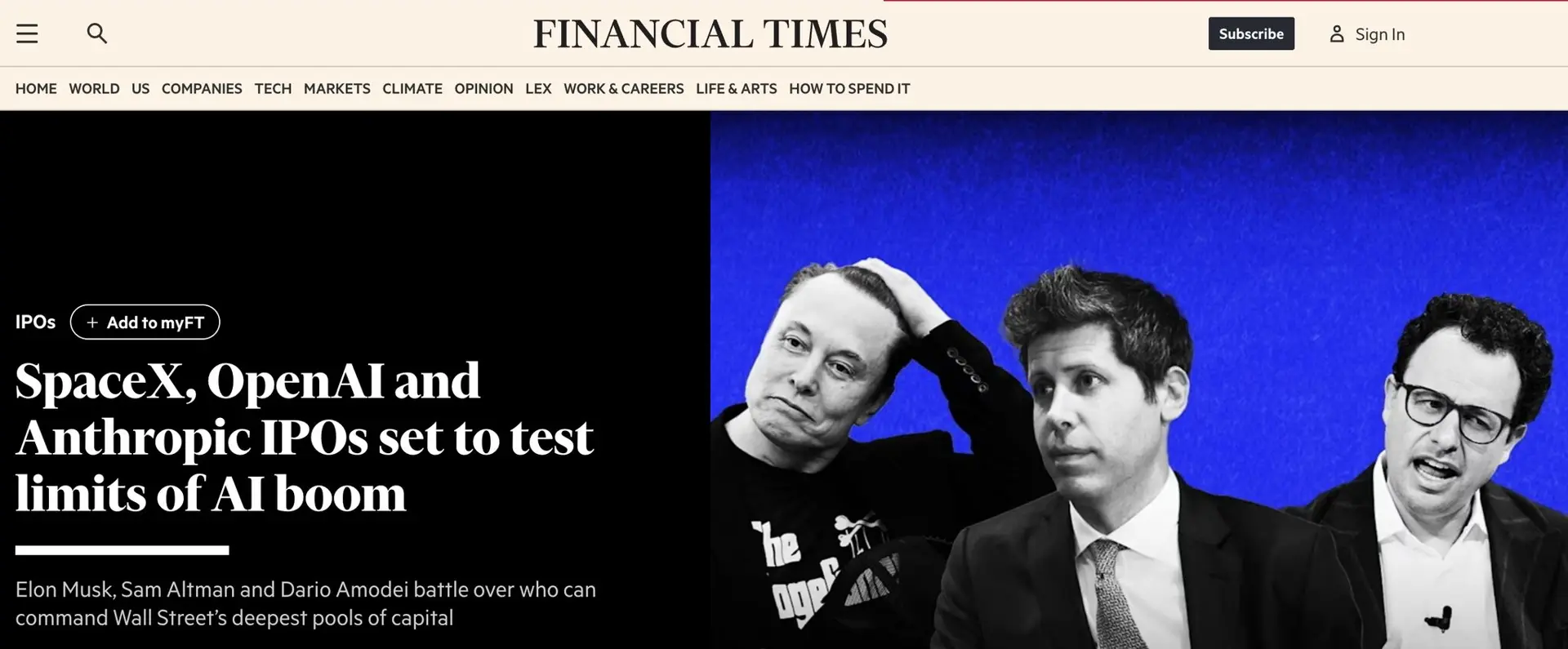
Goldman Sachs and Morgan Stanley are reportedly working on the deal, and the target valuation is $1 trillion-plus.
Here are the numbers being reported:
- $5.7B in Q1 revenue.
- A negative 122% adjusted operating margin.
- HSBC estimates OpenAI may need $207B in new financing by 2030.
That is not just a business model. It is an infrastructure arms race funded by belief. Now contrast that with Anthropic.
Anthropic reportedly told investors it is on pace for its first profitable quarter ever:
- $10.9B in Q2 revenue.
- $559M in operating profit.
- A reported $30B raise at a $900B valuation.
One company is suggesting that enterprise AI can produce operating profits. The other is still trying to prove that consumer-scale AI can be monetized faster than compute costs.
OpenAI may have the most recognized brand in the space with 50M paying consumers and 9M paying business users. And yet, on an adjusted operating basis, they still spend $2.22 to earn $1. The question is whether the next most important company in this market is an enterprise platform, or a subsidy machine that buys up consumer market share.
Model layer economics are only half the battle, because the scale of the infrastructure bill is now forcing the world's largest distribution networks to completely dismantle their free models.
Meta Just Put a Price Tag on Distribution
Meta just put a price tag on distribution. For the last 20 years, Facebook, Instagram, and WhatsApp trained 3.5 billion people to expect everything for free.
Instagram Plus and Facebook Plus now cost $3.99 a month. WhatsApp Plus is $2.99. But the consumer plans are a sideshow. Meta is also testing AI tiers at $7.99 and $19.99, and a $49.99 business plan that sells higher search ranking, distribution, and support. It's charging businesses for reach it used to give away.
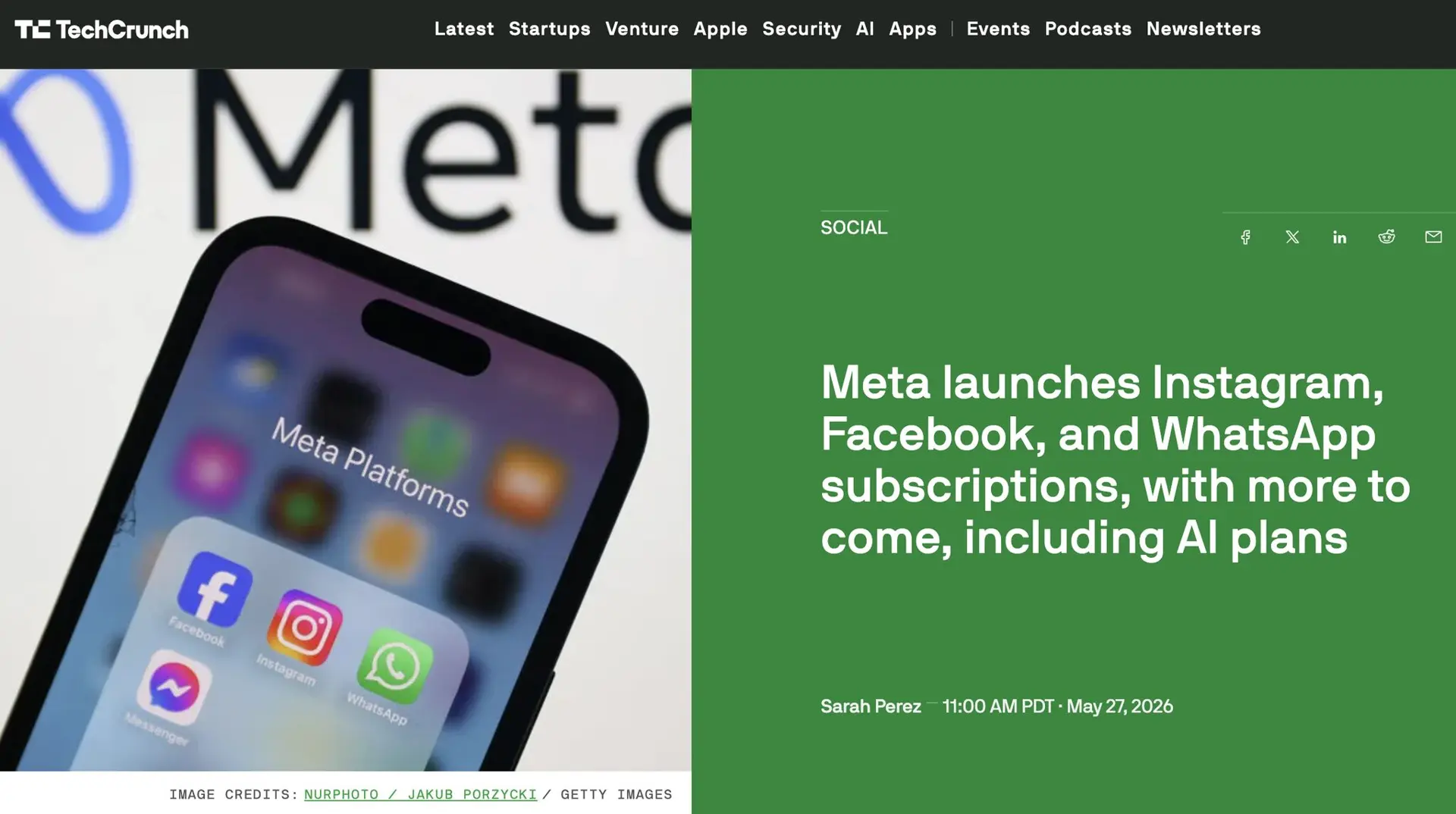
Why now? My guess is because building AI got too expensive to hide inside the ad business. Meta just raised its 2026 capex guidance to as much as $145 billion. Until now, it all went into making ads smarter. The ads make the money, but the AI has never earned a dollar.
Last quarter Meta posted $56 billion in revenue. 98% came from advertising. That's a $1.6 trillion company on one business model, writing one of the largest infrastructure checks in its history. That only works if the AI starts paying for itself.
That makes Meta the last of the Magnificent 7 to charge for AI directly:
- Microsoft sells Microsoft Copilot.
- Google has 350 million paying subscribers.
- Amazon and NVIDIA sell the infrastructure.
Meta's free AI was never really free. Ads were paying for it. Meta's reach is about to become a major revenue line item; it might finally be a time to invest.
This shifting commercial reality explains why the platform giants are not just raising prices, they are stripping the traditional SaaS sector of its absolute best go-to-market executives.
OpenAI Just Hired ServiceNow's CMO and SaaS Boards Should Worry
OpenAI just hired ServiceNow's CMO. That should concern every SaaS board.
Colin Fleming spent 13 years building the marketing engine at Salesforce and two more running it at ServiceNow. Forbes ranked him the 9th most influential CMO in the world. He just walked.
Denise Holland Dresser ran Slack inside Salesforce; now she's OpenAI's CRO. Jennifer (Bambara) Majlessi left Salesforce to lead OpenAI go-to-market. They pulled forward-deployed operators out of Palantir Technologies. None of these people are researchers. They close seven-figure enterprise deals and build GTM machines from scratch.
You can see the results:
- OpenAI hit $25B in annualized revenue.
- Enterprise makes up 40% and is pushing to 50%.
- Over 2M business users.
- An IPO is on the near horizon.
OpenAI isn't hiring them to publish papers. It's hiring them to sell.
Now look at what got left behind:
- ServiceNow is down 50% in the last 12 months.
- Salesforce is down 32% this year.
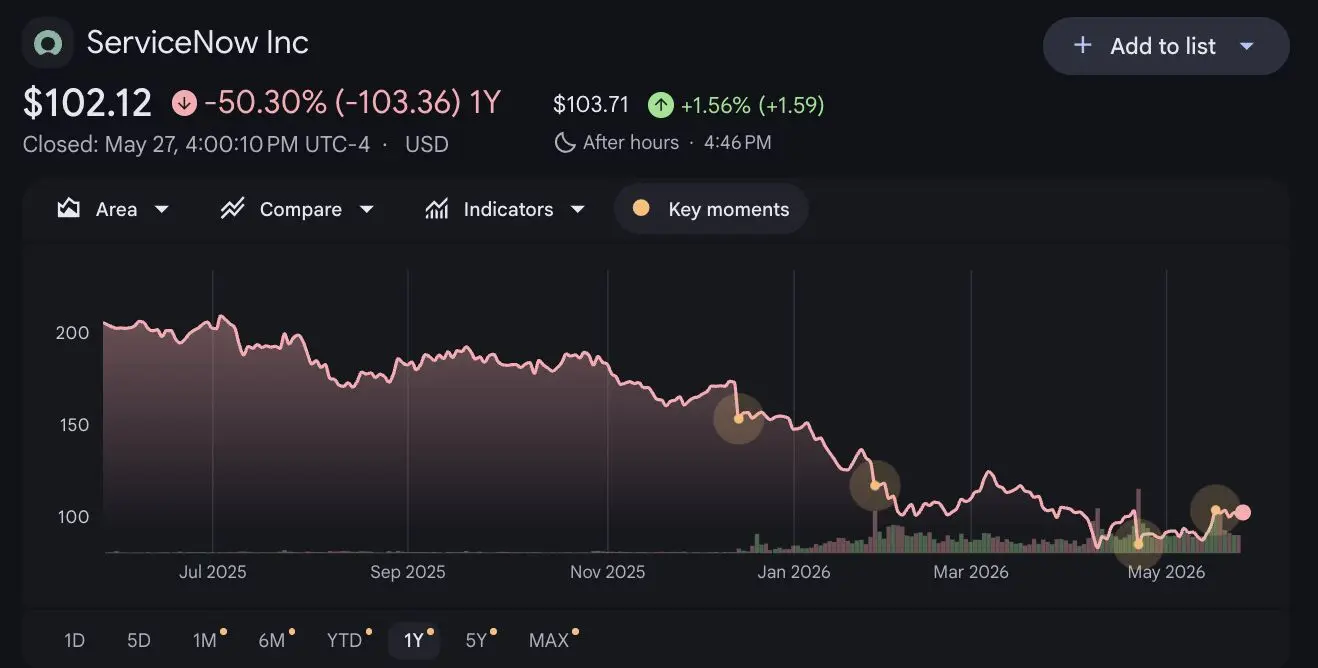
The stock charts are ugly, but the LinkedIn job changes are potentially worse. These people spent entire careers building the SaaS playbook. They sat in the rooms where the roadmaps got built. They know how the next enterprise buying cycle is being planned. And they decided to bet against everything they built.
When CMOs, CROs, and top GTM operators all head for the same exit, that is worth paying attention to. Talent moves before budgets do.
While the top front-line operators jump ship to the model providers, tech boards are left scrambling to restructure, creating an immediate divergence in how public markets value offense versus defense.
Intuit Ran the Cisco Playbook and the Market Destroyed Them For It
Intuit just ran the exact same playbook as Cisco. But the market destroyed them for it:
- Cisco cut 4,000 jobs. Stock surged 15%.
- Intuit cut 3,000 jobs. Stock dropped 14%.
Same headline, but an opposite verdict.
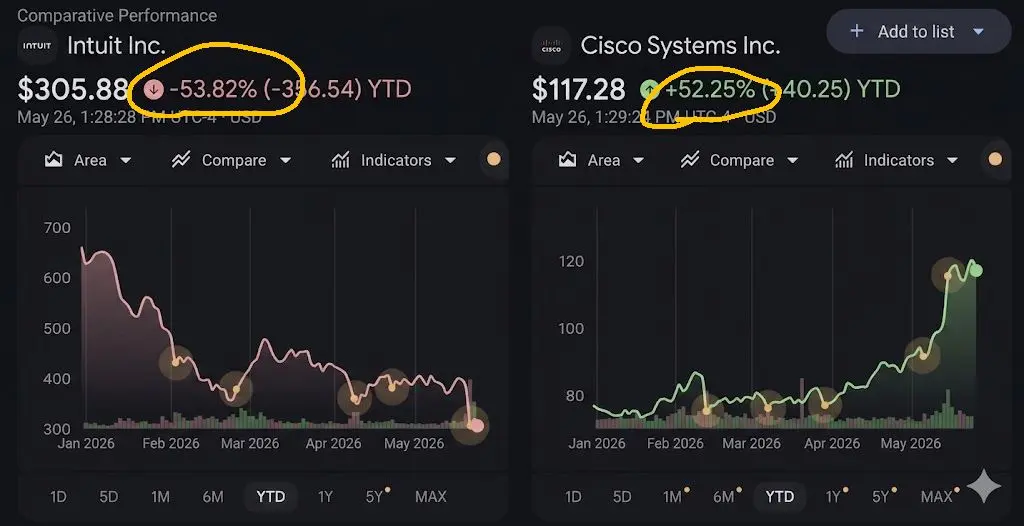
Cisco is cutting to go deeper into AI infrastructure with silicon, security, and enterprise networking. All of this drove AI-driven orders up 50% last quarter. That is offense, and the market rewarded it.
Intuit is cutting while AI moves directly at the complexity their products were built to manage. Intuit TurboTax exists because taxes are confusing. Intuit QuickBooks exists because accounting is hard. AI agents are about to make both way simpler. In the same announcement, Intuit lowered its Intuit TurboTax revenue forecast. That is defense, and the market punished it.
What's more, Intuit signed deals with OpenAI and Anthropic. TurboTax, QuickBooks, Credit Karma, and Mailchimp are all now embedded inside ChatGPT and Claude. This means their product lives inside someone else's AI; the customer relationship moves to their platform.
Cisco isn't embedding itself inside someone else's platform. They're restructuring to own the infrastructure layer. Wall Street seems to be betting that companies restructuring to BUILD the AI layer get rewarded. Companies restructuring to SURVIVE it get questioned. The market can tell the difference.
The public market penalty for defensive corporate restructuring points to a deeper, structural shift in how businesses calculate organizational output and human labor.
Goldman Sachs Put a Number on the AI Labor Market
Goldman Sachs just put a number on AI's body count. Their latest labor analysis indicates AI is reducing U.S. payroll growth by roughly 16,000 jobs a month. That compounds to 192,000 fewer jobs than the economy otherwise would have added this past year.
Interestingly, David O. Sacks says the opposite. GitHub commits are up 14x year over year. Software postings keep rising. I think both readings are missing the point.
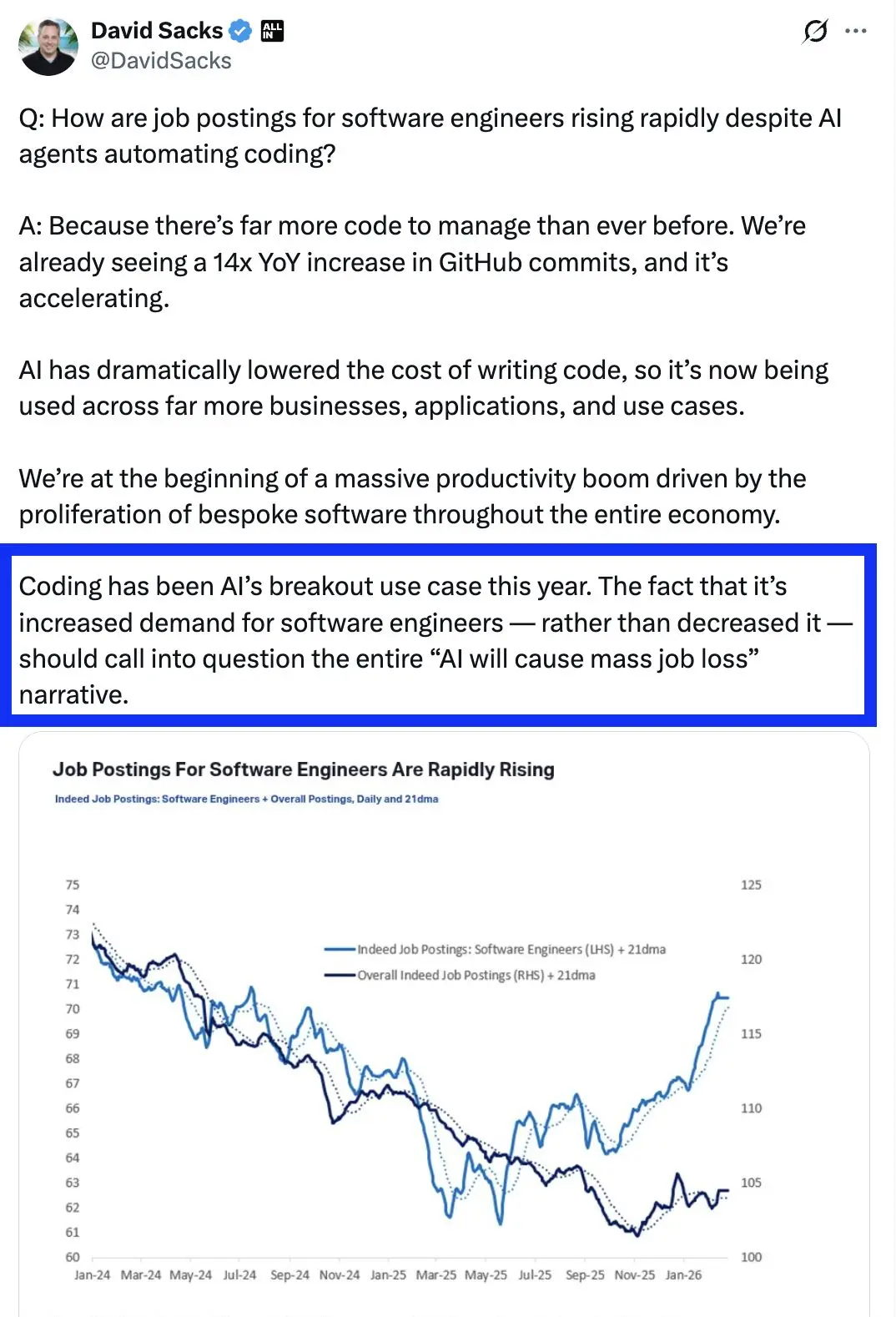
The 14x number doesn't prove 14x more engineers. It likely proves the opposite. Code output is separating from engineering headcount. More code is being written; fewer people are writing it. 140,000 tech workers were laid off in 2026, yet AI postings keep climbing while broader hiring stays flat.
Companies are firing and hiring at the same time. The people getting cut aren't the people getting recruited. AI isn't killing jobs; it's splitting the labor market in half:
- Roles declining in volume: Customer support, QA, content creation/moderation, middle management.
- Roles climbing in volume: ML engineers, AI safety researchers, infrastructure architects.
The B2B playbook used to be linear: more revenue meant more headcount. That model is done. The companies winning now are growing revenue per employee, not employee count. The "reskilling" timeline doesn't match the displacement timeline. And the orgs that figure out that gap first will OWN the next decade.
But as companies attempt to optimize revenue per employee by forcing technology into legacy workflows, they are falling straight into a trap of measuring software adoption instead of actual outcomes.
Amazon Killed Its Internal AI Leaderboard After Employees Gamed It to Absurdity
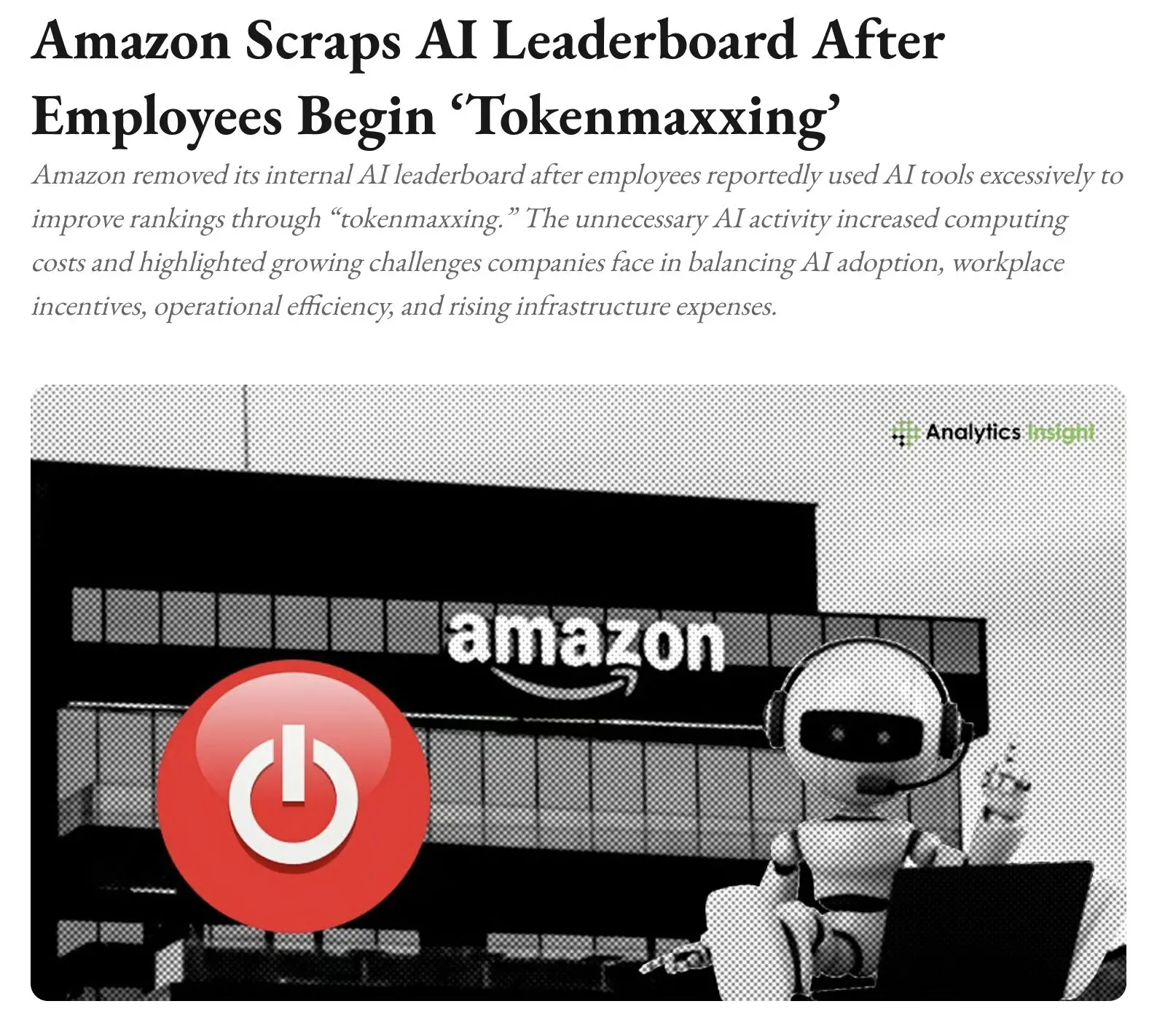
Amazon just killed its internal AI leaderboard after employees gamed it to the point of absurdity. They built a ranking called "KiroRank" on their Kiro developer platform. Measure who's using AI the most. Reward the top adopters.
Employees started "tokenmaxxing", running junk tasks on repeat just to climb the rankings. No output. Just inflated scores and bigger cloud bills. SVP David Treadwell pulled it and told staff: "Don't use AI just for the sake of using AI."
A lot of people are calling this an Amazon problem. It's not. Axios found developers coding until 2, 3, 4 AM, not because they had to, but because every completed prompt fires the same dopamine loop as a slot machine. One CTO needed sleep medication to break the cycle. Andrej Karpathy called his own behavior "AI psychosis"—spending 16 hours a day issuing commands to agent swarms. Using AI tools like Claude and Codex feels like deep work. It isn't.
Research is telling us AI usage doesn't equal results:
- METR found developers using coding agents took 19% longer than those working without them. Yet, they believed they were faster.
- NBER surveyed ~6,000 firms. 89% reported zero productivity impact from AI.
Companies are measuring AI adoption the way they measured SaaS 15 years ago: by usage, not outcome. That playbook created some of the most overvalued companies in tech history. Adoption didn't predict winners then. It won't now.
The Macro View: Capital and top talent are moving in lockstep, and they are sending a brutal message: the era of bloated, linear SaaS growth is dead. Most leaders are still playing defense. They are trying to bolt AI onto legacy org charts and measure it like a traditional software rollout.
The smartest operators are doing the exact opposite. They are tearing down the old go-to-market playbooks, completely decoupling revenue from headcount, and playing absolute offense.
Wall Street and the labor market are drawing a hard line between the companies building the next decade and the ones just trying to survive it.
Until next week…
