

If you look at the headlines this week, it might seem like a chaotic mix of mega-deals, hardware plays, and restructuring bloodbaths. But peel back the PR spin, and a single, defining narrative emerges: The algorithm era has peaked.
We are moving into a much more aggressive phase where the moats are no longer digital, they are physical. For three years, we debated which model was smarter. Now, the market is debating who has the power to turn the models on and the data structure to make them useful. While most leaders are still playing around with chatbot pilots, the frontier labs are signing deals for 300-megawatt power plants and orbital data centers.
The strategy has shifted from using AI as a tool to coordinating it as labor. Whether it isSAP spending $1.16B to turn databases into brains or Coinbase restructuring to build AI-native pods, the message is the same: the legacy model of the enterprise is dead ... the old way of scaling a company by adding middle management and software licenses is over. You either own the infrastructure, own the record, or you get dismantled by a leaner competitor that scales intelligence instead of headcount.
In this edition of Autonomous, we break down the four signals of the physical shift:
- Grid Hegemony: Why the war for AI dominance has moved from silicon to the power grid.
- Structured Brains: SAP’s $1.16B bet proves the next enterprise war will be fought inside the database.
- Sensory Interfaces: Meta is building the nervous system for physical AI by capturing human intent.
- Autonomous Execution: Coinbase and Cloudflare are dismantling middle management to prove that intelligence scales faster than headcount.
Everything starts with physical constraints. If you cannot power the model or structure the data, the algorithm doesn't matter.
Microsoft and OpenAI started the AI race
Anthropic and SpaceX just changed the battlefield.
Yesterday, Anthropic bypassed the entire cloud oligopoly by signing a massive compute deal for SpaceX’s Colossus 1 data center. We are talking 300 megawatts of power. Over 220,000 GPUs.

But the deal isn't really about GPUs. Every major tech company is hoarding Nvidia GPUs. The problem? They don't have the power grids to turn them all on.
Compute is no longer constrained by silicon. It is constrained by electricity. SpaceX realized this before anyone else. They aren't just building rockets or training their own models.
They are monetizing physical infrastructure at a speed Amazon Web Services (AWS) and Microsoft Azure simply cannot match.
The immediate impact is staggering:
- SpaceX secures billions in high-margin compute revenue.
- Anthropic instantly doubles Claude’s enterprise usage limits.
- Both companies secure a major advantage over Microsoft, Google, and Amazon.
For three years, the hyperscalers charged rent on the AI boom. Now, a frontier lab has a direct pipeline to the fastest-deploying infrastructure company on Earth.
But the real edge is buried in the announcement: "orbital AI compute." Anthropic and SpaceX are exploring putting gigawatts of data centers into space. No grid constraints. No land disputes. Limitless solar power.
That sounds like science fiction, but it could be the whole game. Terrestrial land and power grids simply cannot support the next generation of foundation models. The first AI war was fought over algorithms. The second was fought over GPUs. The third is being fought over the power grid.
Microsoft and OpenAI defined the first era. Anthropic and SpaceX are positioning to own the next. This is the most significant frontier lab partnership since the movement began.
When you secure the power to run the models, the next challenge is making those models understand the structured data that actually runs a business.
SAP just paid $1.16B for an AI lab
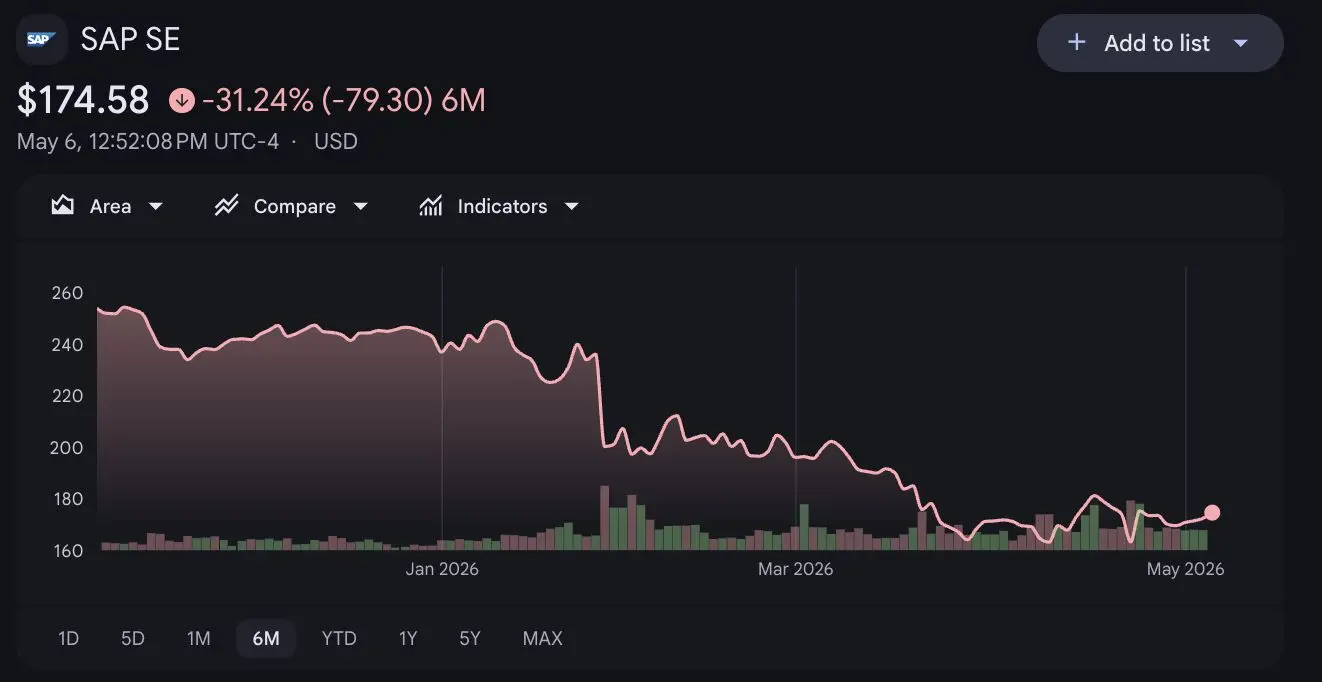
SAP just paid $1.16B for an 18 month AI lab showing they know SaaS is dead. But this is not another AI agent acquisition. Having declined 30%+ and losing $90B in market cap in the last 6 months, SAP is now betting the next enterprise AI war will be fought inside databases.
The company is acquiring Prior Labs, a German AI startup building Tabular Foundation Models. That sounds technical, but it is actually the whole game. While LLMs understand language, Prior Labs is building transformer models that understand structured business data: rows, columns, numbers, and tables.
This is the stuff that actually runs companies: payments, procurement, inventory, HR, customer churn, supplier risk, and revenue forecasts. This is where SAP lives.
Most AI products today summarize what happened. SAP is trying to predict what happens next:
- Will this customer churn?
- Will this supplier fail?
- Will this invoice be delayed?
- Will this account expand?
That is not a better dashboard. It's the beginning of an AI operating layer for enterprise data. For 20 years, SaaS companies won by owning the system of record.
The next platform does not just store the record:
- It understands the record.
- It predicts the next move.
- It lets agents execute the workflow.
That is why every major incumbent is scrambling.
- Microsoft is turning vertical AI into Office features.
- Salesforce is rebuilding around agents and Headless 360.
- Meta is acquiring its way into physical AI.
Now SAP is making its move. They aren't trying to win the chatbot layer, they are turning the enterprise database into an AI brain. The acquisition is not the hard part. It's proving SAP can turn decades of messy enterprise data into an operating system for AI agents.
SAP already owns the record. Now they have to prove they can own the intelligence.
Turning databases into brains allows intelligence to move out of the cloud and into the physical world and Meta is making steps towards it.
Meta is trying to own the interface layer for physical AI
Meta isn't trying to build the next iPhone. It's trying to own the interface for physical AI.
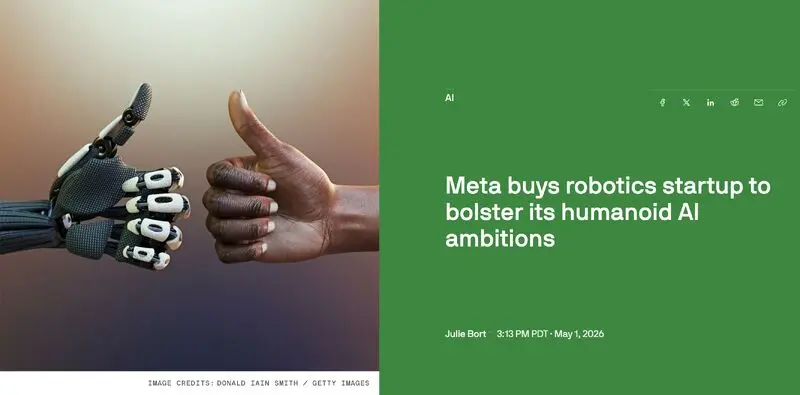
This week, Meta acquired Assured Robot Intelligence (ARI), a humanoid AI startup. Most people will read this as Meta chasing Tesla Optimus or Figure. I think that misses the bigger move.
Tesla and Figure are starting with the robot. Meta is starting with the human.
That is why the Ray-Ban strategy matters so much. Meta’s glasses are not just a camera gadget. They are a sensory interface sitting on your face.
- They see what you see.
- They hear what you hear.
- They capture context hands-free.
Then Meta added the Neural Band. A wrist interface that turns tiny muscle movements into digital commands. Meta no longer sees wearables as accessories. They see them as the front end for embodied AI.
Physical AI needs more than a metal body. It needs sight, sound, memory, context, and human intent. This is where Meta’s strategy diverges from Tesla’s.
- Tesla starts with the hardware.
- Meta starts with the interface.
- Tesla is teaching machines to move like humans.
- Meta is capturing how humans actually move through the world.
The winner in physical AI may not be the company with the best motors. It may be the company that owns the interface between humans, AI, and the physical world.
Tesla is building the body. Meta is building the nervous system. And in physical AI, the company that owns the interface may own the industry.
Once the infrastructure, the data intelligence, and the interfaces are in place, the legacy model of scaling via headcount becomes a liability.
Building a native intelligence layer makes the old ways of working obsolete. Human middleware is a bottleneck. Coinbase is dismantling the legacy org chart right now
Coinbase gave AI a seat at the table
Coinbase just gave AI agents a seat inside the company org chart. In a massive structural shift and a 14% layoff, Brian Armstrong announced they are fundamentally changing how the company operates.
They are shifting to an "Autonomous Enterprise" / AI-Native company. It is no longer about using AI as a software tool. It is about building a Human / Cloud Employee hybrid workforce.
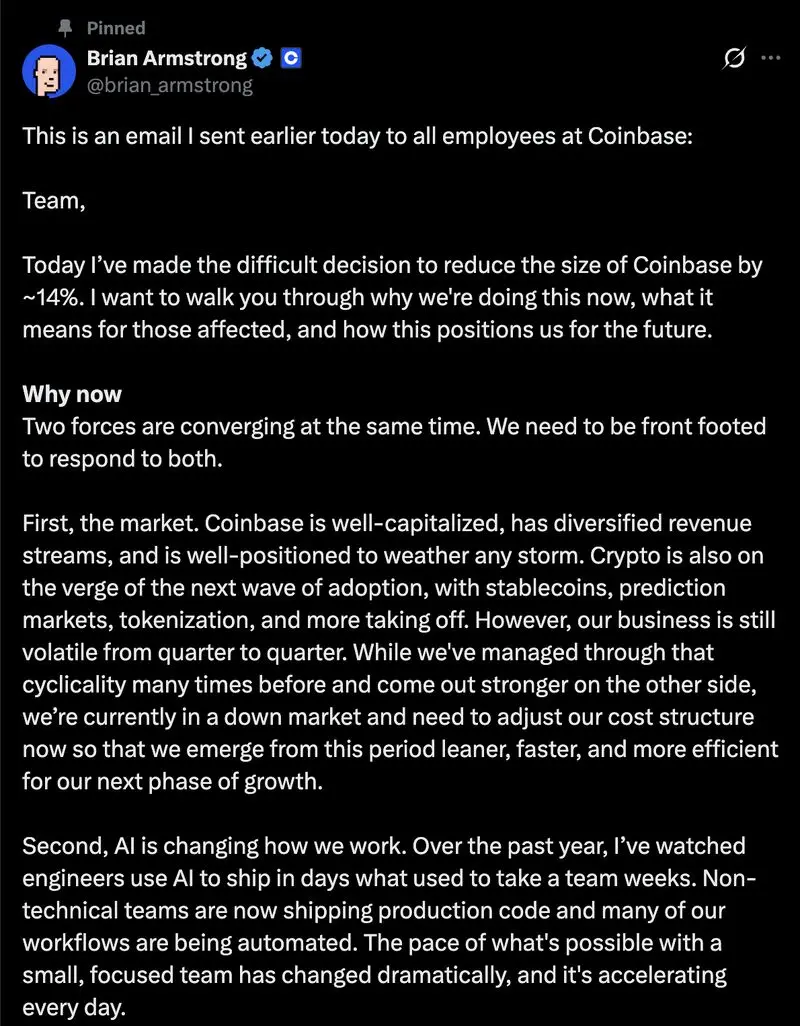
Armstrong shared that their focused teams have dramatically changed the pace of what is possible, and the results speak for themselves:
- Engineers are using AI to ship in days what used to take a team weeks.
- Non-technical teams are now shipping production code.
- The output per employee is accelerating every single day.
Because of this, Coinbase is ruthlessly restructuring the way they build software:
- Fewer layers, faster decisions
- Zero "pure managers."
- AI-native pods.
They are even experimenting with “one-person teams” where a single employee handles engineering, design, and product management all in one role, powered by AI agents.
You can debate whether Coinbase is a good or bad product. You can argue about the volatility of crypto. But you cannot ignore the precedent they are setting. We have seen similar shifts with Meta and Block when Jack Dorsey announced layoffs cutting over 50% of its workforce, to transition into a smaller AI-native organization.
Coinbase is proactively adapting to the new way of building and scaling businesses. In the past decade, scaling a business meant scaling your headcount. You added layers, pods, and middle management.
When the intelligence layer is being built, it disrupts the old ways of work. Human middleware is no longer a support structure. It is a bottleneck. Coinbase and Cloudflare are proving that reality right now.
Cloudflare Cut 20% of its workforce overnight
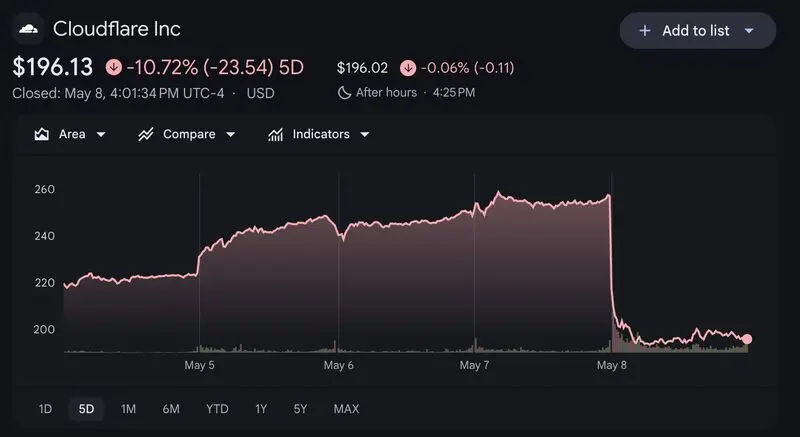
Cloudflare just blew out earnings, raised guidance, cut 20% of its workforce, and lost nearly $22B in market cap overnight.
On Thursday, Cloudflare reported a massive Q1:
- $639.8M in revenue.
- 34% year-over-year growth.
- $0.25 non-GAAP EPS.
- Raised full-year guidance.
In a normal market, the stock jumps 10%. Instead, it cratered over 23%.
Why? Wall Street hates ambiguity, and Cloudflare just broke the traditional SaaS business model.
Buried in the earnings was a bombshell memo: Cloudflare is laying off 1,100 employees. But this wasn't defensive cost-cutting. It was a proactive pivot to an "agentic AI-first" company.
Internal AI usage spiked 600% in just three months. Employees across engineering, HR, finance, and marketing are running thousands of AI agent sessions every day. The productivity gain was so high that 20% of their human roles simply became obsolete.
Cloudflare took a $150M restructuring charge to replace human workflows with AI. The market panicked. The company's valuation dropped from $90B to $69B in hours. Investors know how to model payroll. They have no idea how to value a Human-Cloud hybrid workforce.
But Cloudflare is trading short-term pain for a permanent structural advantage. For 20 years, SaaS companies grew revenue by adding headcount. More people meant more scale.
Cloudflare is the next company to declared that era is over. The next tech giants won't be measured by the size of their workforce. They will be measured by the intelligence of their agents.
The Macro View
The reason these moves matter right now is simple: the method that built your company for the last decade is no longer valid. The old world was built on cheap capital and infinite headcount. This new world is built on physical power and autonomous execution.
To survive the industrialization of intelligence, you have to win on three fronts:
- Secure the grid. Compute is no longer a software abstraction. It is a physical utility. Your infrastructure needs to be anchored to massive power pipelines like Anthropic or your growth has a hard ceiling. Secure your power today or get capped tomorrow.
- Own the structured logic. LLMs are commodities. Non-language models like tabular models that understand behavior, churn, inventory, and payments are the only proprietary moats left. Your database is either an operating brain or a cost center.
- Cut the coordination cost. Growth is now tied to the volume of intelligence you coordinate. If your org chart still relies on layers of management to move information, you are moving too slowly to survive this cycle.
The giants are building and the signal for leaders is clear. The companies that win are the ones who realize the shift and pivot to coordinate the most intelligence with the least amount of friction.
Focus on the builders.
Until next week...
