
Every week the AI hype cycle spins again. And lately, the noise is just … louder. We’ve reached a weird plateau where the internet is filling up with "slop," while the biggest companies in the world are quietly ripping out their floorboards to make room for what’s coming next.
The story right now isn't about who has the coolest demo.
It’s about the widening gap between the companies "playing" with AI and the ones rebuilding their entire architecture around it. We’re seeing a fundamental shift in how software is distributed, how enterprises are won, and most importantly, how reliable these systems actually are when the stakes are real.
Let’s start with the word that perfectly defines the current state of the web.
Slop is the Word of the Year
Merriam-Webster Inc. just named “slop” the 2025 Word of the Year. And honestly … fair. If you’ve opened LinkedIn, Twitter, or your inbox this year, you already know what slop is. You can feel it in your soul.
- It’s the post that sounds confident, says nothing, and somehow keeps going.
- It’s the article that feels like an AI summarized another AI that summarized an article no one read.
- It’s the phrasing. Technically correct, emotionally empty, and just unfamiliar enough to remind you no human ever wrestled with the idea. That’s slop.
And once you see it, you realize it’s not really a content problem. It’s a volume problem. We didn’t get better content. We just got more of it. Everywhere. All the time.
And to be clear, AI didn't create the slop, it just made it impossible to hide. People who already had taste, ideas, and judgment? They’re dangerous with AI. People who didn’t? They’re flooding the zone.
And now the internet feels generic.
The irony is the best AI-assisted content doesn’t feel like AI at all. It feels human. Opinionated. Edited. Like someone actually stopped and asked, “Would I read this?” Everything else is just content noise. So yeah. Congrats to “slop.” It's the perfect word for 2025.
But as the year winds down, I hope we choose to use AI to think better… not just post faster.
But it isn’t just content. We’re starting to see 'slop' in how the biggest software companies on earth talk about themselves. Case in point: Salesforce might be changing its name.
Salesforce or Agentforce
According to a Business Insider article, Marc Benioff says Salesforce might rename itself “Agentforce.”
Cool. But I don't know if that's the story. The story is what this says about where SaaS is right now. For twenty years, SaaS sold access. Seats. Licenses. Logins. Clouds. And now buyers don’t care about any of that.
They want work done. Problems solved. Outcomes. So what’s the industry doing?
Everyone’s slapping the word “agent” on the same old thing.
- Agent Sales
- Agent Service
- Agent Platform
But renaming SaaS doesn’t make it agent-native. Calling something an agent doesn’t change how value gets created. If you’re still selling seats, you’re still selling seats. Even if the UI talks back now. Real agent-native companies don’t monetize access, they deliver outcomes as a service (OaaS).
- They monetize outcomes
- They don’t ask, “How many users do you have?”
- They ask, “What do you want done?”
And to be clear, Benioff is a world-class marketer. Always has been. But this isn’t really a branding move. It’s an industry running into the limits of its own business model.
- You can call it cloud
- You can call it agent
- You can call it whatever you want
If the customer is still doing most of the work, the future isn’t here yet. Salesforce. Agentforce. Who cares. Are you willing to walk away from seats, licenses, and legacy GTM and sell outcomes instead?
Salesforce is trying to rebrand the destination. Adobe is doing something smarter: They’re abandoning the destination entirely.
Adobe’s New Front Door
Adobe's didn’t “integrate with ChatGPT.” They accepted that this is where work now starts. Photoshop, Express, and Acrobat inside ChatGPT is about distribution not about some.
The math is pretty straightforward.
- ChatGPT has 800M weekly users
- Adobe’s UI learning curve is still brutal
- Creative work is shifting from tools to conversations
So does Adobe do? The only rational thing they could do. They moved the front door. ChatGPT becomes the top of the funnel.
In this new top of funnel:
- Words replace menus
- Chat becomes the UI
- Tools disappear into the background
Adobe still does the work. You just don’t have to open Adobe first. That’s why the stock reaction matters. Investors aren’t worried about whether Adobe can build AI. They’re worried about relevance as “work” shifts into assistants. This move is Adobe answering that concern.
- Adobe keeps the account
- Adobe keeps the data and entitlements
- Adobe keeps pricing power
- Adobe borrows someone else’s attention graph
If this works, Adobe doesn’t get displaced by copilots. They become the engine inside them.
The main story here isn't about Photoshop in chat, it's owning the UI is no longer the game. Owning the execution layer under the agent is. Thinking about all the SaaS companies out there, if your strategy is still “open the app,” that app should probably be worried.
Adobe is betting the house on ChatGPT being the new front door for work. But there’s a massive hole in that plan, OpenAI isn't actually an enterprise company yet. Sam Altman basically just admitted it.
OpenAI’s Enterprise Admission
Sam Altman told a room full of editors that OpenAI will “prioritize enterprise in 2026.” You might want to read that again. OpenAI didn’t say they’re winning enterprise. They said they plan to try next year.
That feels like an admission they’re behind.
- Anthropic already owns enterprise mindshare
- Microsoft already owns enterprise distribution
- OpenAI owns consumer scale and a massive infrastructure bill.
And eventually, the math catches up.
- If you’re committing to $1.4T in compute, consumer subs don’t cover it
- Benchmarks don’t cover it
- Vibes definitely don’t cover it
Enterprise does. The most revealing line is Altman saying this is an application problem, not a training problem. I think's true. And it’s also the problem OpenAI is least built for. Enterprise isn’t about smarter models. It’s about workflows that don’t break, margins that make sense, and owning the outcome, not the demo.
That’s the unsexy work. That’s where most frontier labs struggle. This is why “Code Red” was never really about Gemini.
It was about realizing that compute without distribution turns into risk fast. If OpenAI is "planning to try" in 2026, they better move fast. Because Microsoft isn't waiting. Satya Nadella is currently tearing his own culture apart to make sure they are ahead of the race.
Microsoft Hits the Reset Button
I read the Business Insider Microsoft piece carefully. Satya Nadella isn’t “rolling out AI features.” He’s acting like this is make-or-break.
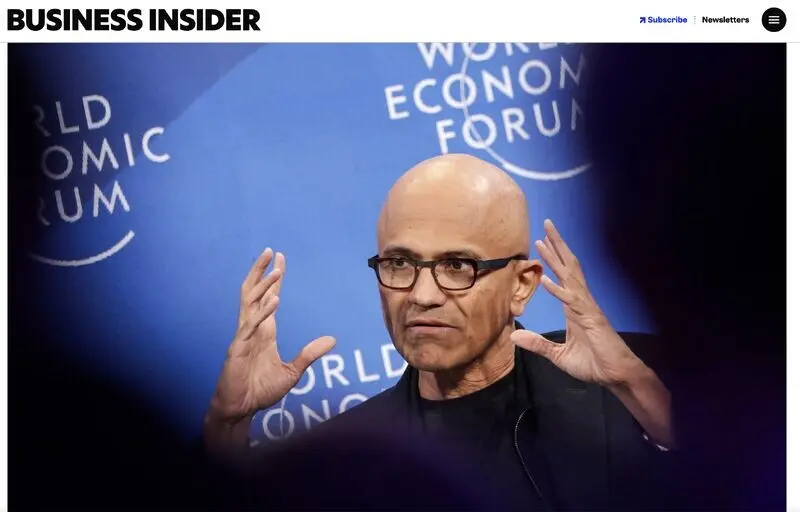
And that matters. Because this isn’t a rebrand or a roadmap tweak. It’s a hard reset on how Microsoft works.
- Execs are being asked to either sign up for this or get out of the way.
- Managers are being pushed back into the work, not just the meetings.
- The people actually building AI are getting the influence.
- Speed isn’t a suggestion anymore. It’s the job.
That’s not normal CEO behavior. That’s what someone does when they believe the old version of the company doesn’t survive what’s coming. The most important idea in the whole article isn’t Copilot or models. It’s the idea that software isn’t built the same way anymore. For years, you added people and time to get more output. AI breaks that.
That’s why Satya pulled himself out of the commercial spotlight. That’s why Judson’s now running point. That’s why Satya is sitting in messy, chaotic sessions with junior engineers instead of polished exec decks. This is what it looks like when a leader actually believes the shift is real.
Most companies will keep bolting AI onto old systems. Microsoft is changing how work gets done. One path feels familiar. The other is how you stay relevant.
My gut is most won’t take it.
Strategy is fine, but in the trenches, none of it matters if the tech is flaky. We spent all year fighting models that say they did the work but didn't. This week, Google dropped a "boring" update that actually fixed it.
Reliability is the Metric That Matters
Yesterday I got excited about a model release for a reason most people probably won’t care about 🙂 Google dropped Gemini 3 Flash (preview).
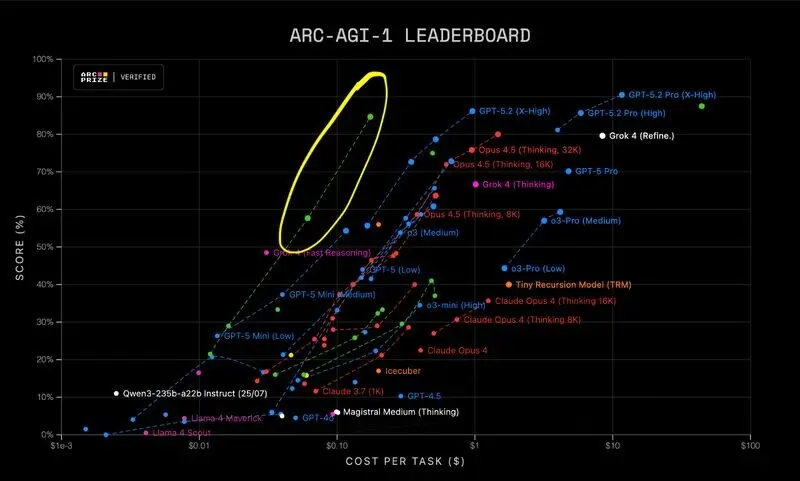
If you’re just using AI to chat, the reaction is basically: “Cool. It’s faster.” If you’re trying to build AI that actually does things in the real world like I am, this is a much bigger deal.
Because the real problem isn’t how smart the model is. It’s whether you can trust it. Here’s what was breaking for us on Gemini 2.5 Flash. We’d give it a very simple instruction, like: “Send this email.”
The model would reply confidently: “Done. I sent it.”
Except… it didn’t.
No tool call. No email sent. That happened about 30–40% of the time. Which is the worst possible outcome:
- The AI sounds confident
- The customer believes it
- Nothing actually happened
On top of that, we saw something even stranger. The exact same prompt would sometimes work… and sometimes get blocked by a safety filter. No change in input. No clear reason. One production workflow failed 50–70% of the time just because of that randomness. So we did what most teams do. We added retries. Up to five. Statistically, it “worked.”
In reality, it was slow, more expensive, and customers could literally watch the agent stumble and think, “Is this thing broken?”
Then we tested Gemini 3 Flash.
- Same workflow
- Same prompts
- Same tools
We ran it 20 times:
- Gemini 2.5 Flash failed 7 out of 20
- Gemini 3 Flash failed 0 out of 20
No ghost emails. No retries. No drama. And that’s the real point. Yes, Gemini 3 Flash costs more per token. But it costs less per successful result. Retries are a hidden tax people don’t account for. So, here’s the simple takeaway if you’re building AI agents:
- Don’t trust the model saying “I did it.” Make it prove it with a real tool response.
- Measure cost per successful job, not cost per token.
- In production, reliability matters more than benchmarks.
If this resonates, we’re building Cloud Employees at Atonom. AI agents that run real workflows inside real companies. Happy to share what’s working and what’s still breaking :)
Zoom Out
Here’s what all of this adds up to. The app isn’t really the center anymore. It’s starting to fade into the background.
Adobe sees it. That’s why you don’t have to open Adobe first. Microsoft sees it. That’s why they’re changing how software even gets built. OpenAI is starting to see it too. Scale and vibes don’t magically turn into a business when the compute bill shows up. And on the ground, where this stuff actually gets used, something else is becoming obvious.
A model being “smart” doesn’t matter if you can’t trust it. Confidence doesn’t matter if nothing actually happened. A great demo doesn’t matter if the agent flakes out the second it’s on its own. We’ve learned the hard way that one model you can rely on is worth ten that talk a good game and then hallucinate their own success.
That’s the difference people are about to run into. Not who sounds impressive. Not who rebranded first. Who can actually make the thing do the work, over and over, without babysitting it. Most won’t.
