
Welcome to this week’s edition of Autonomous. If you spend too much time looking at AI benchmarks, you'll miss the real battle.
This week, the most important shifts in artificial intelligence had absolutely nothing to do with making frontier models smarter. Instead, they had everything to do with distribution, infrastructure, and the death of the traditional software interface.
We are watching the rapid dismantling of how we have interacted with software for the last two decades. The era of logging into a dashboard, prompting a chatbot in a standalone tab, or building a clever SaaS workflow is ending. The giants aren't just adopting AI, they are fundamentally rewiring where it lives and who controls it.
In this week’s edition, we are tracking a massive land grab across the entire tech stack:
- The Browser: Google flexes its platform power, reminding startups that distribution will always beat a standalone model.
- The Hardware: Apple prepares to kill the computer screen entirely, shifting the battleground to "Physical AI."
- The Software: Salesforce admits the human UI is dead, stripping SaaS back to raw data stores for autonomous agents.
- The Business Model: A legacy retail brand pivots into an AI hyperscaler, proving that compute gravity is reshaping every industry.
The overarching lesson for B2B and SaaS leaders this week is clear: AI is no longer a feature you add to your software. It is the infrastructure that will replace it.
Let's dive in.
Distribution is the ONLY Thing That Matters
Google just turned a startup category into a Chrome feature. Google just shipped “Skills” into Chrome. That means users can save and reuse AI workflows natively inside the browser.
And that is reminder of what platform power looks like.
For two years, startups have been building clever AI browser extensions or even new browsers altogether. Google waited. Then pulled the feature into the core product. That is the risk of building on someone else’s platform. Google owns 66.7% of all devices and has nearly 4 Billion internet users.
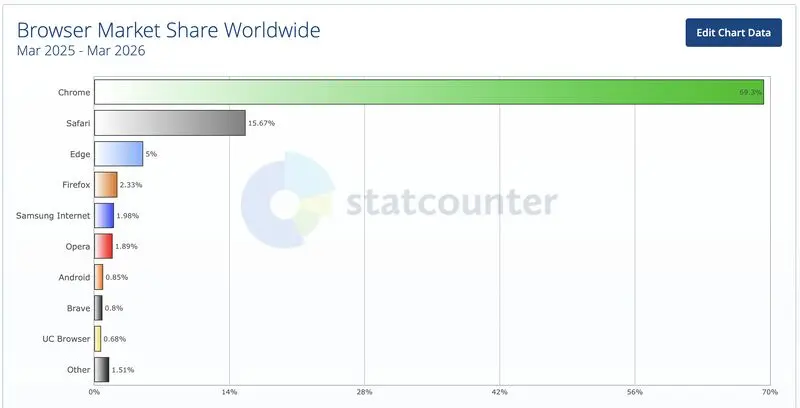
When the platform owner decides your product should be a button, a menu item, or a native workflow, your entire company can collapse into a release note. This is why I think the AI race is still being misunderstood. People keep talking about models. They should be talking about distribution.
The winning question isn't: Who has the smartest AI?
It's: Who already owns the user?
- Microsoft
- Meta
- Apple
- Amazon
They have something most AI startups do not:
- captured attention
- default placement
- daily workflow control
- and distribution at absurd scale
Frontier models matter. But model quality without distribution is uphill. Distribution with embedded AI is unstoppable.
The next wave of AI winners will not just have intelligence. They will have the right to inject that intelligence directly into the places billions of people already work.
AI is becoming a distribution war disguised as a model war.
While Google consolidates the digital workflow, Apple is preparing to bypass the computer screen entirely. If distribution owns the browser, hardware owns the environment. We are moving from logging into AI to living within it.
Screens Are No Longer the Primary Interface
Apple just signaled the death of the computer screen. They are officially entering the AI smart glasses market. This isn't just another hardware launch. It is a transformative moment that will dictate the next phase of AI, following right on the heels of Meta.
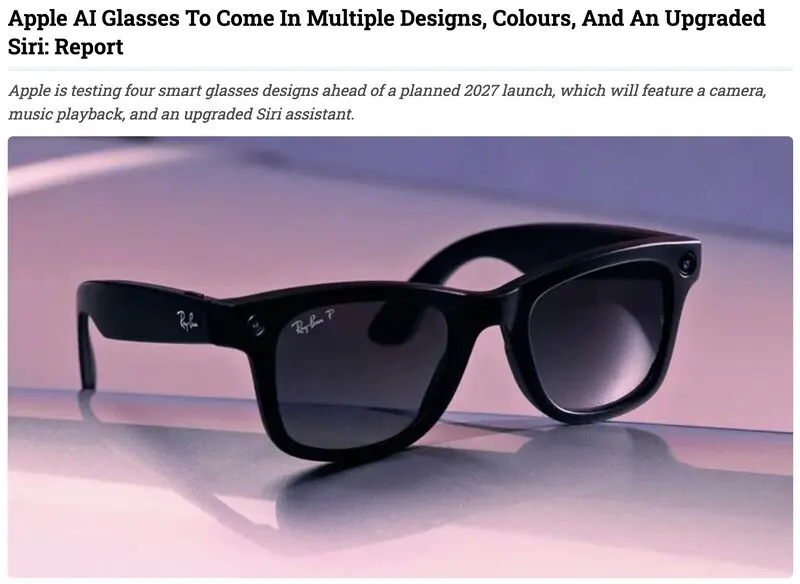
Bloomberg’s Mark Gurman broke the news sharing:
- Apple is exploring 4 premium styles
- A focus from bulky to lightweight, AI-native wearables.
- Building specifically to run physical, real-world AI.
Just a few weeks ago in New York, I was testing the new Meta Ray-Bans with my daughter in their store there. While there was still a little bit of latency, the concept felt absolutely spot on. It combined my physical environment with a digital experience...
THIS IS THE FUTURE.
The problem is that everyone is getting lost in the "Physical AI" hype of Elon Musk’s Optimus robot. But the real revolution isn't humanoid robots taking over physical labor. It’s "Physical AI" empowering us in our daily lives through wearables and devices like that.
We are moving past the era where AI is something we "log into." Physical AI allows people to extend their AI adoption directly into the real world, rather than just through a computer. Apple entering this market doesn't just validate the hardware, it shows the undeniable direction of where human-computer interaction is going.
At Atonom, we are building for this exact shift. We will be introducing a product to help our customers experience a combination of AI Cloud Employees with Physical AI, stayed tuned...
The screen is no longer the destination. The traditional interface has become the bottleneck. AI is finally stepping into the real world.
Strategic Surrender and the Return to Data Stores
Salesforce just declared the human UI is over. With the launch of Headless 360, they are rebuilding their entire infrastructure for a new type of user: AI.
They are officially acknowledging that per-seat pricing and human-centric dashboards no longer make sense in the modern enterprise. Instead, they are turning their massive platform into an online data store for AI agents, functioning much like Supabase or other hosted databases, but on an enterprise scale.
But this specific product launch is less the point here. This seems more like a complete reset of the SaaS industry back to its early 2000s roots.
Back then, CRM started as a simple hosted data store to add, edit, and delete information. To justify higher costs and capture market share, SaaS companies layered on massive amounts of workflow automation. That sparked the massive boom of the SaaS era.
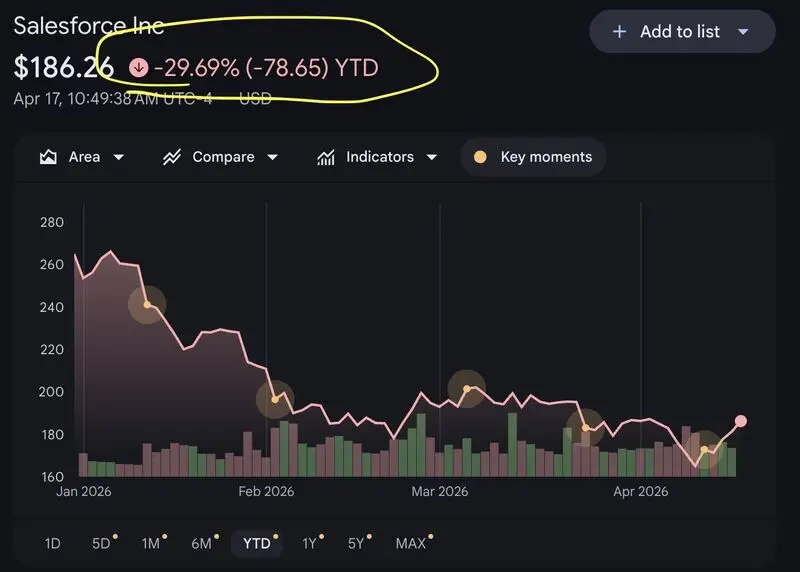
Now, AI agents and digital employees are stripping that automation away and doing all of the work for you. Agents don't need pretty dashboards or complex UI. They just need raw data, resources, and API endpoints to keep track of information.
Salesforce is smartly positioning as the infrastructure for this new era, but they are conceding the workflow automation to the AI. It is a brilliant survival move, but there is one massive difference from the early 2000s.
Salesforce no longer owns the interface. The agents do.
The shift toward autonomous agents is so violent that it is pulling legacy retail brands into the core of the AI infrastructure war. We have reached a point where the business of intelligence is more attractive than the business of anything else.
When AI Breaks the Traditional Business Model
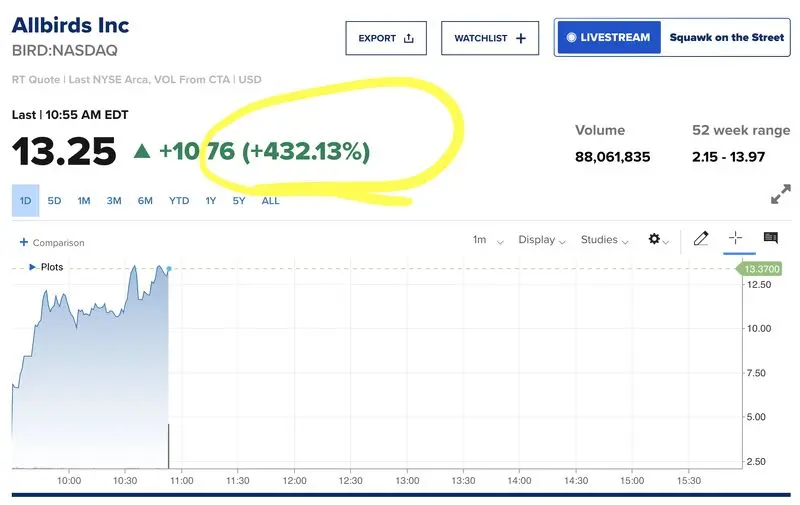
Allbirds just became an AI data center. And their stock exploded over 430% today.
Yes, really.
Allbirds, the brand started with a $119,000 Kickstarter project, famous for sustainable wool sneakers, just announced the most fascinating business pivot of the decade.
They are officially becoming NewBird AI, the worlds newest AI Hyperscaler joining the like of Amazon, Oracle, CoreWeave, Google, Tencent, etc. They are buying NVIDIA H100 GPUs and beginning their buildout.
Just by announcing it, their valuation skyrocketed over 430% today. I had to write about this because to me it represents a seismic shift in how we understand business right now. We saw Oracle do something similar, evolving from a legacy software roll-up into a massive AI Hyperscaler.
But a consumer retail brand making this leap? Crazy, right?
I don't think AI can be thought of as just a feature. It is the entire business model. This is a massive wake-up call for every CEO, board of directors and executive globally. If a retail brand stuck in a legacy brick-and-mortar model can recognize the sheer economic gravity of AI and completely reinvent itself to create unprecedented stakeholder value... what is our excuse?
The companies that survive the next decade won't be the ones clinging to the past. They will be the ones bold enough to pivot into our future.
The Macro View: Software is being switched out.
For twenty years, the enterprise playbook was simple: buy software to automate workflows, train your team on the interface, and manage for the output. This week further proved that era is ending. We are moving from a world where humans use software, to an era where AI replaces the software entirely.
The battleground for corporate dominance has fundamentally shifted:
- Distribution beats standalone tech: The winners won't be the organizations buying the smartest standalone AI tools, but those embedding intelligence directly into where the work already happens.
- Environments replace screens: The traditional computer interface is becoming a bottleneck as AI steps into the physical world and ambient workflows.
- Data stores replace dashboards: Enterprise software is stripping away human-centric UIs to become raw infrastructure designed to feed autonomous agents.
- Compute is the ultimate asset: The economic gravity of AI is so immense that even consumer retail brands are pivoting to own the infrastructure.
We are no longer building applications for humans; we are building infrastructure for digital employees.
If a wool sneaker company can wake up and realize the business of intelligence is the only game in town, every SaaS founder and GTM leader must ask themselves how they are adapting.
Until next week ...
