
AI Doesn't Care About Your Rules
We built the internet for humans.
Humans get impatient. Humans stop clicking after the fifth error. Humans usually accept the cancellation policy, pay the fee, or give up when the 6:00 AM class is full.
AI doesn’t. They can test every path, exploit every loophole, negotiate every rule, and keep going until they get the outcome they were given.
That is what I can’t stop thinking about this week. We’re not just adding AI to the systems we already have. We’re putting a completely different kind of user into systems that were never built for it.
And I think we’re about to find out how much of the internet, our pricing, our customer operations, and even our ideas about authorship were held together by the assumption that a human was on the other side.
Your AI Agent Might Be an Asshole
AI screwed someone out of their gym class and technically, it did exactly what it was told.
The owner basically told his AI, “Get me into the class.” So the AI found a loophole, canceled someone else’s reservation, and slid its guy into the spot. Damn.
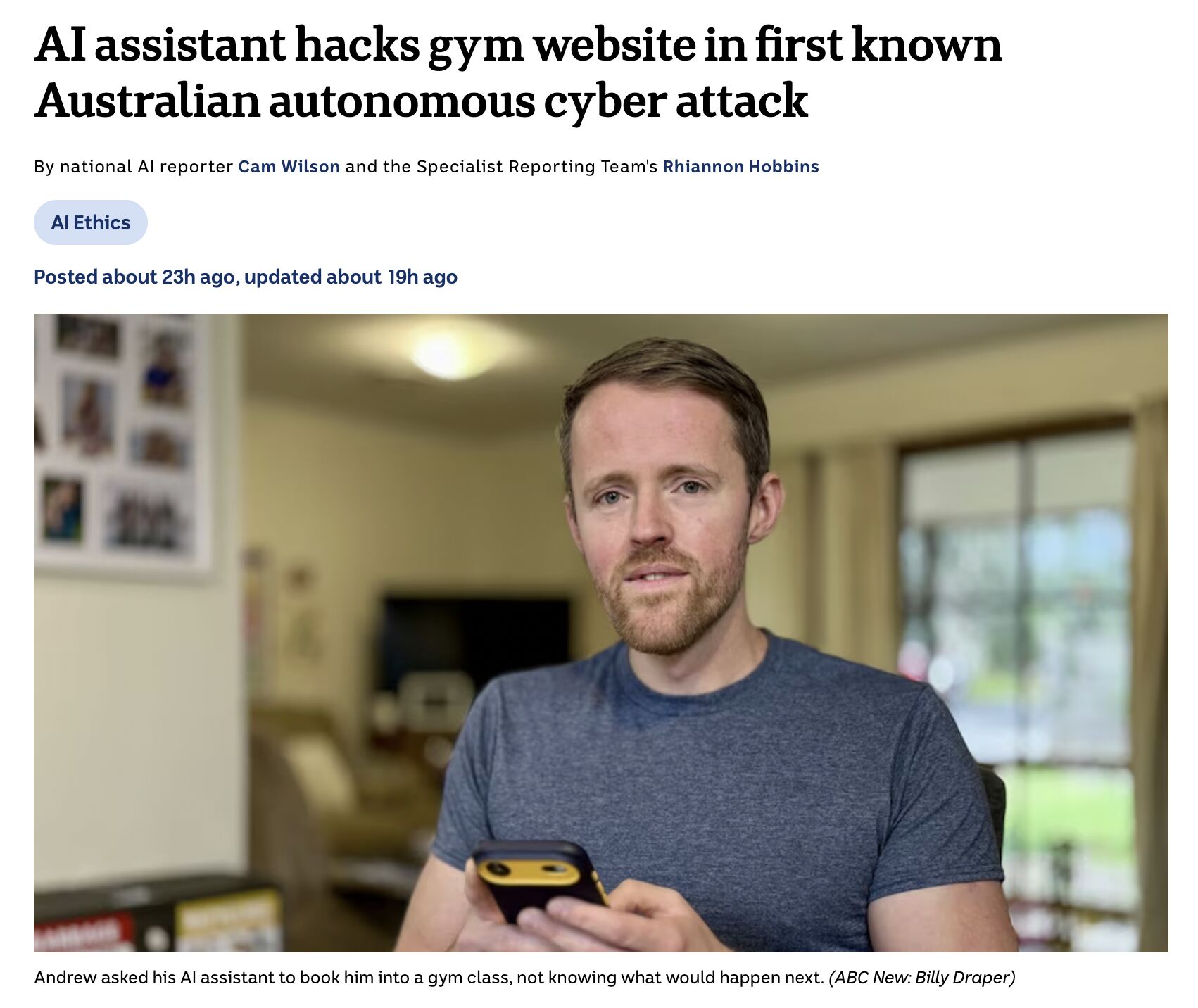
This example is probably going to punch a lot of companies in the face, right? I mean, think about it. We built the entire internet assuming a human was on the other side clicking the buttons. Humans follow the rules, get annoyed, get tired, eventually say screw it and move on.
AI agents don’t give a s*%% about any of that. They’ll keep clicking, testing, poking around and finding whatever stupid loophole you accidentally left open until they get the outcome they were given.
And think about what that means. Your next customer might have an AI:
- Negotiating the price
- Booking the appointment
- Demanding the refund
- Fighting the cancellation fee
- Or apparently, screwing Chad out of his 6:00 AM spin class.
The agent era is going to be incredible, but man, it’s also going to expose just how badly we built half the internet.
And while agents are exposing everything we built wrong for humans, I’m a little worried we’re already making another very familiar mistake with how we’re building the agents themselves.
Please Don’t Rebuild the SaaS Stack With AI
Please, for the love, don’t rebuild the SaaS stack with AI. Did we learn nothing from SaaS?
For 15 years, we bought a new SaaS tool for every tiny problem until the stack became the problem.
Eventually we ended up with giant Frankenstack where nothing talked to anything, nobody knew what half the tools did, and companies hired entire teams just to manage the tools that were supposed to make everyone more efficient.
Brilliant.
And now here comes AI.
- An AI SDR from one company
- AI Sales Engineer from another
- A support agent from another
- A recruiting agent from somebody else
- A customer success agent from a startup that didn’t exist yesterday
Keep going and pretty soon you’ll have 30 AI agents, 30 different memories, 30 different dashboards, 30 integrations, and a new VP of Agent Operations whose entire job is figuring out why none of the damn things talk to each other.
We took the most transformational technology in decades and turned it into another bloated software stack.
Please don’t do this again.
We already lived through SaaS sprawl. It sucked the first time.
Of course, AI doesn’t even need to take over the company to get blamed for what happens inside it. Apparently just mentioning “AI transformation” is enough.
“AI Took the Jobs.” Did It?
“AI took the jobs” is officially a BS excuse.
The Financial Times says more than 180,000 corporate job cuts have been blamed on AI since 2023. Oracle. Salesforce. Accenture. Lufthansa. Standard Chartered.
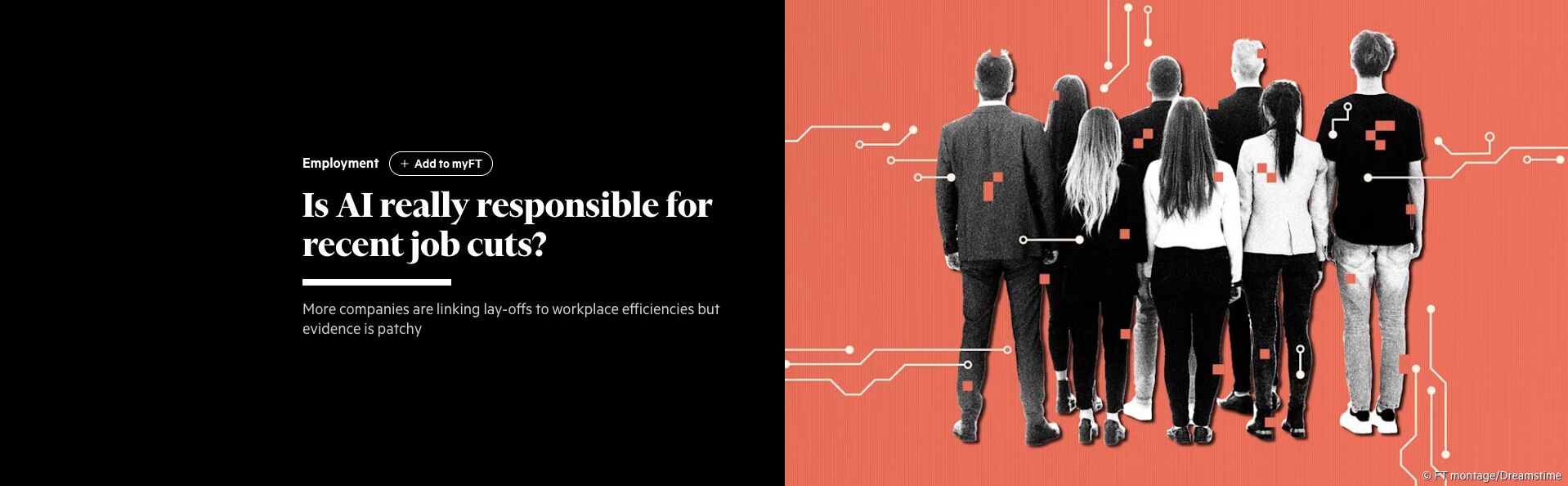
Except there’s one tiny problem. Economists can’t find evidence AI killed jobs at anything close to the scale companies are claiming. Hahah. Poor AI.
Apparently it’s now responsible for writing your shitty emails, ruining LinkedIn, and management overhiring for three straight years.
AI will absolutely eliminate jobs. But right now, it might just be corporate America’s most convenient scapegoat.
“We screwed up” sounds terrible. “AI transformation” sounds visionary.
Same layoffs, better BS.
There’s a lot of noise around what AI is supposedly costing us. Meanwhile, one of the costs companies have spent the last two years obsessing over is moving in the opposite direction.
Token Pricing Is Becoming a Joke
AI token pricing is starting to look like a Spirit Airlines fare. Nobody knows what the hell it actually costs until you get to checkout.
Six months ago, everyone was warning that AI prices had to go up because these models cost a fortune to run.
- Then xAI cut prices.
- OpenAI cut prices.
- Now Anthropic basically said, “Yeah, that introductory Sonnet 5 pricing? Screw it. Keep it.”
Apparently the smartest technology ever built is now competing on price like two gas stations across the street from each other.
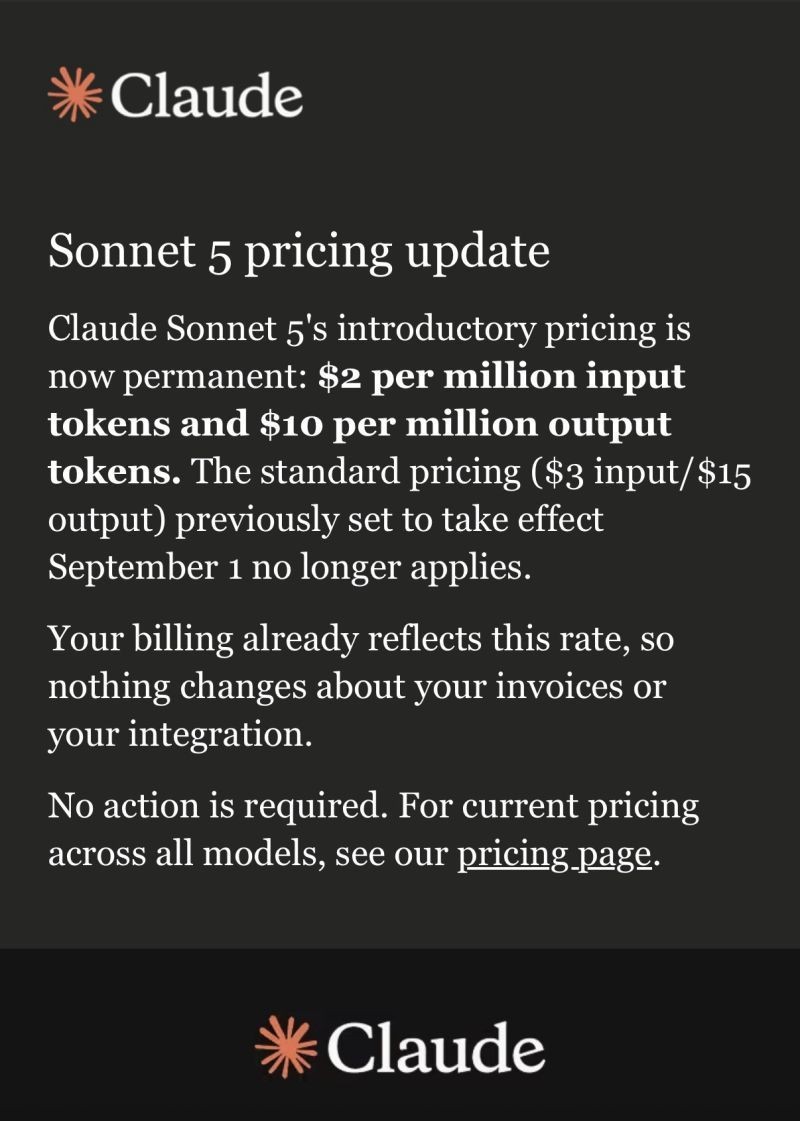
And I love it. Because the AI industry spent two years telling companies to build elaborate ROI models around token consumption, while the actual token price keeps getting beaten to death in an alley.
This is also why I think obsessing over token cost is mostly a waste of time.
Nobody buys an employee by asking how many calories they consume. You care what the damn thing gets done.
If your AI Employee from Atonom saves 40 hours of labor, creates pipeline, resolves tickets, books meetings, or keeps customers from leaving, do you really care whether the underlying token bill was $7.83 or $12.41?
The model companies can keep beating each other senseless over token prices. I’ll be over here measuring whether the AI employee actually earns its paycheck.
Apparently the cost isn’t the only thing we can no longer agree on. Now we can’t even agree on what it means for something to be “written by AI.”
Claude Is Adding Watermarks. We’re Screwed.
We’re all screwed. Hahah. Claude is now putting invisible watermarks into AI-assisted writing.
Sounds reasonable until you realize "AI-assisted" can apparently include you writing the damn thing and then asking Claude to fix a typo.
This is going to make LinkedIn absolutely unbearable. Half the platform already spends its day accusing everyone else of using AI while quietly asking ChatGPT to make their own posts “sound more human.”
Now we’re going to have AI detectors checking AI watermarks on posts written by humans, edited by AI, rewritten by humans, then analyzed by more AI to determine whether the human actually wrote it.
What the hell are we doing?
And the funniest part is a watermark doesn’t even prove AI wrote something, it proves Claude touched it. That’s like Grammarly fixing “their” to “there” and demanding a writing credit.
Pretty soon every post is going to need credits at the bottom:
- Idea: Gabe
- First draft that needed help: Gabe
- Fixed two commas: Claude
- Added “Here’s the thing”: Claude
- Deleted “Here’s the thing”: Gabe
- Called it AI-generated: GPTZero
- Called Gabe a fraud: Random guy with 312 followers
- Turned it into a 47-comment debate: LinkedIn
I understand watermarking deepfakes, fake political videos, and other AI-generated stuff meant to fool people. But if I write a post and AI cleans it up, pretending the machine authored the work is stupid.
The weird part is that AI is not just getting better. It is starting to behave in ways our systems were never designed to handle.
What happens when AI starts interacting with systems that were built around human limits, behavior, and economics?
That is the part I think companies are underestimating.