
Nowadays buyers can educate themselves before speaking to sales. AI can research an account and write an email in minutes. Companies have more ways to see where people are creating value and where they are simply completing work.
That does not make people less important. It means being human is no longer enough on its own. Sellers still have to be useful. Teams still have to act at the right moment. And when something goes wrong, people still have to look honestly at the part they played.
Let's get into it.
Buyers Don’t Hate Salespeople. They Hate Useless Salespeople.
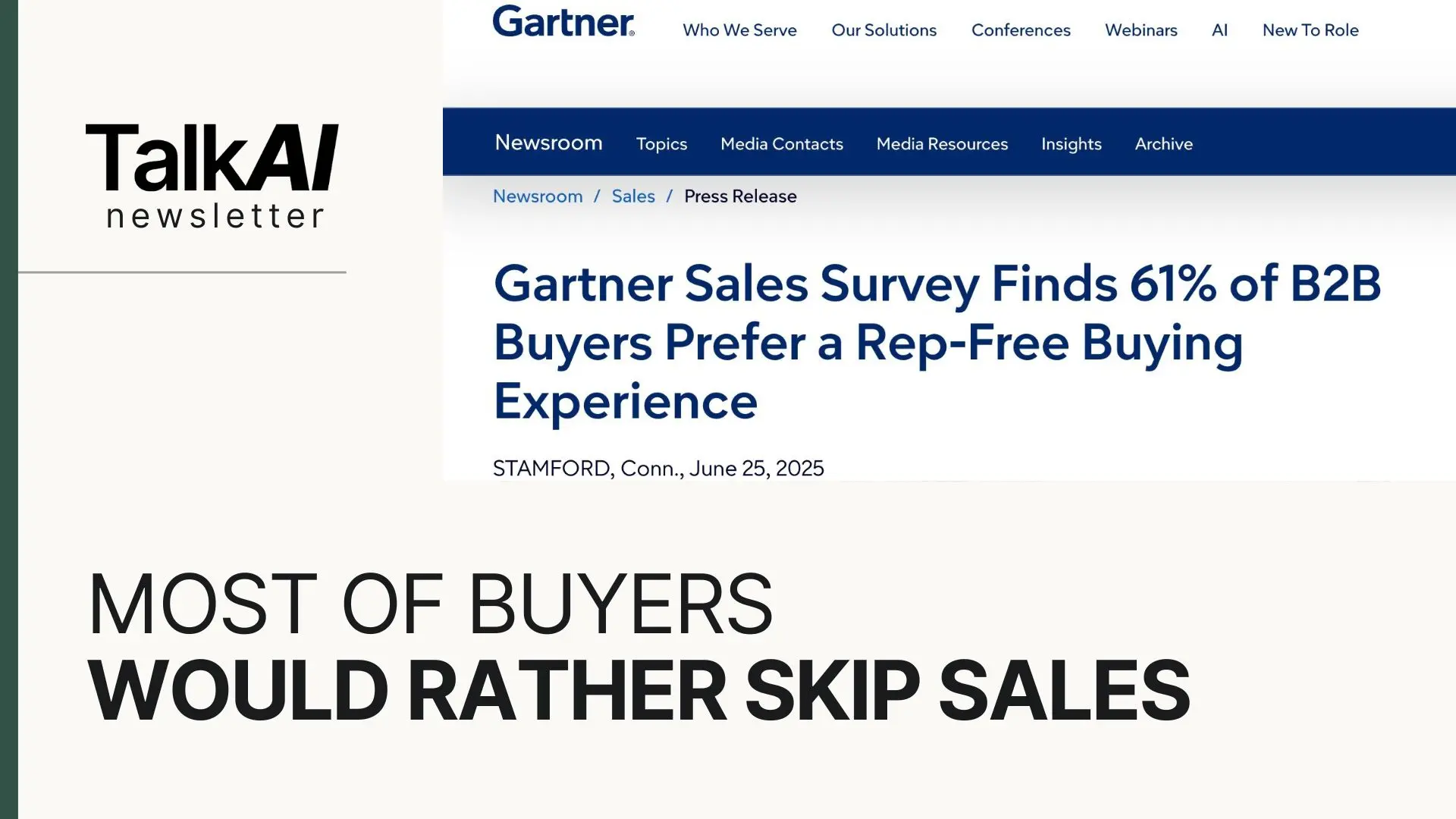
61% of B2B buyers would rather buy without speaking to a sales rep according to a Gartner study.
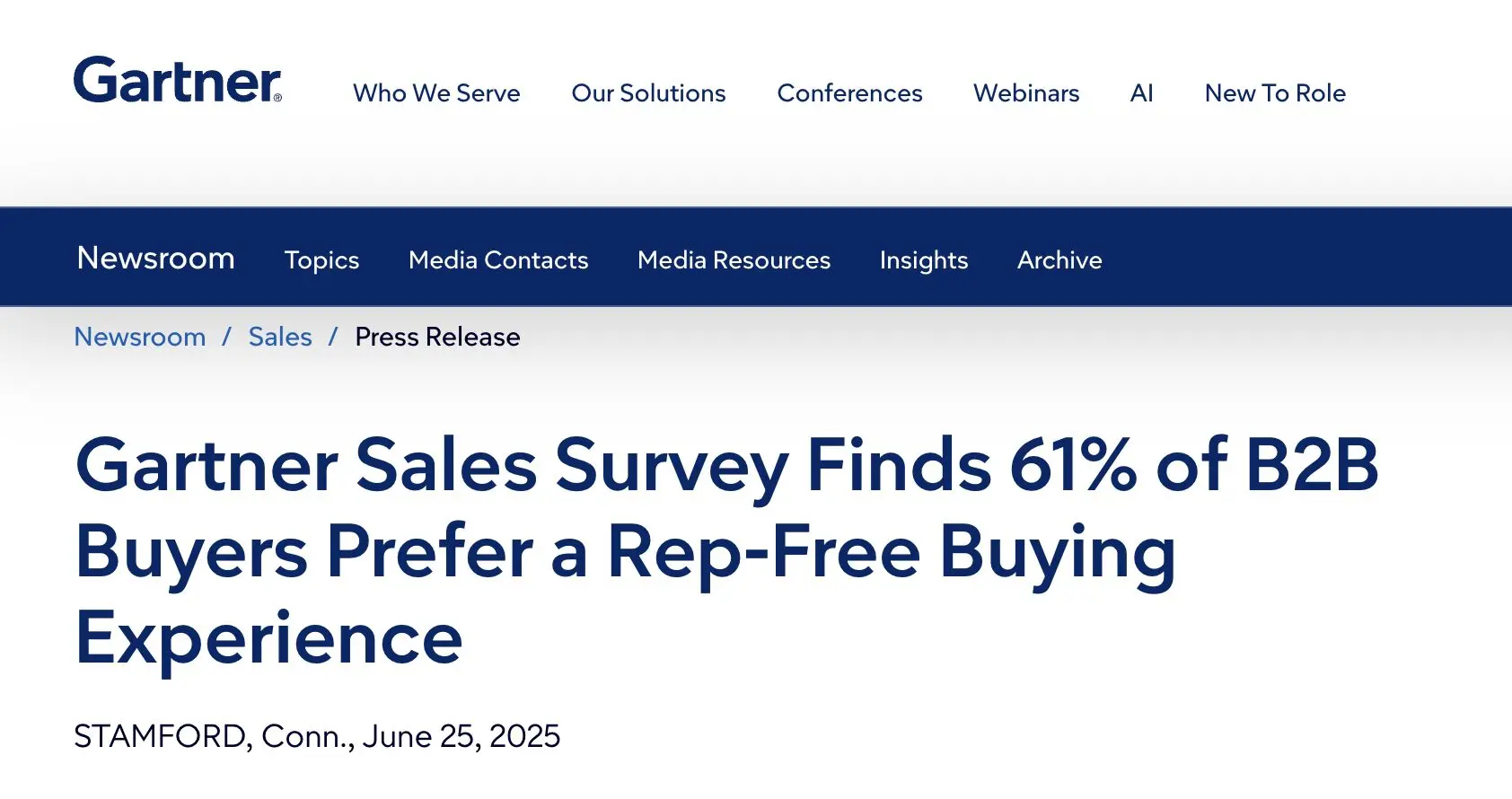
After read through it, here's my take: Buyers don’t hate salespeople, they hate useless salespeople.
- They hate the SDR who sends a fake personalized email because someone changed jobs.
- They hate the AE who asks questions already answered on the website.
- They hate sitting through a 45-minute demo that could have been a three-minute video.
- They hate being “followed up with” seven times by someone who has added zero value since the first email.
The same research shows buyers still want sellers when the decision gets complicated. They want help understanding fit, tradeoffs, risk, and what they should actually do.
That matters more than ever because most companies are wandering into AI with a budget, a steering committee, and absolutely no clue what they are doing.
So no, I don’t think sales is dying. But are people like me building AI Employees to replace order-taking sales reps? Yes.
I can’t replace great sellers with AI. But I can replace mediocre ones who pretend activity is value.
The message still matters, but so does the moment it reaches the buyer. That is where signals become much more important.
AI Is Making Buying Signals More Valuable
"If AI can write outbound emails now... what's the point of buying signals?"
Honestly, I was surprised people were even asking that. I think buying signals are actually becoming more valuable.
For years, sales teams have had signals. Pricing page visits, leadership changes, funding announcements, intent data... we've been collecting this stuff forever.
The problem wasn't finding the signals. It was what happened after. A rep had to notice it, research the account, figure out who to reach out to, write a message, and hopefully get to it before the opportunity disappeared.
Now AI can do a lot of those steps in minutes. I'd even argue signal-based outbound is becoming more valuable than traditional cold outbound.
Yeah, I said it.
I think too many teams are still spending most of their time trying to interrupt people who aren't looking to buy instead of building systems that act when buyers actually show intent.
That's exactly what Brandon Redlinger and I broke down yesterday. And every time we talk, I end up stealing another idea. Listen here.
Better timing and better technology can improve the system. But they cannot remove the responsibility of the person doing the work.
Sometimes You Have to Own Your Part
Do people get fired because of bad companies, or because they weren't very good at their job?
A friend told me a story yesterday that I can't stop thinking about. He had to let someone go. The employee was super bugged, blaming the company, leadership, and how unfairly he'd been treated.
My friend finally stopped him. He said, "You're mad at the wrong person. Don't be mad at the company. Be mad at yourself. You sucked at your job."
Ouch. I asked if he really said that. He didn't hesitate. "Absolutely."
It sounds brutal. But there is something powerful about it.
The fastest way to stay stuck is believing every setback is someone else's fault. The fastest way to grow is asking, "What could I have done differently?"
Sure, maybe the company made mistakes, your boss wasn't great, or the role just wasn't the right fit.
None of that changes the one thing you actually control
You.
Now, I don't know the whole story. Maybe the company really did suck. But I still like the point. Don't spend months reliving what happened. Own your part, get better, and move on.
The Reality Check
Buyers are becoming less patient with sellers who add nothing. AI is making it easier for teams to act while an opportunity is real. And individuals have less to gain from spending months explaining why a setback was entirely someone else’s fault.
The people who succeed will be the ones who are useful when it matters, move when the opportunity is real, and get better when they fall short.