
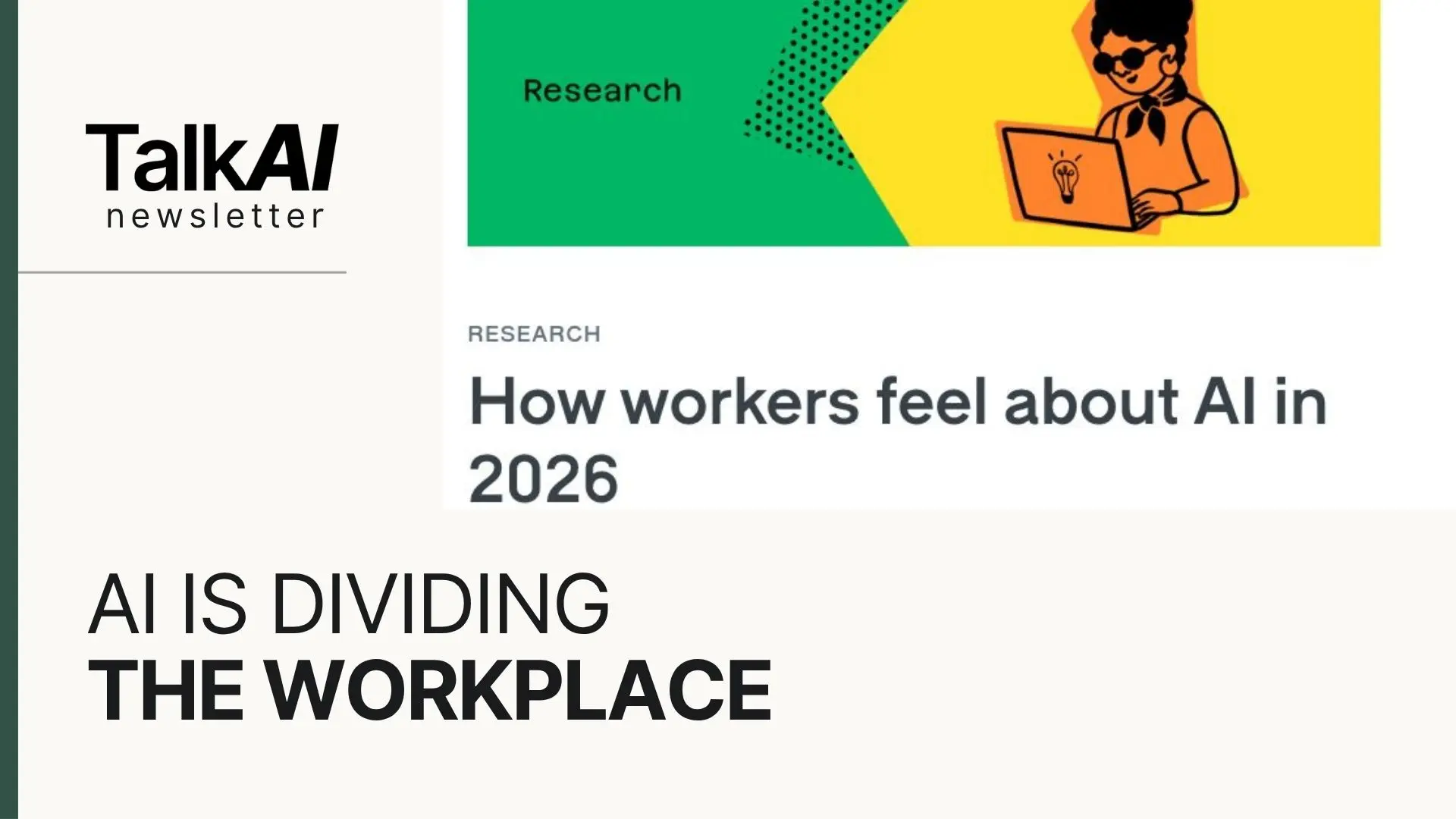
Depending on who you ask, AI is leverage, a threat, a crutch, a job killer, a writing assistant, or the reason their entire workday falls apart when ChatGPT goes down for 20 minutes.
We’re becoming incredibly dependent on AI while also getting increasingly pissed off about how it’s being used. And I don’t think that’s because people suddenly hate technology. I think we’ve been so focused on what AI can replace, automate, judge, and improve that we haven’t spent nearly enough time deciding what it should leave alone.
I’m as bullish on AI as ever. But if progress means stripping the human out of everything just because we can, I’m not sure people are going to like the future we’re building.
That’s what I keep coming back to this week.
Let’s get into it.
People Outside Tech Are Starting to Say “F These Guys”
This AI billboard got vandalized in San Francisco. And I can’t stop thinking about it.
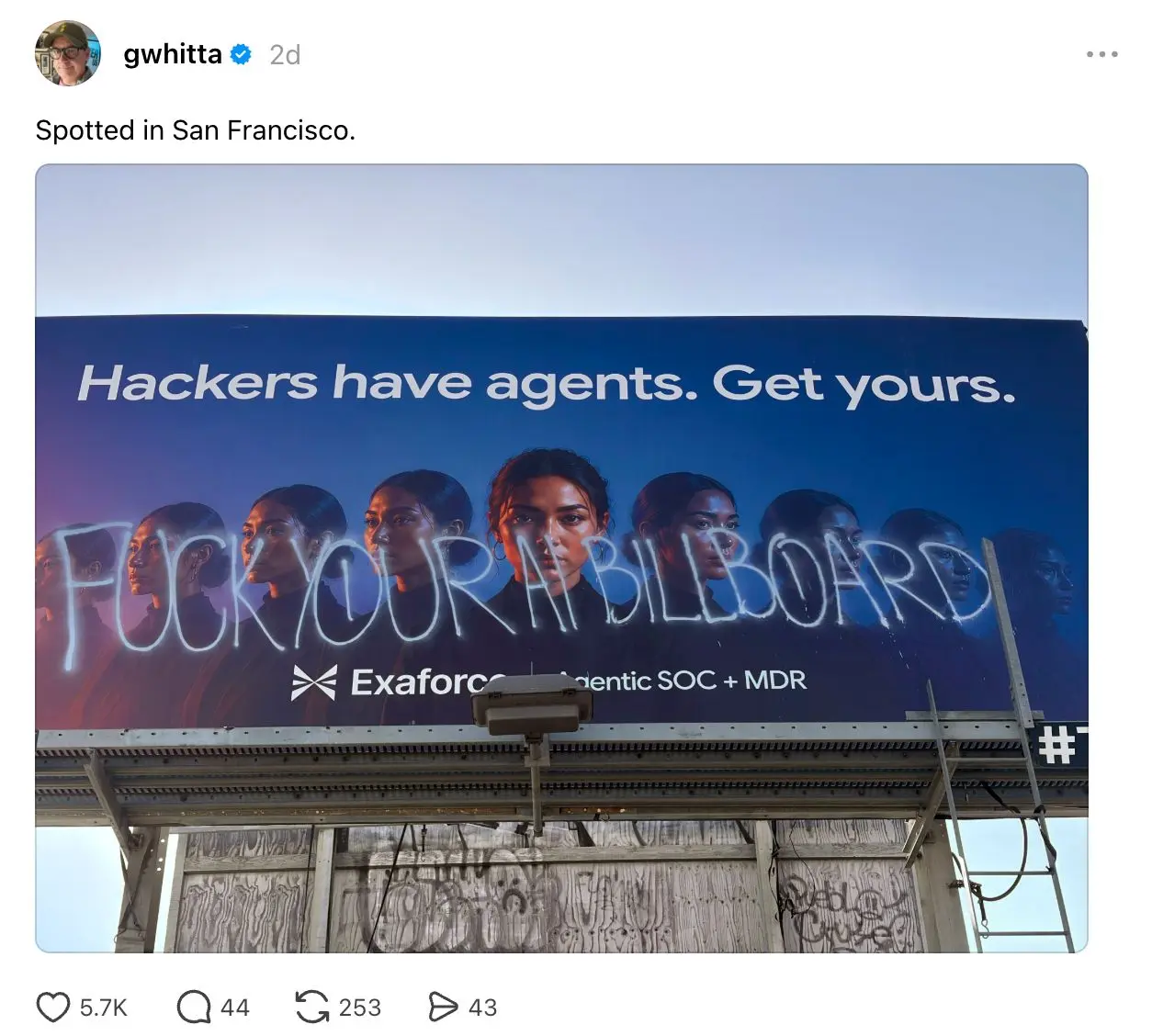
AI companies spent two years saying:
- Replace people
- Cut headcount
- Stop hiring humans
Then we act surprised when people see an AI ad and think, “f these guys.”
I believe in AI employees. We’re building them at Atonom.
But I think we screwed up the story. AI should work alongside people, not become a celebration of getting rid of them.
Maybe people don’t hate AI. Maybe they hate the way we keep talking about it.
And I think that distinction matters. Because when people already feel like AI is being pushed on them, they start reacting to anything that looks or feels like AI, even when there’s still a human behind it.
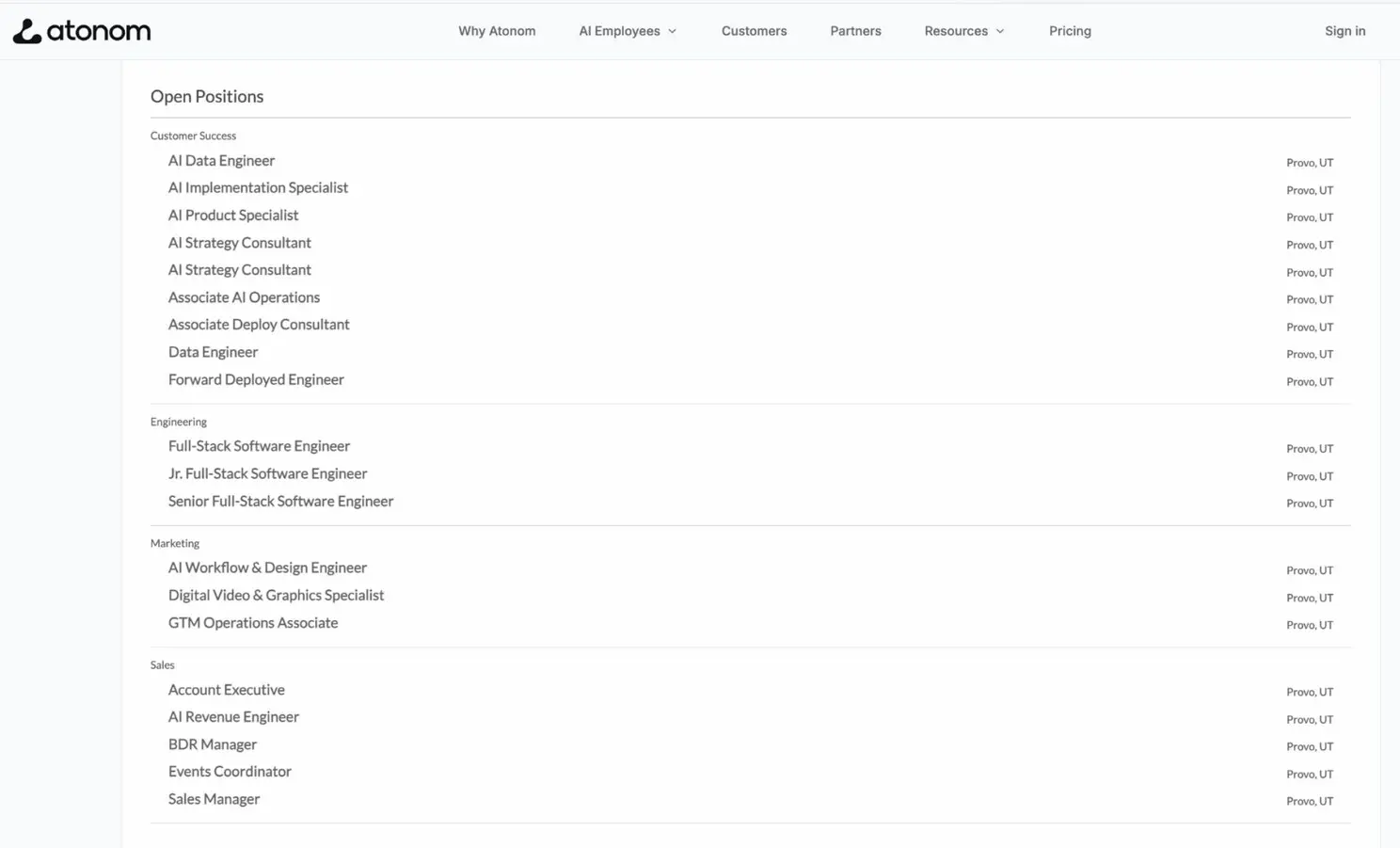
The “Hire an AI Employee” Company Is Hiring Humans
Wait… the “Hire an AI Employee” company is hiring humans? Yep. A lot of them. Some AI founders seem weirdly proud that they don’t hire people anymore. I think that’s stupid.
At Atonom, we’re building AI employees and hiring humans like crazy. Sales leaders, AEs, SDR leaders, marketers, customer success, engineers, and operators.
Why?
Because I want incredible humans doing the work only humans can do, and AI handling the repetitive crap that burns their time. The Autonomous Organization isn’t people-free, it’s BS-work-free.
Hire AI employees and hire great human employees too.
If you want to help build the Autonomous Organization, come join us.
AI Helped Write This. Come Get Me.
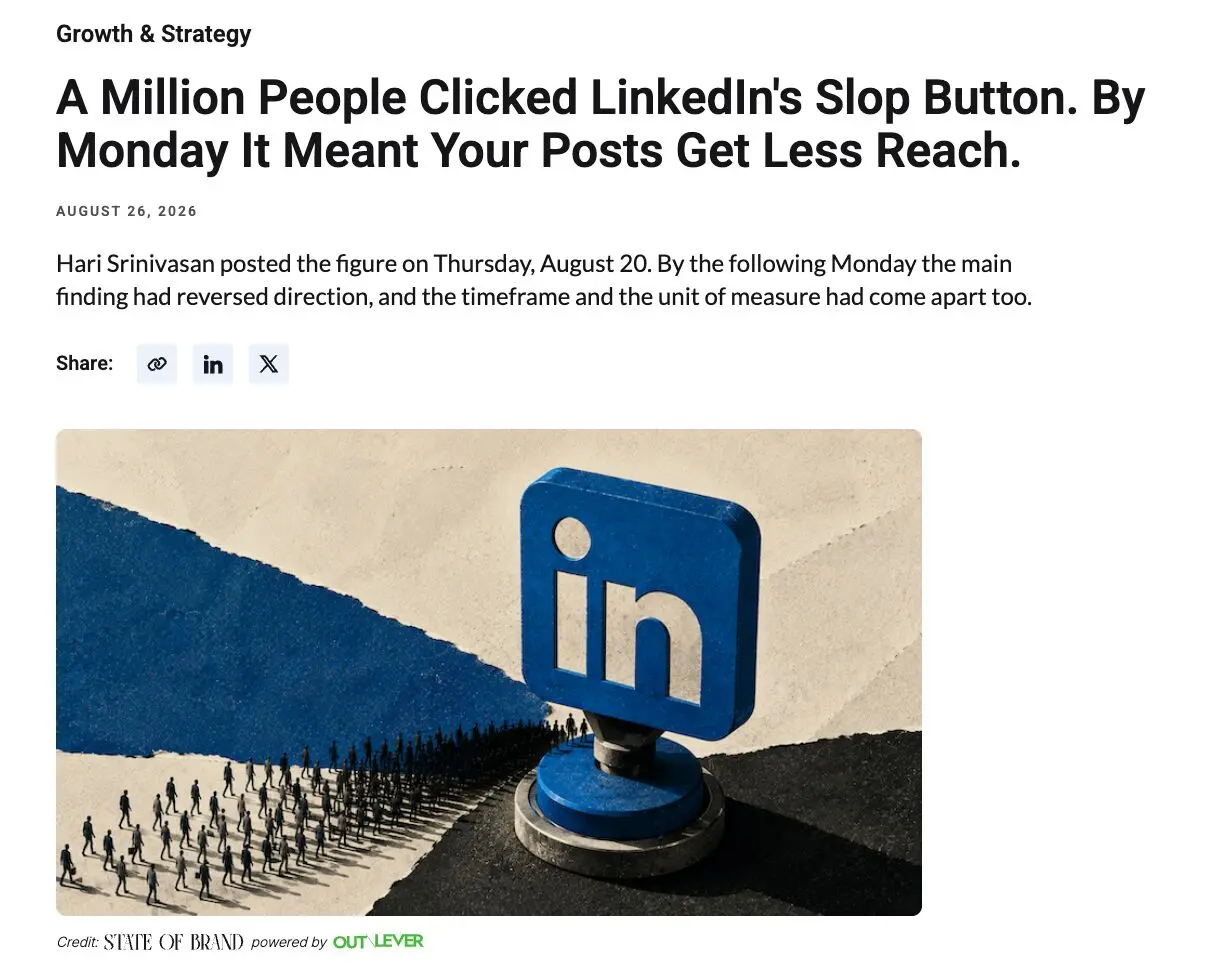
Stop using LinkedIn’s AI slop button. Seriously, stop it.
More than 1 million people have already hit it, which means we now have a million self-appointed content cops running around deciding what deserves to be seen.
I thought this was basically a “help clean up my feed” thing. I guess I was wrong :) It’s actually influencing what gets seen. And this is the part that bothers me.
Most people on LinkedIn aren’t Coca-Cola with a $4 billion marketing budget. They’re just trying to get noticed.
- Sell a service or land a customer
- Get a job
- Build a company
- Maybe make payroll
That’s why casually screwing with someone’s distribution because you think their post is “slop” feels pretty damn lame.
FYI, this post was about 75% AI-assisted. The idea was mine. AI helped with the sentence structure and idea clarification. So if that counts as slop, come get me.
And while LinkedIn is busy deciding what counts as “too much AI,” there’s a much bigger divide forming around who actually sees this technology as an opportunity in the first place.
Why Is There a 2X AI Confidence Gap?
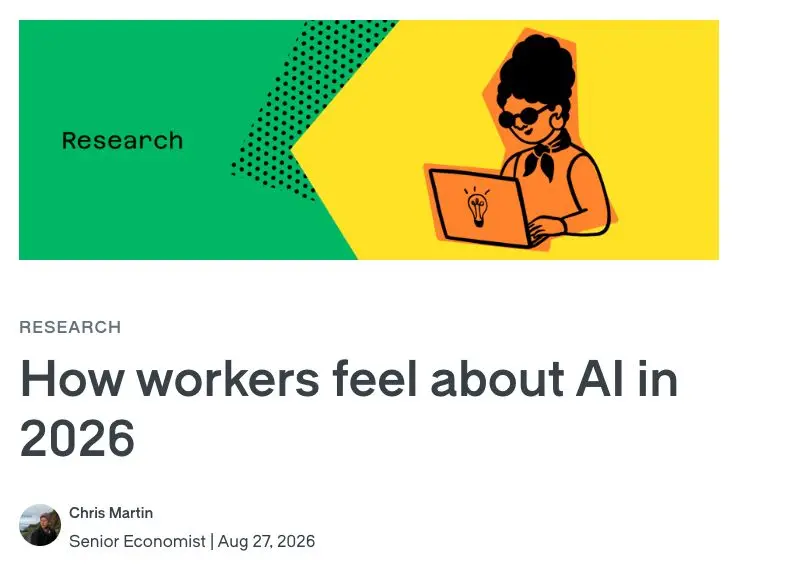
42% of Gen Z men feel positive about AI at work. Only 21% of Gen Z women do. Wow. That's a 2x gap but WHY?
I was reading the Glassdoor survey data and it was the usual boring stuff on AI, then this stat jumped out. Same generation, with the same technology, but completely different reactions.
WHY?
I don’t know the answer, and the article didn’t have one either. But a 2x confidence gap around the most important workplace technology of our lifetime feels like something we should pay attention to.
Because if men are more likely to see AI as leverage while women are more likely to see it as a threat, that gap won’t stay emotional for long.
It will show up in:
- Adoption
- Skills
- Opportunity
- Income
That’s the part I can’t stop thinking about.
What makes this even stranger is that while we can’t agree on whether AI is exciting or threatening, we’ve already managed to make ourselves pretty damn dependent on it.
Take Away AI and Half the Office Stops Working
AI went down this morning and corporate America basically became a middle school during a fire drill.
And suddenly nobody knew what the hell to do. We're all been worried AI would take our jobs and it turns out it just has to go offline for 20 minutes and half the workforce becomes useless.

That’s a pretty weird place to be. We’re skeptical of AI, worried about what it’s doing to work, and apparently unable to work without it.
And somehow, while we’re still figuring out that relationship, we’re also willing to destroy things that have survived for generations just to feed the machines a little more data.
Not Everything Should Become Training Data
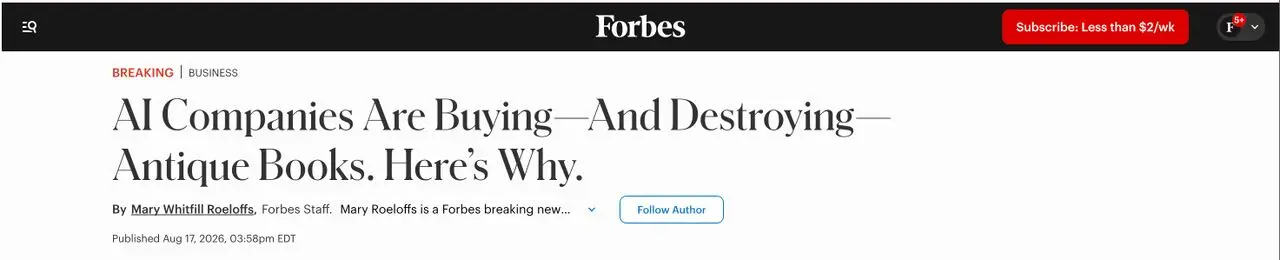
AI is so important now we’re literally shredding rare books to make the machines smarter. This is total bullshit.
Amazon is buying rare books, cutting the bindings off, scanning them, and throwing the originals away so the data can be fed into AI. Anthropic apparently did the same thing.
I’m as bullish on AI as anyone, but somewhere along the way “innovation” became an excuse to do dumb shit.
Not everything needs to be sacrificed at the altar of model improvement. Some things matter because they survived, because a human made them, and because they’re part of the physical record of how we got here.
We don’t need to destroy history to build the future.
And if your AI strategy requires turning rare books into confetti, your strategy is stupid.
Reality Check
Maybe the real AI divide isn’t between people who believe in it and people who don’t. The same person can complain about AI slop in the morning and be completely useless when ChatGPT goes down that afternoon. We can hate the idea of AI replacing people while depending on it more every week.
We’ve built a really weird relationship with this technology. We market it as a replacement for people, shame each other for using it, worry about what it will take from us, then panic the second it disappears.
And if different people can look at the exact same technology and see either leverage or a threat, another model release isn’t going to fix that. AI adoption is becoming a human problem. People need to feel like this technology is working with them, not being done to them.
Because the future shouldn’t be humans versus AI. It should be incredible humans and AI working side by side, with ridiculous leverage, doing work that actually matters.
If we build anything else, we screwed it up.