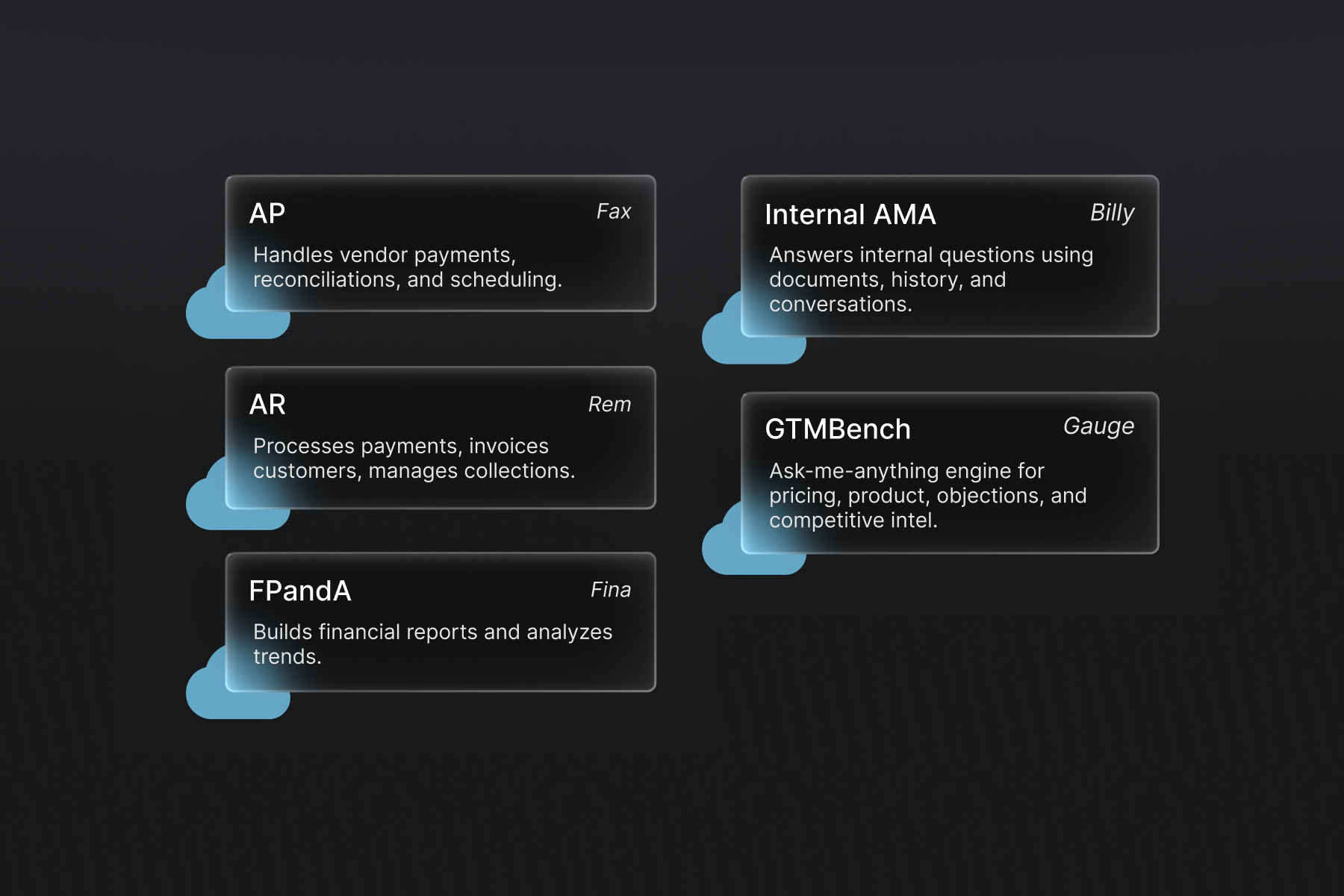
The Autonomous Organization
This is our north star. Are we 100 percent here today? No. Do we review this every week and measure progress against it? Yes.
The Autonomous Organization blends people, tools, and Cloud Employees working side by side. Cloud Employees handle the repetitive, predictable, operational work. Humans focus on judgment, creativity, leadership, and relationships.
This is not automation. This is a different operating system for a company. Below is what it actually looks like, team by team, and a breakdown of every Cloud Employee in the system.

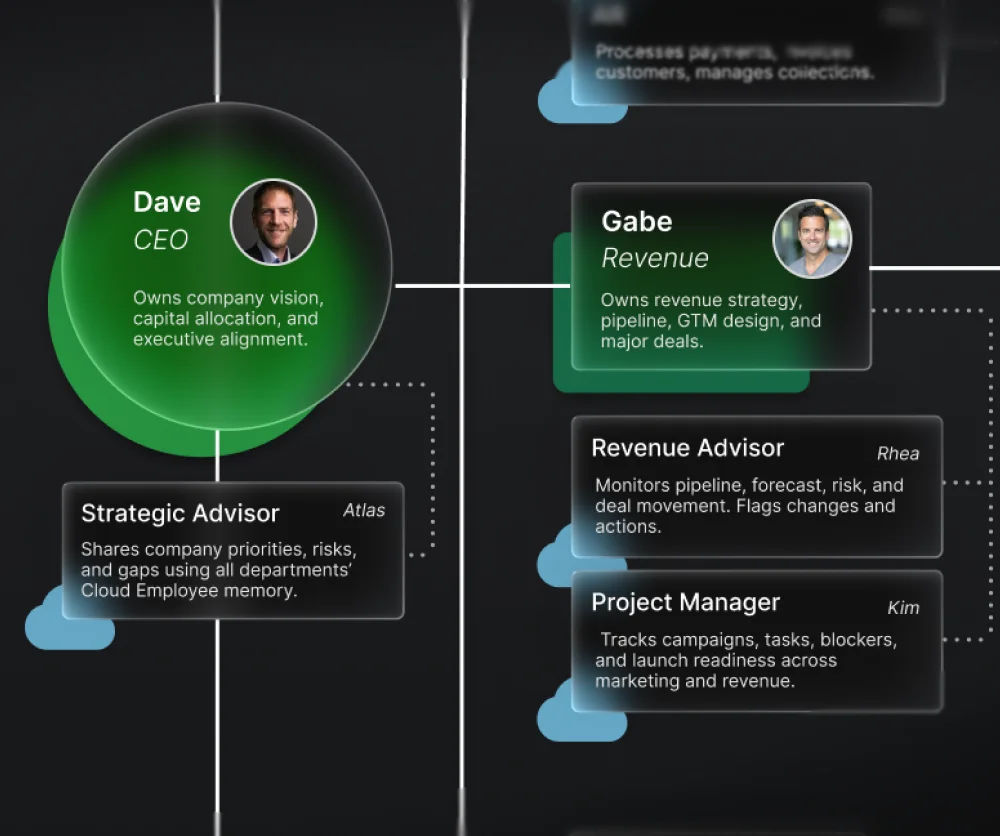
CEO
The CEO no longer spends half the day gathering updates, reviewing scattered dashboards, or chasing alignment. AI condenses all of that into a daily briefing. Patterns, risks, and opportunities surface automatically, but decisions still belong to the humans.
- •Decide
- •Prioritize
- •Allocate
- •Coach
Revenue
Pipeline updates, forecasting, deal risk, competitive shifts, and GTM blockers used to take hours of meetings and spreadsheets. AI now surfaces these signals faster and with far less manual effort, though leaders still interpret and steer the decisions.
- •Design strategy
- •Review shifts
- •Focus on major deals
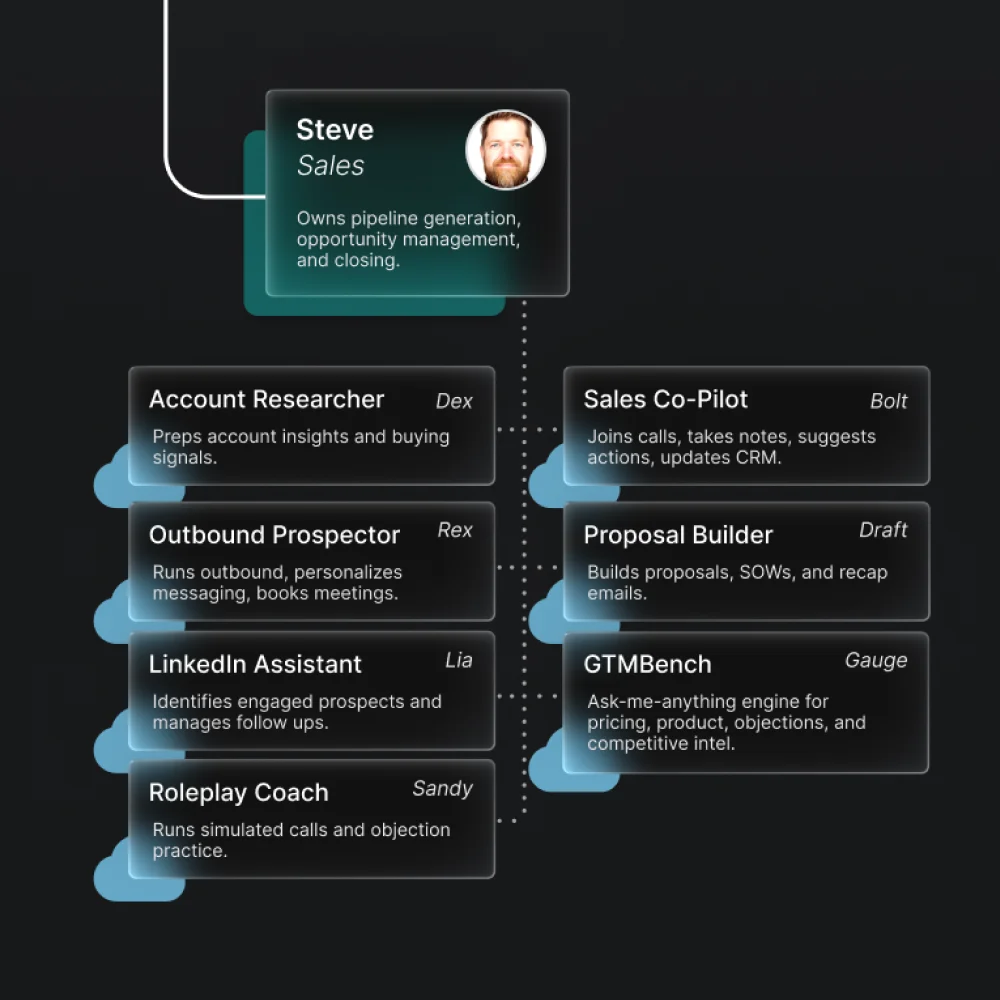
Sales
Everything around generating pipeline used to be labor. Research, outbound, signal tracking, follow up, call prep, proposals, CRM updates. AI now carries most of that load, and reps supervise, refine, and stay focused on selling.
- •Run great calls
- •Move deals forward
- •Build relationships
- •Close
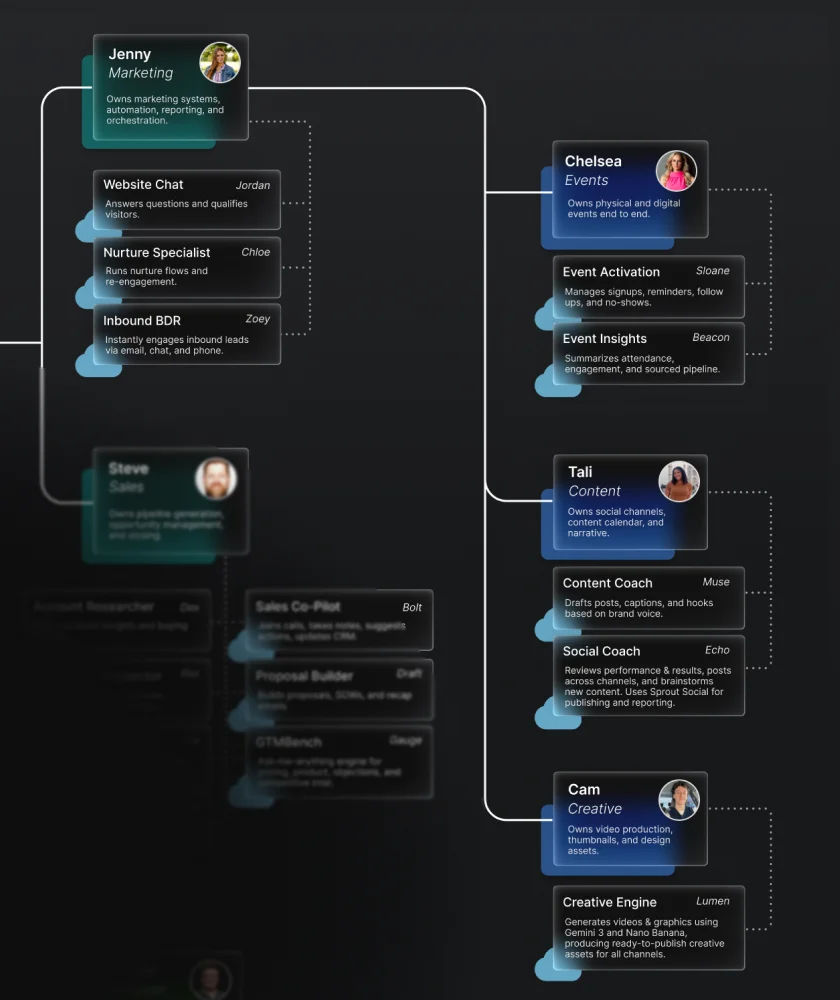
Marketing
Nurtures, routing, qualification, reporting, and inbound follow up are no longer manual, but they aren’t fire-and-forget. Cloud Employees handle the execution, and humans guide the strategy and adjust the system.
- •Create strategy
- •Build experiences
- •Measure and optimize
Events
Signups, reminders, follow-ups, no-show outreach, and post-event summaries used to eat entire days. AI now runs most of the workflow, with humans refining the experience and stepping in where needed.
- •Design memorable events
- •Create content that converts
- •Focus on attendee experience
Social & Content
Drafting posts, repurposing clips, monitoring comments, and tracking engagement used to take hours. Now the machine handles production and signal scanning, but humans still own the voice and narrative.
- •Set the narrative
- •Approve and refine the voice
- •Be the on-camera personality
Design & Creative
Versioning, revising, resizing, thumbnailing, and clipping long videos used to be time consuming. Now it happens automatically, with humans directing the creative vision.
- •Create
- •Direct
- •Experiment
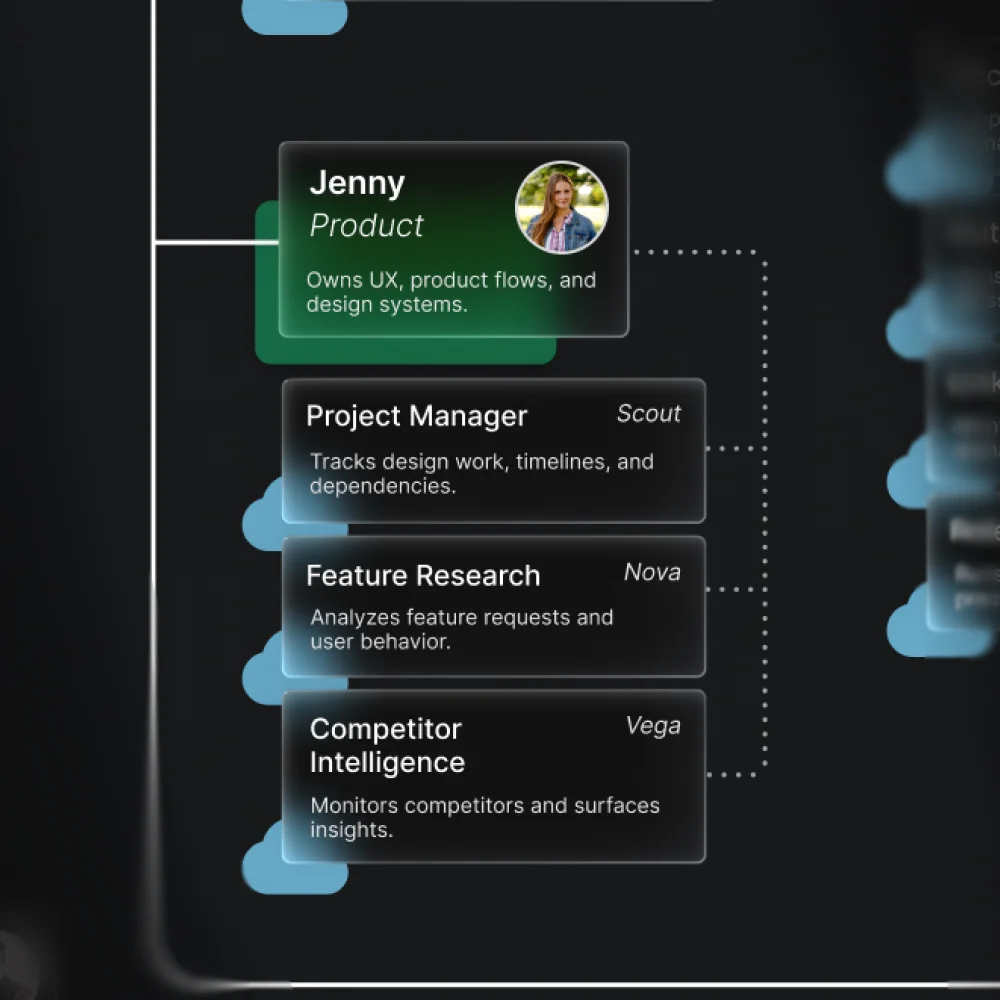
Product
User research, competitive monitoring, backlog grooming, dependency tracking, and project coordination used to slow product cycles. AI now runs the signals and workflows, and the product team reviews, interprets, and prioritizes what actually matters.
- •Focus on UX
- •Improve product flows
- •Guide product direction
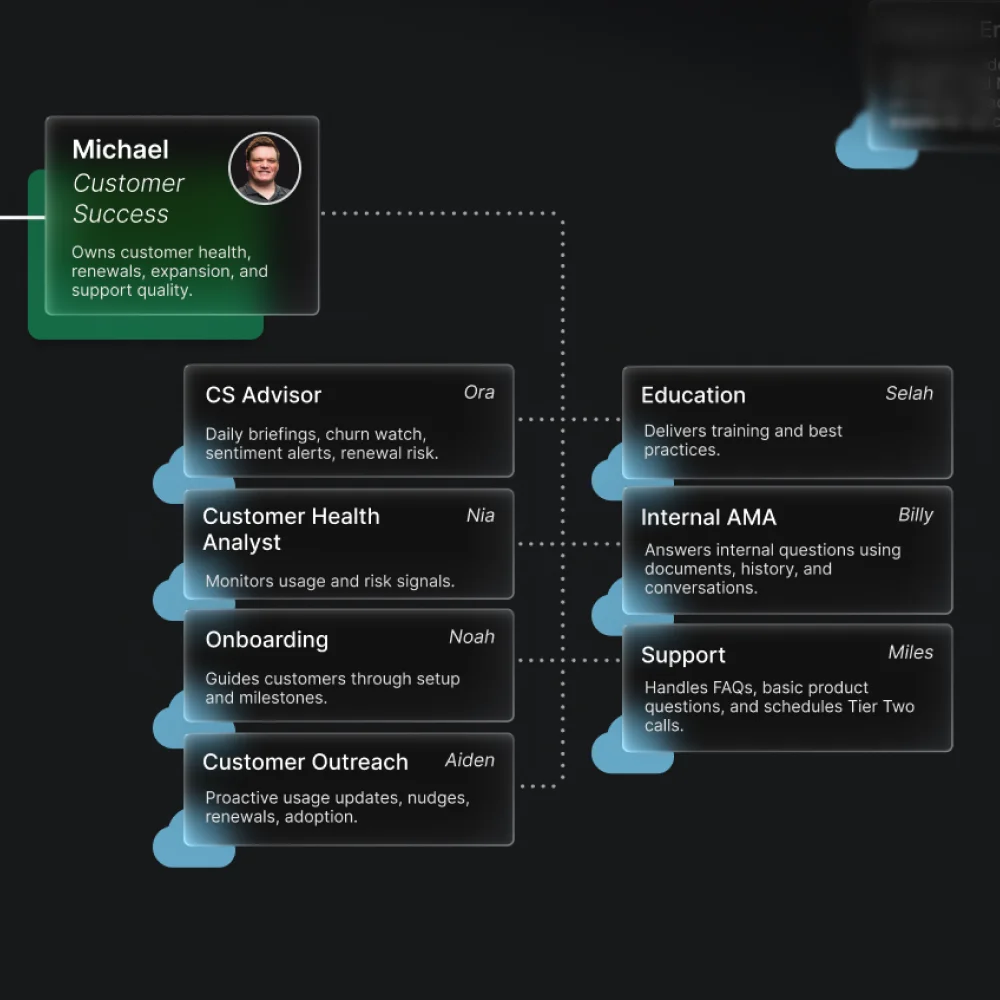
Customer Success
Success teams used to react late to churn signals and spent hours writing check-ins, tracking onboarding steps, logging updates, and answering basic questions. AI now monitors health and surfaces risks earlier, while humans review the signals and act on the strategy.
- •Build relationships
- •Solve meaningful problems
- •Guide customer strategy
Support
Tier one support used to be a backlog of repetitive questions, simple troubleshooting, and scheduling. AI now resolves everything simple instantly, and humans focus on higher-value work.
- •Handle complex issues
- •Improve documentation
- •Deliver higher-quality support
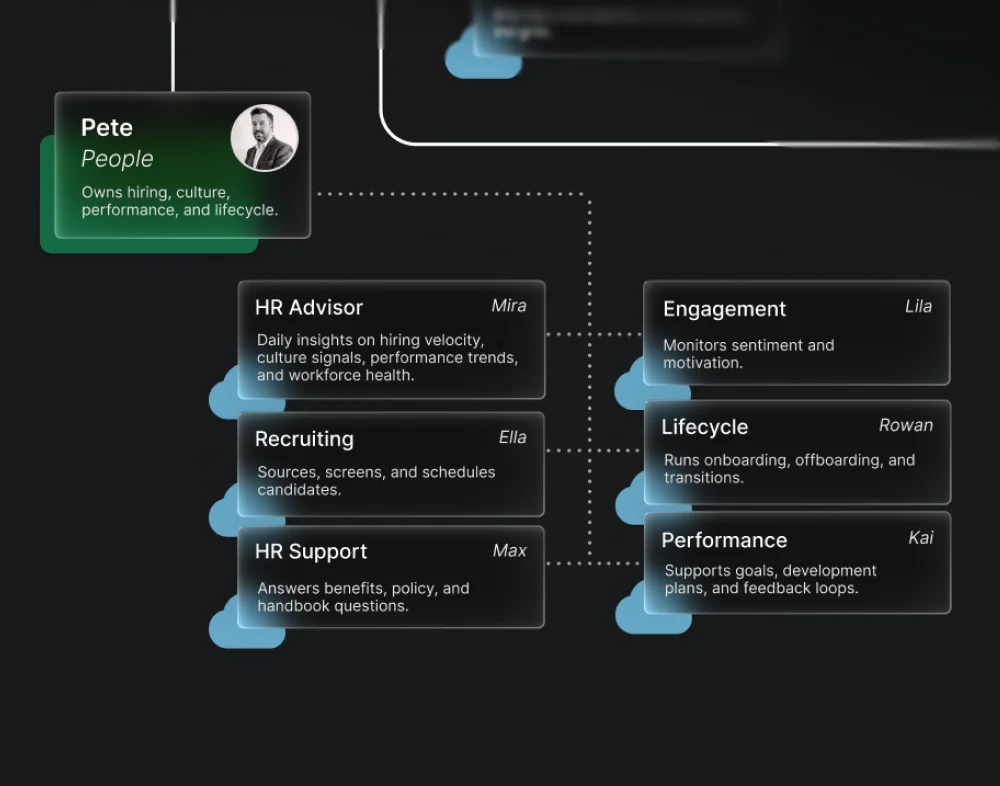
HR
Recruiting coordination, handbook questions, sentiment tracking, onboarding flows, and performance reminders used to consume full workloads. AI now runs these continuously, though humans still oversee quality and culture.
- •Hire exceptional people
- •Shape culture
- •Support development
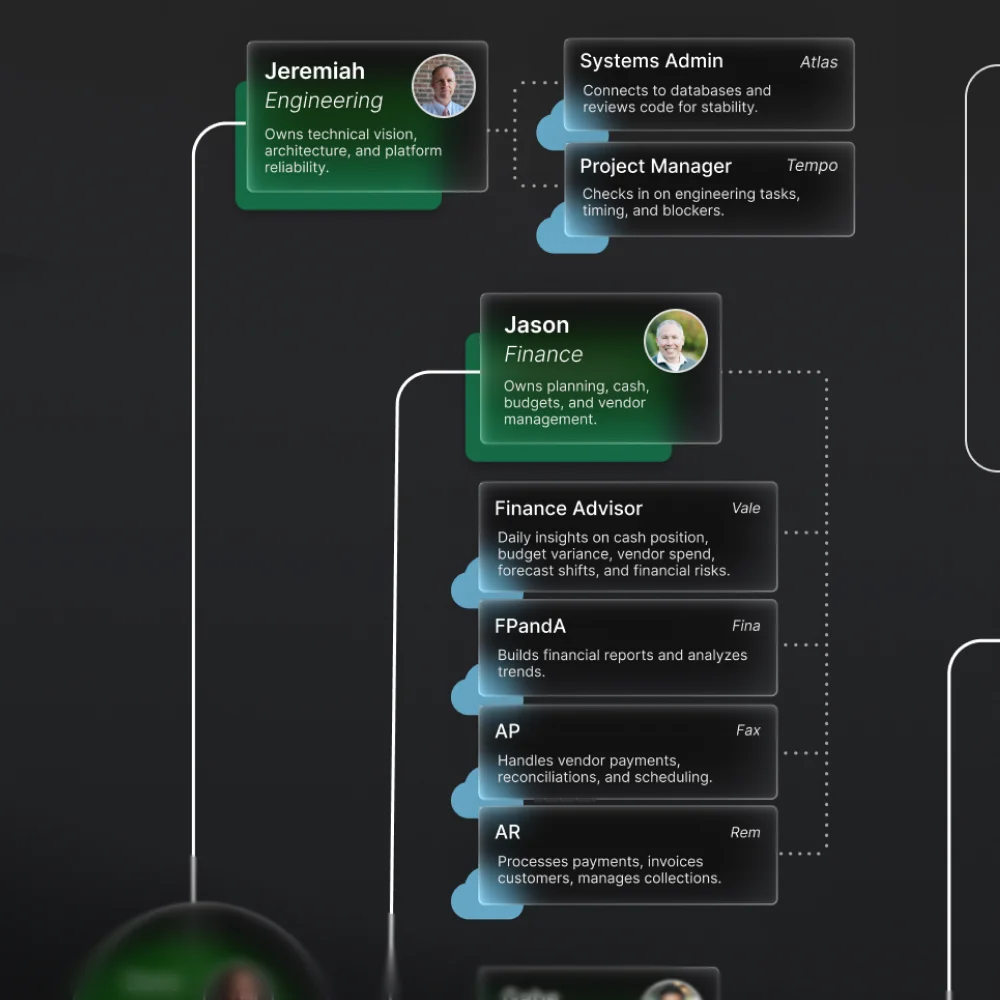
Engineering
Project tracking, stability checks, code scanning, and system monitoring used to pull engineers away from building. AI now runs these continuously in the background, and humans step in to review signals and make high-impact decisions.
- •Architect
- •Build
- •Review high-impact decisions
Finance
Month-end reports, invoice chasing, vendor payments, reconciliations, and forecasting updates used to be slow and manual. AI now handles the recurring financial ops work, and humans focus on analysis and planning.
- •Plan
- •Model
- •Advise
The Real Shift
Every person in this model has leverage, not because they work harder but because they work with capable systems around them. Every team operates with multiple Cloud Employees that eliminate the drag, surface the signals, and keep the work moving.
These are real roles, not scripts or automations bolted onto old workflows. This is a company designed around continuous intelligence and continuous execution.
Most organizations will eventually look like this. The ones who get there early will feel the compounding advantage first. This is a new kind of organization.
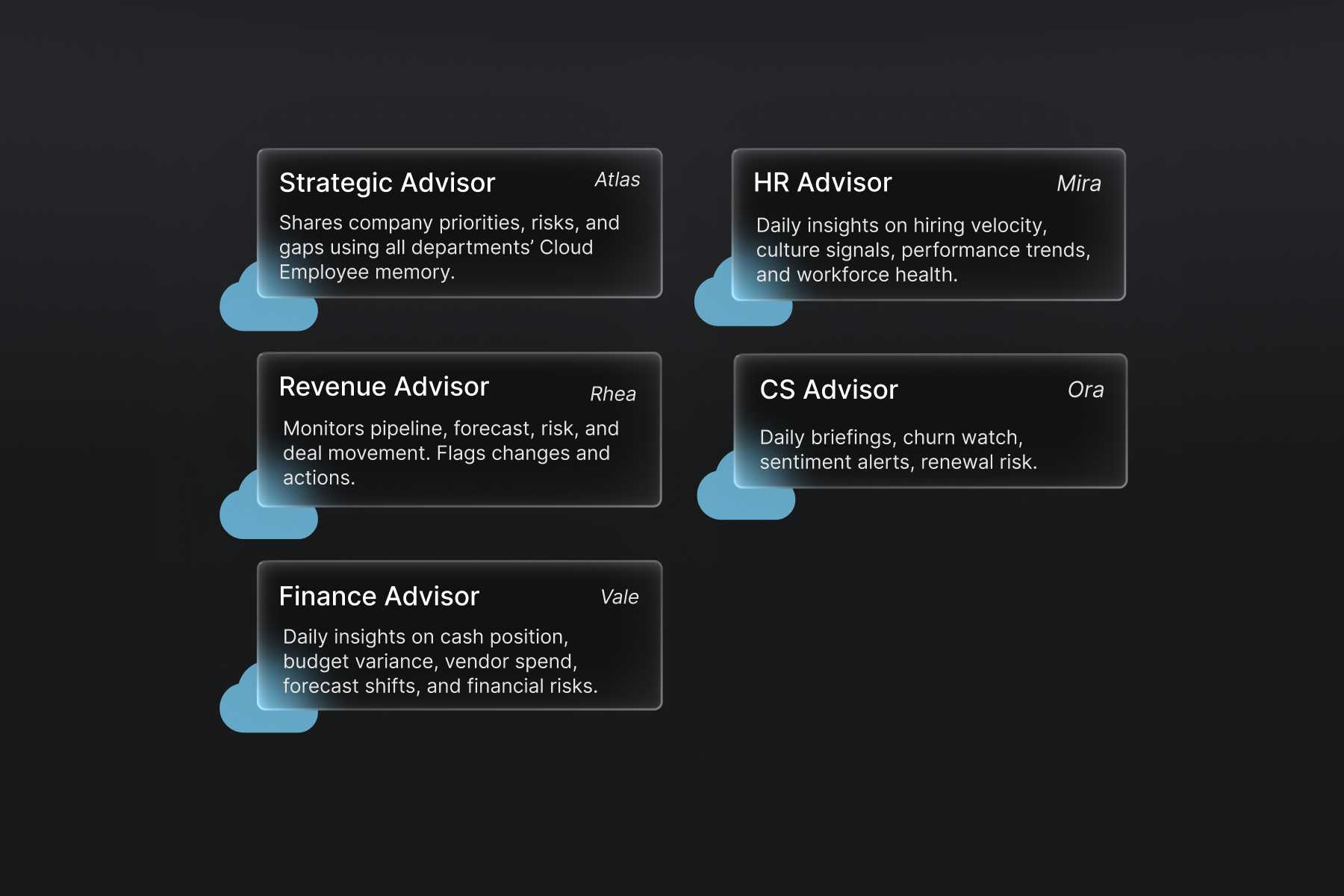
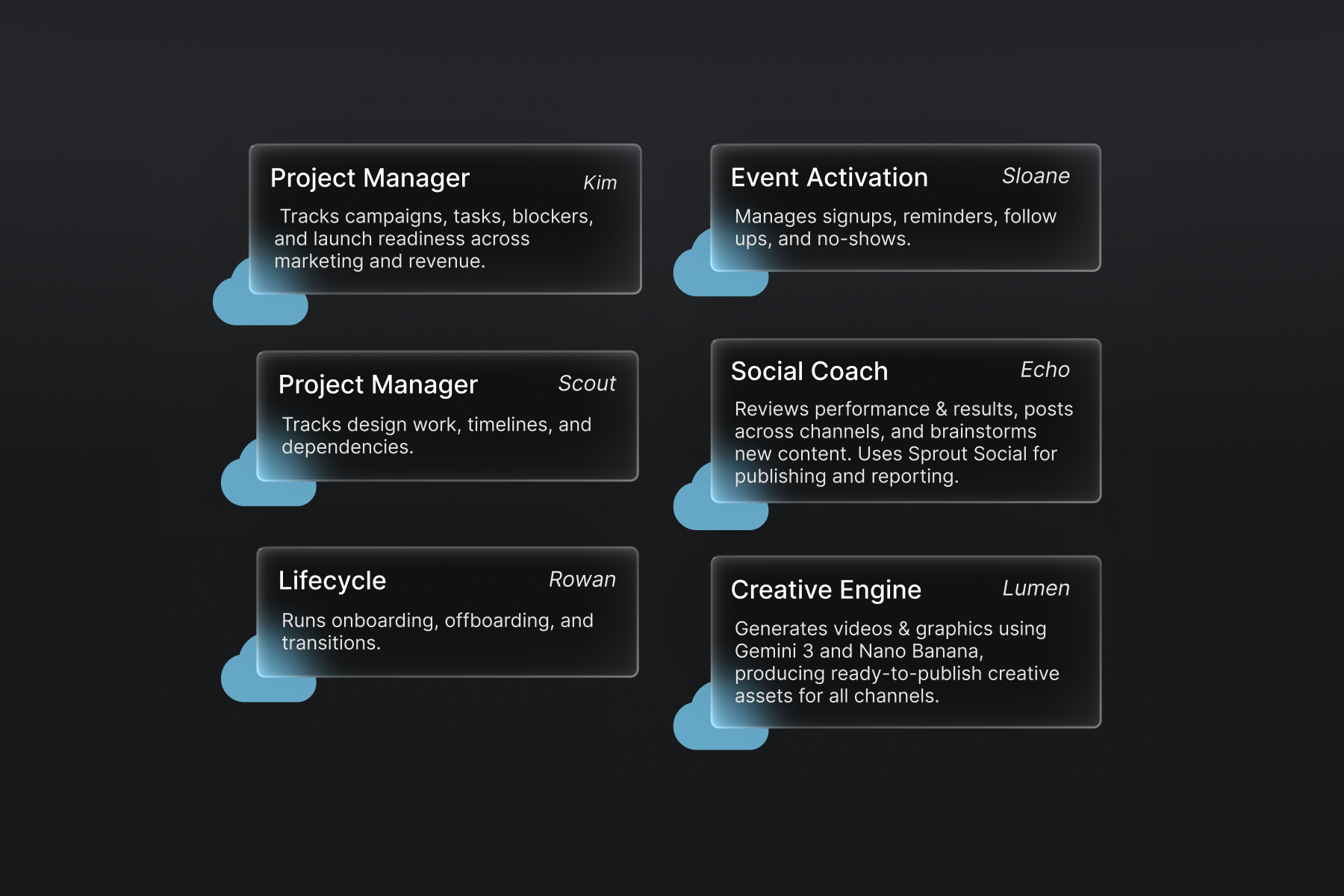
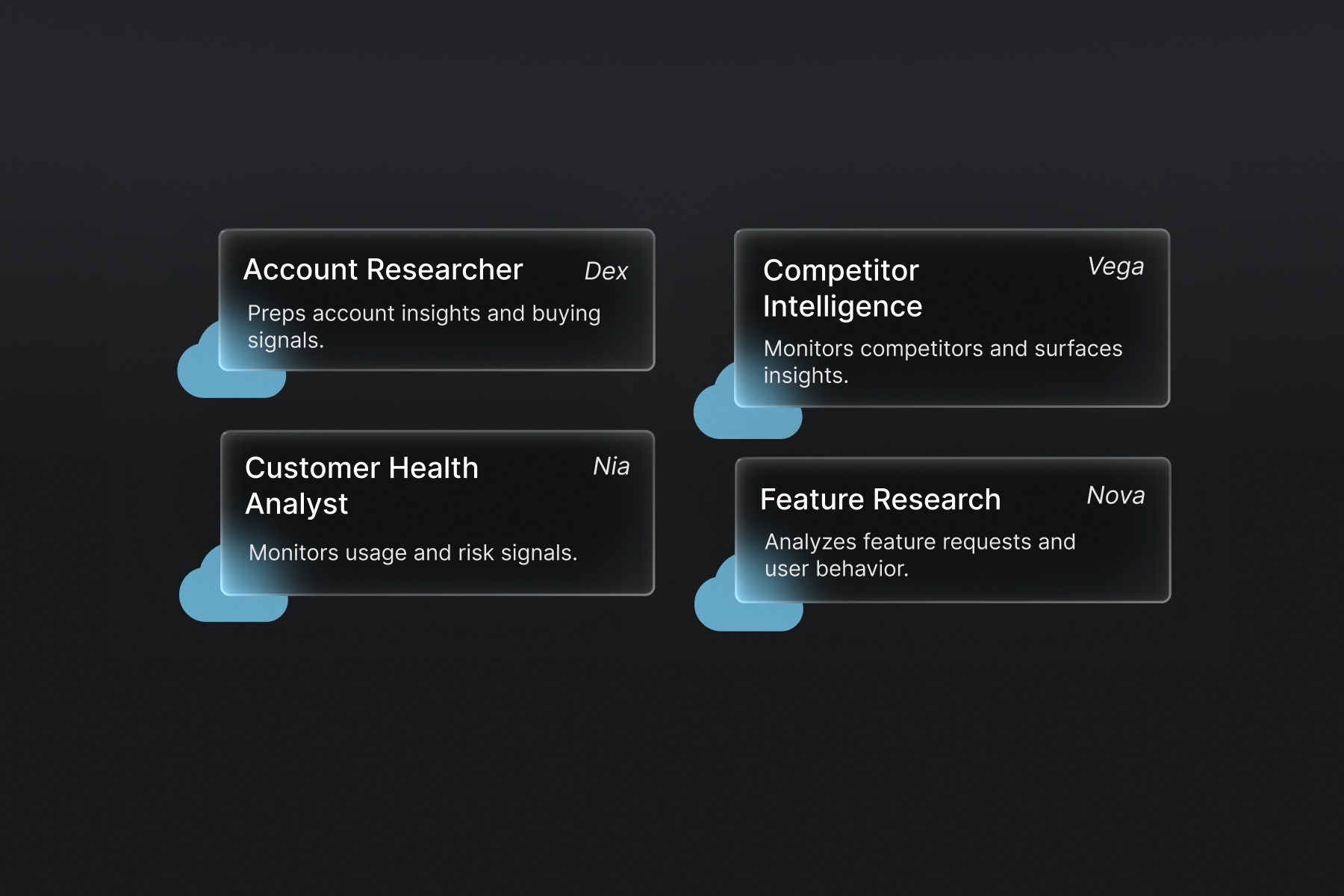
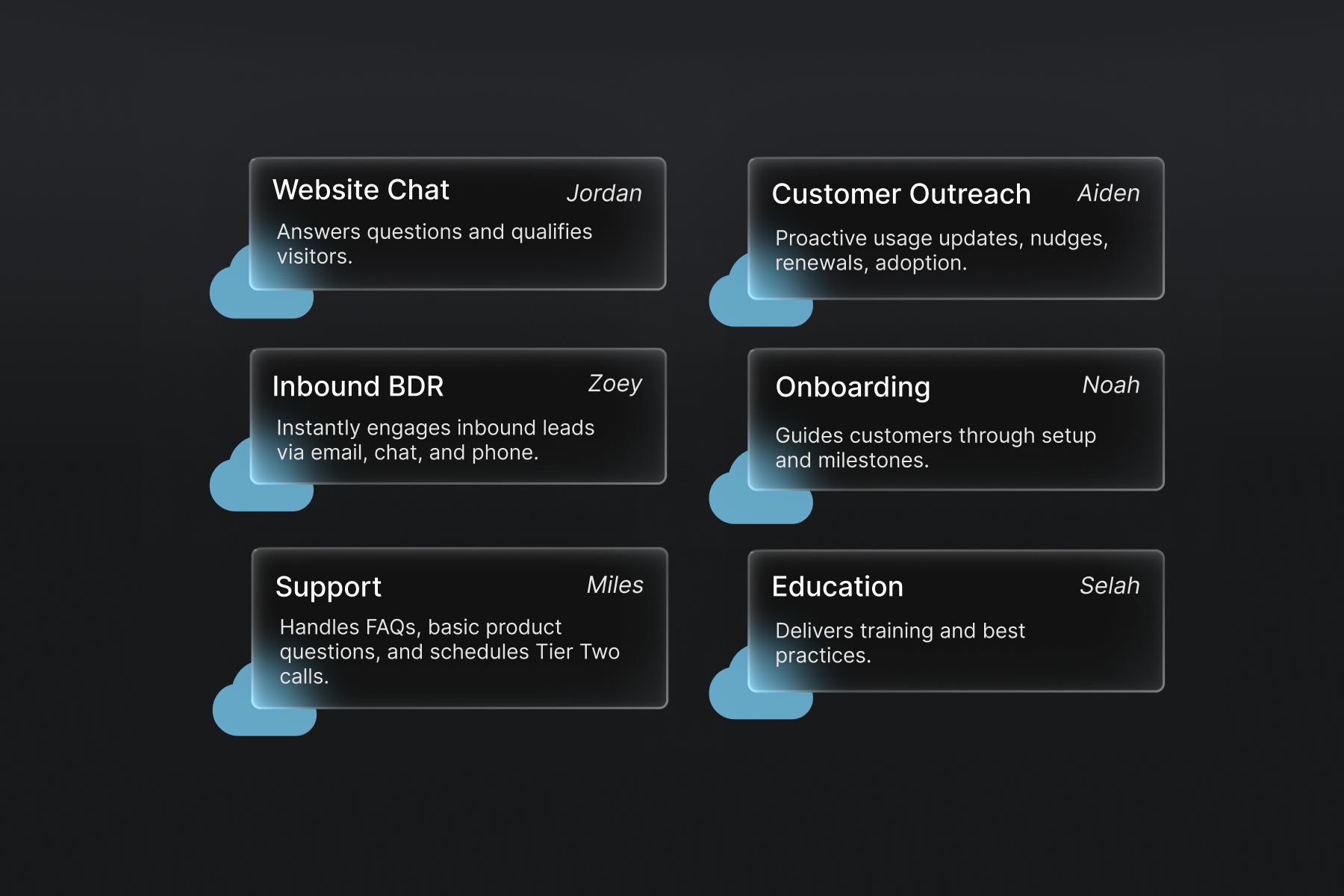
The Cloud Employees Behind the Org
If you’re wondering “Who are all these Cloud Employees and what do they actually do,” here’s the simple version.
Strategic Advisors
Execution Engines
Research & Signals
Customer-Facing
Ops & Finance