
It is wild how long people will cling to an old playbook just because it feels safe.
You see it everywhere right now. Leaders are desperately trying to solve new problems with old habits. They are trying to build moats in an industry that moves too fast to have them. They are blaming AI for hiring gaps they caused themselves. They are squeezing their teams with fear and confusing panic for productivity.
This week is all about what happens when the old way of doing things finally breaks.
Let's get into it.
Your AI Moat Will Last Exactly Four Days
If I hear one more investor ask, "What is your moat?" I am going to lose it.
Everyone is obsessed with building a moat. In AI, that is yesterday's game.
- You launch a feature on Monday.
- A frontier model adds it on Tuesday.
- An open source project copies it on Wednesday.
- A competitor ships it on Friday.
Congratulations. Your moat lasted four days.
The more I think about it, the more I think moats are a waste of time. I am not saying do not innovate. Of course you should. I am saying stop expecting one big idea to protect your business. It will not.
The best founders I know are not obsessed with protecting what they built. They are obsessed with what they are building next. That is a much better use of your time.
Since moats are dead and the tech moves so fast, the people building the machine are suddenly becoming the most valuable people in the room. Even in departments where they supposedly do not belong.
When Pipeline Becomes an Engineering Problem
Today I heard the most 2026 hiring story imaginable. A marketing leader made it to the final round for a marketing leadership role. The company passed on him and hired a 25-year-old AI engineer instead.
That one stopped me for a second. They believed the engineer could generate more pipeline than a marketing executive.
Crazy, right? Maybe.
But I do not think that is the interesting part. The interesting part is what it says about how companies are starting to think. Somewhere along the way, pipeline stopped being a marketing problem and became an engineering problem.
That is a pretty uncomfortable place to be if your entire career has been built around managing campaigns instead of building the machine.
So engineers are taking over marketing, but what about sales? Well, it turns out we might finally be past the theoretical phase there too.
So engineers are taking over marketing, but what about sales? Well, it turns out we might finally be past the theoretical phase there too.
The Only Stat That Mattered in Salesforce's 37 Page Report
I just finished reviewing Salesforce's 37-page State of Sales report. It sucked. Let me summarize so you do not waste the time.
Most of it felt like the same recycled advice we have been hearing for years.
- Reps have too many tools
- They spend too much time on admin
- Customers expect personalization
Then I got to one stat that actually stood out: 88% of sales teams either already use AI agents or expect to within the next two years.
Kind of interesting. Have we officially moved past asking if we should use AI?
Is the new question... What should AI own? Not really assist or help with but actually own.
AI taking on more ownership makes it really easy to blame it for every negative shift in the job market. But when it comes to junior talent, we might be pointing the finger at the wrong thing.
Stop Blaming AI for the Death of Entry Level Jobs
Everyone is blaming AI for the collapse of entry-level jobs, but are we blaming the wrong thing?
A new study I came across says remote work may be a bigger reason companies are hiring fewer recent grads than AI.
I am not sure that is what people want to hear :)
It is interesting. You can manage experienced employees remotely, but training new employees is a completely different challenge. New grads do not learn everything from onboarding docs and Zoom calls.
They learn by:
- Overhearing conversations
- Watching top performers handle tough situations
- Sitting in meetings they were not supposed to be in
- Getting pulled aside after a call and hearing what actually happened
New hires absorb a lot of what they learn and that is hard to replicate in Slack. So companies have adapted. Instead of hiring and developing junior talent, they started hiring people who already knew how to do the job.
The irony is hard to ignore. The same people warning that AI is destroying entry-level opportunities may have helped accelerate the problem by championing fully remote work.
Will AI eventually eliminate some entry-level jobs? Probably. But remote work may have already stopped companies from creating them in the first place.
Losing junior talent is bad, but losing your entire company culture is worse. And right now, a lot of leaders are actively destroying theirs while thinking they are doing a great job.
The Hidden Cost of Fear Based Leadership
The more I think about it, the more I wonder if we have learned the wrong leadership lesson. I have watched leaders get praised for doing more with less.
- Layoffs
- Stack ranking
- Performance crackdowns
- "Do more with less"
For a long time, that looked like great leadership. Now, even Meta is reportedly admitting morale is near its lowest point in years. It makes you wonder. Are we celebrating a leadership playbook that gets short-term results but slowly drains the life out of a company?
Here is the thing. Fear is incredibly effective at first.
- People work longer hours
- They respond faster
- Costs come down
- The numbers look better
Then something changes. People stop taking risks, stop pushing back on bad ideas, and eventually stop caring enough to tell you when something is broken. And that is what worries me.
If people are afraid of being wrong, they stop speaking up. And that is when companies stop getting better.
When people stop caring and stop speaking up, the company slowly dies. It is a good reminder that despite all the tech we just talked about, this whole thing still runs on human connection.
Information is Free. Get in the Room.
The more AI I use, the more I want to be in a room with real people. I spend most of my week on Zoom. I hate traveling. Half the time I try to talk myself out of going to events.
Then I get in a room with 50 people who are all trying to figure out the future of AI and I remember why I came.
AI is making information free. Which means conversations are becoming more valuable.
If you are only learning about AI from LinkedIn, podcasts, and ChatGPT, you are missing the best part. Get in the room, man!
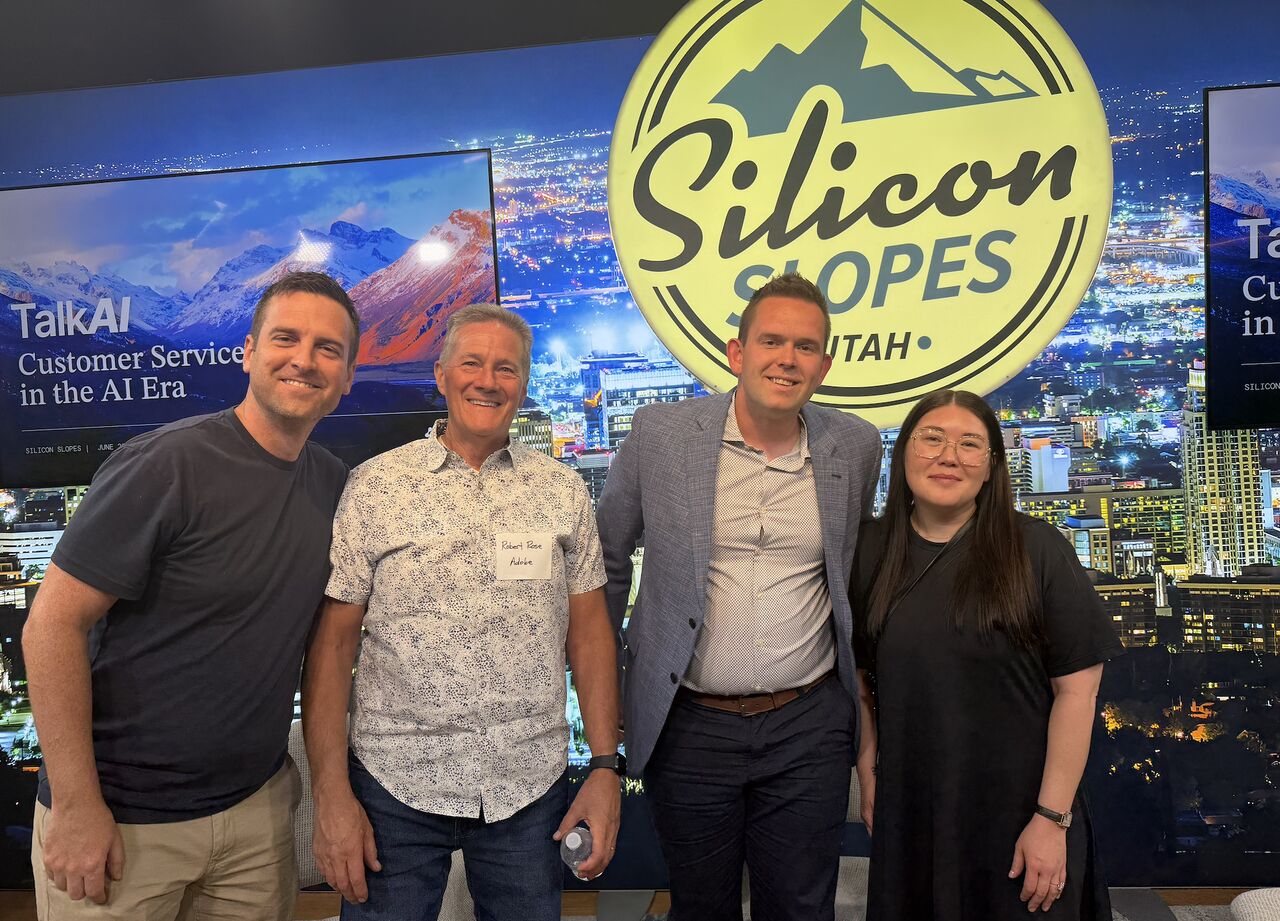
Thanks to Robert Rose, Nate Christiansen, Jessica Bengtzen, David Elkington, and Silicon Slopes for an awesome night about CX and AI.
Reality Check
AI changes a lot of things, but it does not change the fact that business is still a human sport.
If you want to win in this new era, stop protecting what you built yesterday and start building what comes next. Stop managing by fear. And most importantly, remember that as AI makes information free, human connection is the only thing becoming more valuable.