
Four AI stocks lost $80B in a single day this week.
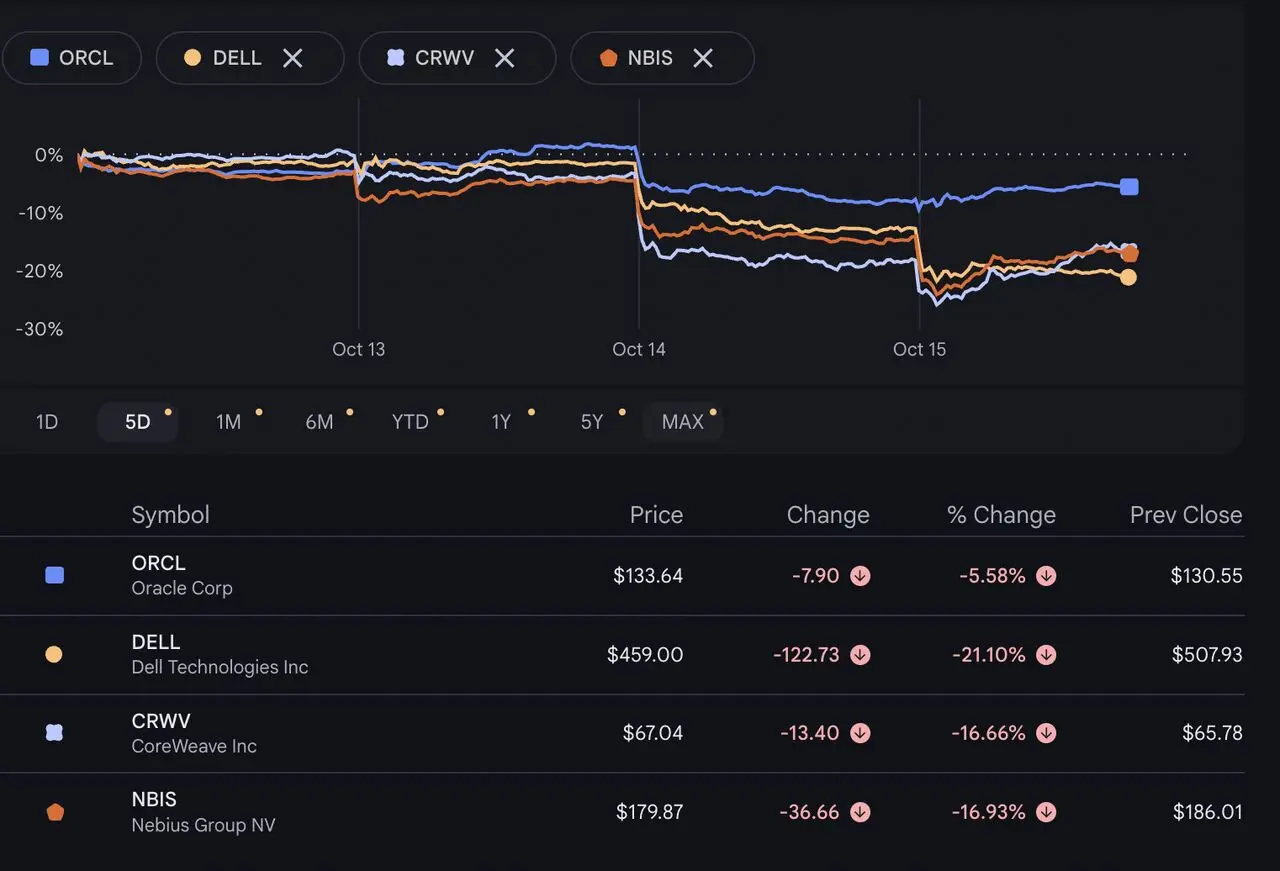
Oracle fell 9%. Dell Technologies fell 11%. CoreWeave and Nebius dropped too, as investors started questioning how quickly all this AI spending turns into actual cash.
At the same time, Salesforce announced yet another acquisition, bringing its 2026 total to nine as it tries to move from selling software seats to selling more of the work itself.
For the last few years, AI companies have been rewarded for what the technology might eventually do.
That window is now getting smaller.
Look at what is happening:
- AI infrastructure: Investors are starting to ask whether hundreds of billions in spending can actually produce enough revenue or savings.
- Salesforce: Is buying capabilities across sales, service, research, analytics and billing instead of waiting for its existing products to evolve on their own.
- AI agents: Are getting closer to spending money and completing transactions, which means someone has to be responsible when they get it wrong.
The next phase of AI is going to be measured much less by what it can generate.
It will be measured by what it can actually do, what that work is worth, and who is accountable when it fails.

Four AI Stocks Lost $80B This Week
Wall Street is losing patience with AI’s "promised" returns. Oracle fell 9%. Dell fell 11%.
The higher borrowing costs are forcing investors to question whether AI will generate enough cash to justify the spending.
Even as of this post today they have lost another $15B:
- Oracle: Up 2% today.
- Dell Technologies: Down another 8%.
- CoreWeave: Down another 2%.
- Nebius: Down another 5%.
We need ROI faster. All this data center spending ultimately depends on customers getting enough value to keep paying.
That means either:
- More revenue
- Lower costs, ... full stop.
I wrote recently about canceling all our Claude licenses at Atonom. Emails and PowerPoints were taking longer. Salespeople were spending time building and fixing automation.
We had created more work. Producing more content doesn’t necessarily it a business. The value is in truly autonomous. That is what the next generation of companies will be built on.
Semi-Autonomous agents like Muse, Dots and Grok Bots are promising because they complete work for us without as much oversight and management.
Still, we need to get from experimenting with AI to making money with it much faster.
Salesforce’s Market Cap Is Down $55.7B This Year
Loops acquisition brings their list of acquisitions announced or closed in 2026 to nine.
They’re clearly trying to buy their way from a traditional SaaS platform to an AI platform.
$8.33B across the five deals with disclosed prices or published estimates. Four more prices remain undisclosed:
- Qualified (Acquired by Salesforce): $1.2B. AI sales development.
- Cimulate (Acquired by Salesforce): Product search and discovery.
- Momentum: Customer conversations and CRM updates.
- Contentful: $1.5B. Content and personalization.
- m3ter: Usage metering and billing.
- Fin, formerly Intercom: $3.6B. AI customer service.
- MeshMesh: Salesforce implementation and configuration.
- Listen Labs: Estimated $2B. AI customer research.
- Loops: Estimated $30M. Explain why business metrics changed.
Qualified closed in April after a 2025 announcement. Listen Labs and Loops remain pending.
One sign investors are warming to this transition: Salesforce’s stock jumped 22.6% on August 27 after earnings and an their Anthropic partnership.
This all suggests growing confidence in their strategy. But it doesn’t tell us how much value to attribute to acquisitions. Through October 12, market cap is still down 22.4% year to date.
Loops CEO Tom Laufer says analytics should help businesses:
Understand what drives their results and decide what to do next.
Combining all acquisitions together they research customers, generate pipeline, serve accounts, explain results, and bill for usage.
If Salesforce can connect these capabilities, they could sell more of the work our teams need done. That is a much bigger ambition than selling us another software seat.
When an AI Agent Spends Our Money Without Permission, Who Pays?
This week, J.P. Morgan CEO Jamie Dimon said:
“We are building tools to protect customers and will not allow unvetted outside agents into our internal systems due to security risks.”
This feels a little like a revenue moat more than for our protection.
But if an agent makes a purchase we never approved, these are the inevitable responses:
- The bank says the credentials were valid.
- The retailer says the payment was approved.
- The AI provider says we accepted the terms.
Everyone has an explanation, ... so we are left carrying the bag.
Connecting an account should NOT mean accepting unlimited financial responsibility for what an agent does.
We authorized access. We set limits. Those limits should mean something when a transaction is disputed.
Accountability needs to be clear before the first dollar moves.
But where should customer responsibility end: if we give an agent permission to act and it exceeds our instructions, should we bear any of the loss?
The Macro View
AI is moving from experimentation to accountability.
Investors want to know where the return is. While customers want software that does more than help employees produce more stuff.
Once agents start taking real actions, companies need clear answers about who owns the consequences.
A few things stand out:
- More AI usage does not automatically mean more business value.
- Software companies are racing to own the work, not just the tool employees use to do it.
- Autonomy becomes much more valuable when it reduces labor instead of creating more management.
- The more authority we give agents, the more important limits, permissions and liability become.
The easy phase was getting people to try AI. Now everyone has to prove it makes money, saves money or completes work we would otherwise pay someone to do.
Until next week…
